Yes, but the bake setting is chosen for the battery, not just the clear coat
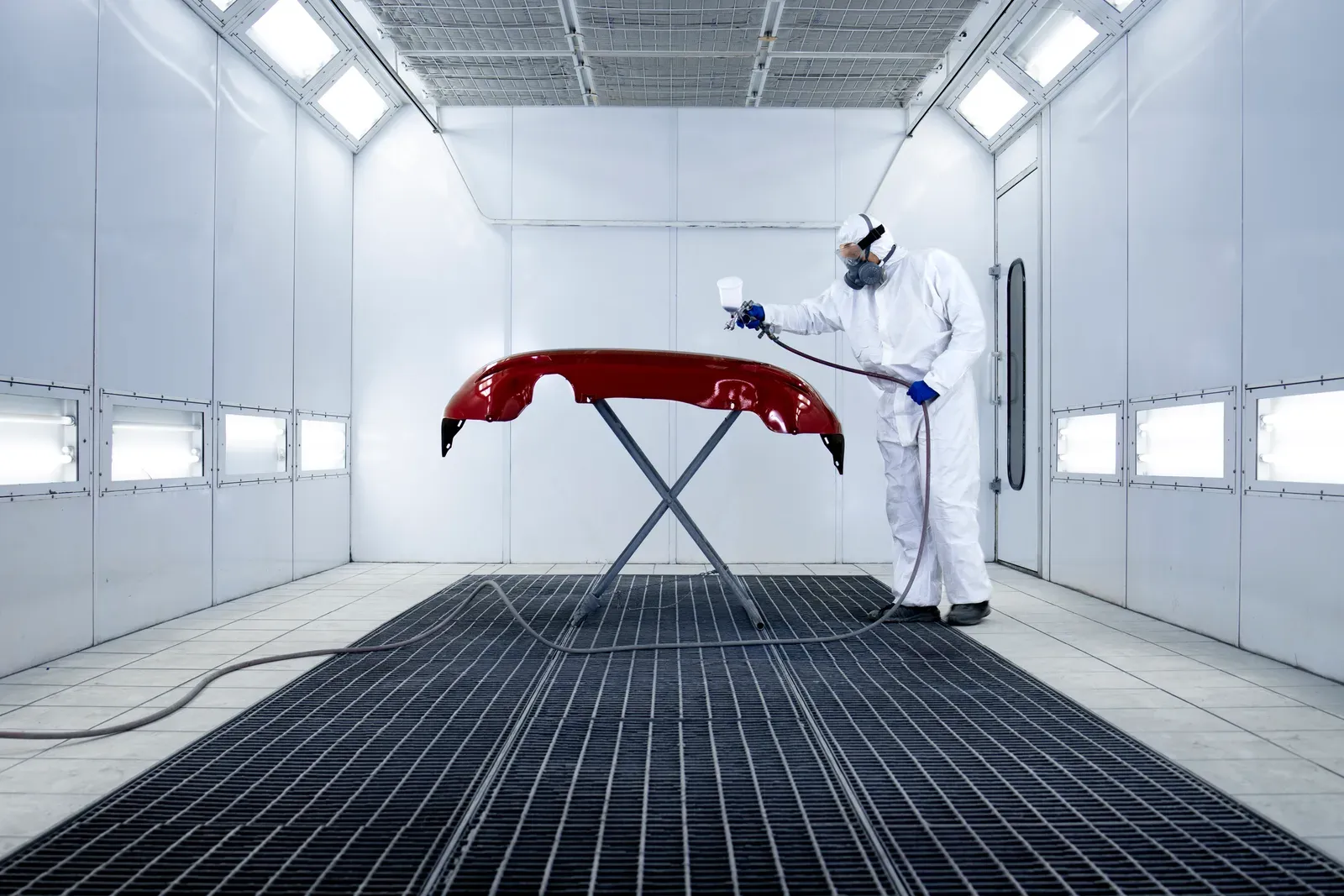
An EV goes into an ordinary spray booth. What changes is how the paint is cured once it is on. In a conventional repair, after the last coat of clear goes down, the booth switches into a bake cycle: it recirculates heated air for a set time so the clear hardens quickly and the car can move on to polishing. On a gasoline car that heat is a non-issue for anything except a few plastic trims and the 12-volt electronics, which the procedure already accounts for.
A lithium-ion pack is a different kind of passenger. It has a temperature range it is designed to live in, and the repair information for many EVs and hybrids sets a ceiling on how hot the car may get in a booth, and for how long. Respecting that ceiling is the whole answer. The car can still be painted to the same finish; the cure is simply planned around the pack.
Why booth heat matters to a battery that is switched off
Because the pack’s cooling is switched off in the shop, any heat the booth puts in stays there. When you drive on a hot July day, or park on an open lot in full sun, the car’s thermal management system pumps coolant through the pack and holds its temperature in range. In a body shop the car is usually powered down, and for collision work the high-voltage system may be fully disabled. That means the cooling system is not running while the booth is heating the car, and whatever heat soaks into a large pack stays there and leaves slowly.
The concern is cumulative rather than instant. A short warm-up does little to a heavy pack with a lot of thermal mass, but a long bake, or several bakes on the same day for multiple panels, can push its temperature up gradually. Heat is one of the main things that shortens a battery’s life, and manufacturers set limits precisely so a repair does not quietly take years off it.
Hybrids sit in the same category. Their packs are smaller and often tucked under the rear seat, which keeps them closer to the cabin air the booth is heating, and their repair procedures carry similar cautions.
Low-temperature bakes, infrared lamps and off-car painting replace the full bake
There are three main approaches, and a single job often uses more than one. The first is a low-temperature cure: the booth runs at a reduced setting for longer, and the paint system is one whose clear coats are formulated to harden properly at that lower temperature. The finish is the same; the clock simply runs a little longer before the car can be handled.
The second is spot curing with infrared lamps. Short-wave or medium-wave infrared heats the painted surface of one panel directly, which puts the energy where the paint is rather than into the air around the whole car. A fender, a door or a bumper cover can be cured this way while the floor and the pack below stay near room temperature, provided the lamp is positioned to the procedure’s distances.
The third is to take the part off. Bumper covers, doors, hoods, liftgates and mirror caps can be refinished on stands, away from the car, and baked on a normal cycle without the battery anywhere near the heat. Blending into an adjacent panel that stays on the car is then done with a low-temperature cure. On a metallic or pearl colour, a bumper cover painted off the car still gets the neighbouring fender or quarter blended so the new paint and the original paint meet without a visible step once the cover is refitted.
- A reduced booth temperature with a clear coat made to cure at that setting.
- Infrared lamps that heat only the panel that was painted.
- Refinishing removed parts on stands and baking them away from the car.
- Spacing out cure cycles so heat does not build up in the pack over a day.
What this means for timing and quality in a GTA winter
A lower-temperature cure adds some time, usually measured in hours across the job rather than days, and it is built into the schedule from the start. In January it interacts with the weather: an EV that arrives cold-soaked from a night outside in North York has to come up to booth temperature before the first coat goes on, just like any other car, so the paint lays down and flashes properly. That warm-up happens without a bake.
Quality does not change. An EV finish carries the same lifetime warranty on paint and refinish as any other car, because the paint system is cured to its own specification either way. What a careful cure prevents is the expensive problem nobody would see at pickup: a battery that spent too long hotter than it should, with no mark on the finish to show for it. If you want to know how a given repair will be cured, ask at the counter and we will tell you which method the procedure calls for.
Questions people ask
Does a low-temperature cure make the paint softer or less durable?
Not when the clear coat is designed for it. Modern refinish systems specify cure schedules at more than one temperature, and following the lower schedule fully produces the same hardness. Fresh paint of any kind still needs gentle care for the first weeks.
Can the battery be removed so the car can be baked normally?
Pulling a pack just to paint is rarely sensible; it is heavy, needs specialist handling and adds its own risks. Curing around the pack, or painting removed panels off the car, achieves the same finish without touching the battery.
Does this apply to plug-in hybrids too?
Yes. A plug-in hybrid carries a larger pack than a conventional hybrid, and its procedures generally treat booth heat with the same caution as a full electric car. We check the specific model’s information before choosing the cure.