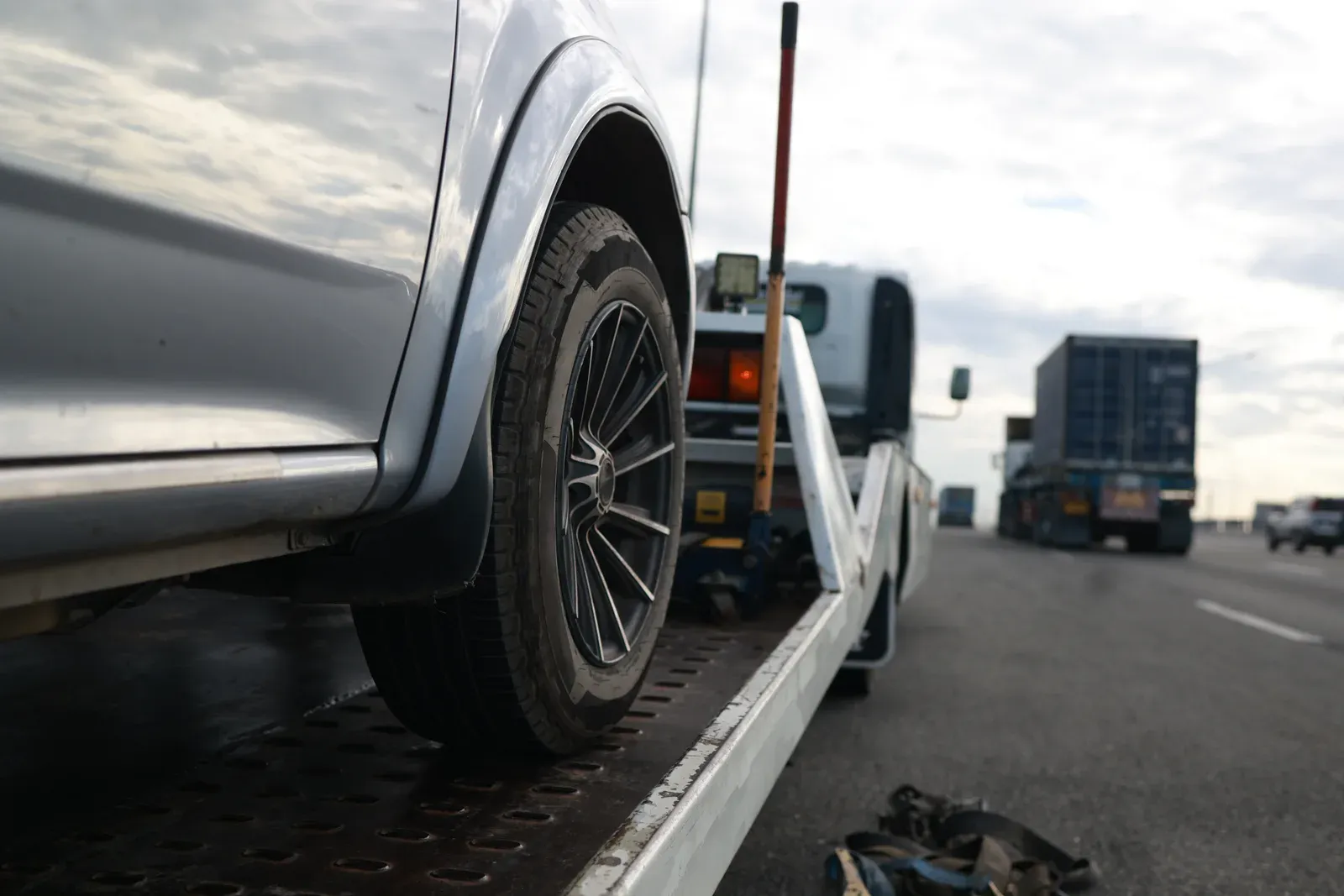
Before you sign the drop-off slip, walk the car and photograph the lower edges
The moment to catch tow damage is the moment the car comes off the deck, while the operator is still standing there. Once the truck leaves and the paperwork is signed, every new mark becomes your word against theirs. So ask for two minutes, walk all the way around, and crouch. Tow damage lives low on the car, where nobody looks during a roadside crash.
Compare what you see with the photos you took at the scene. If you took none, ask whether a friend or bystander did; the police or Collision Reporting Centre may also have photographed the car, and your insurance company can ask about that. Anything new on the side of the car that was not hit is a strong sign it happened in transport, because a collision does not usually reach around to the far wheel.
- Front and rear lower valances: a winch pulling a car up a steep deck can drag the bottom lip of the bumper cover and crack or tear it.
- Alloy wheels: wheel-lift straps and dollies leave fresh scuffs on the spokes and the rim lip.
- Tie-down points and the tow-eye socket: a hook in the wrong spot can bend a loop or crack the little cover in the bumper.
- Under the car: a scraped oil pan, a torn splash shield or a hanging exhaust hanger.
- All-wheel-drive cars and EVs towed with two wheels on the road: many owner’s manuals call for a flatbed only, so note how the car arrived.
Get the certificate details and an itemized invoice, then put the complaint in writing
Ask the driver for the tow business name, the operator’s provincial certificate details and an itemized invoice before anything else. Ontario certifies tow operators, and a certified operator expects to hand over an itemized bill. Photograph the truck’s markings and plate too. If the tow was arranged by police from the 401 or the DVP, that information matters even more, because you did not choose the company and may never see that truck again.
Write the new damage on the invoice or the drop-off slip before you sign it — a line such as “new scrape on right rear wheel, torn front lip, noted at delivery” is enough. If the driver refuses to let you write on it, take a photo of the unsigned slip next to the damage and send the company an email the same evening describing what you found. A dated message with photos attached is the record a claim is built on.
Then ask the tow company, in that email, how it handles a damage complaint and which insurance company covers its trucks. Some operators settle a scuffed wheel without a fight; others push back. If a certified operator will not engage, the Ministry of Transportation runs the tow-certification program and takes complaints about certified operators.
Keep tow damage on its own line, apart from the collision repair
The original crash and the tow are two separate events, and they should be paid as two separate things. Your collision claim covers what the other car, the guardrail or the curb did. A cracked lip on the opposite end, caused by a winch, was not part of that collision, and if it gets folded into the main estimate the wrong party pays for it — sometimes you, through your deductible.
Tell your insurance company as soon as you see it, in the same call or message where you give them the tow invoice. The adjuster decides whether to deal with that damage on the existing file or send you to the tow company for it. Either way, the photos from the scene and from the drop-off are what separate the two, so keep them together and do not delete anything from your phone until the car is home.
If you paid for the tow yourself, your roadside plan or the coverage paying for the crash may still reimburse the tow charge itself. That is a different question from who pays for the damage the tow caused. Keep the receipt for one and the photos for the other.
How we separate tow marks from crash marks when the car reaches us
Tell us when the car is coming in on a flatbed, and it is photographed on the deck and again as it comes down, before anyone opens a door. If something happens in the last few metres of the unload, the photos show it, and if the car arrived with fresh damage from an earlier leg — a police-directed tow to a yard, then a second tow to us — they show that too.
During teardown, our estimator writes transport damage as its own group of lines with its own photos, separate from the collision items. A torn valance at the undamaged end, a bent tow-eye bracket or a wheel with new curb-style scuffing all get flagged that way. The adjuster then sees which repairs belong to the crash and which belong to the tow, and nobody has to untangle it later from a single combined total.
Most of what a tow does is cosmetic and repairs cleanly: a lower cover is refinished or replaced, a wheel is refinished, a splash shield is swapped. The exception is a car dragged with the wrong wheels on the ground, where the drivetrain may need a look from a mechanic as well. We tell you which kind you have before the work is booked.
Questions people ask
The car sat in my driveway overnight before I spotted the torn lip. Can I still blame the tow?
No, but the case is weaker without a delivery photo, so move quickly. Email the tow company that day with dated photos, mention that the mark is on a part of the car the collision did not touch, and tell your insurance company. Scene photos that show the same spot undamaged carry most of the weight.
The tow company says the car was already damaged there. What now?
Lay the scene photos beside the delivery photos and send both. If the spot is clean in one and marked in the other, that is usually the end of the argument. Where it is not clear-cut, let the adjuster weigh in; they see transport disputes often and know what a winch or a wheel strap leaves behind.
Was it wrong to tow my all-wheel-drive car with two wheels down?
It may have been. Many manufacturers specify a flatbed for all-wheel-drive models and electric cars, and the owner’s manual says which. If the car arrived on a wheel-lift, note it on the paperwork and have the drivetrain checked before you rely on the car again.