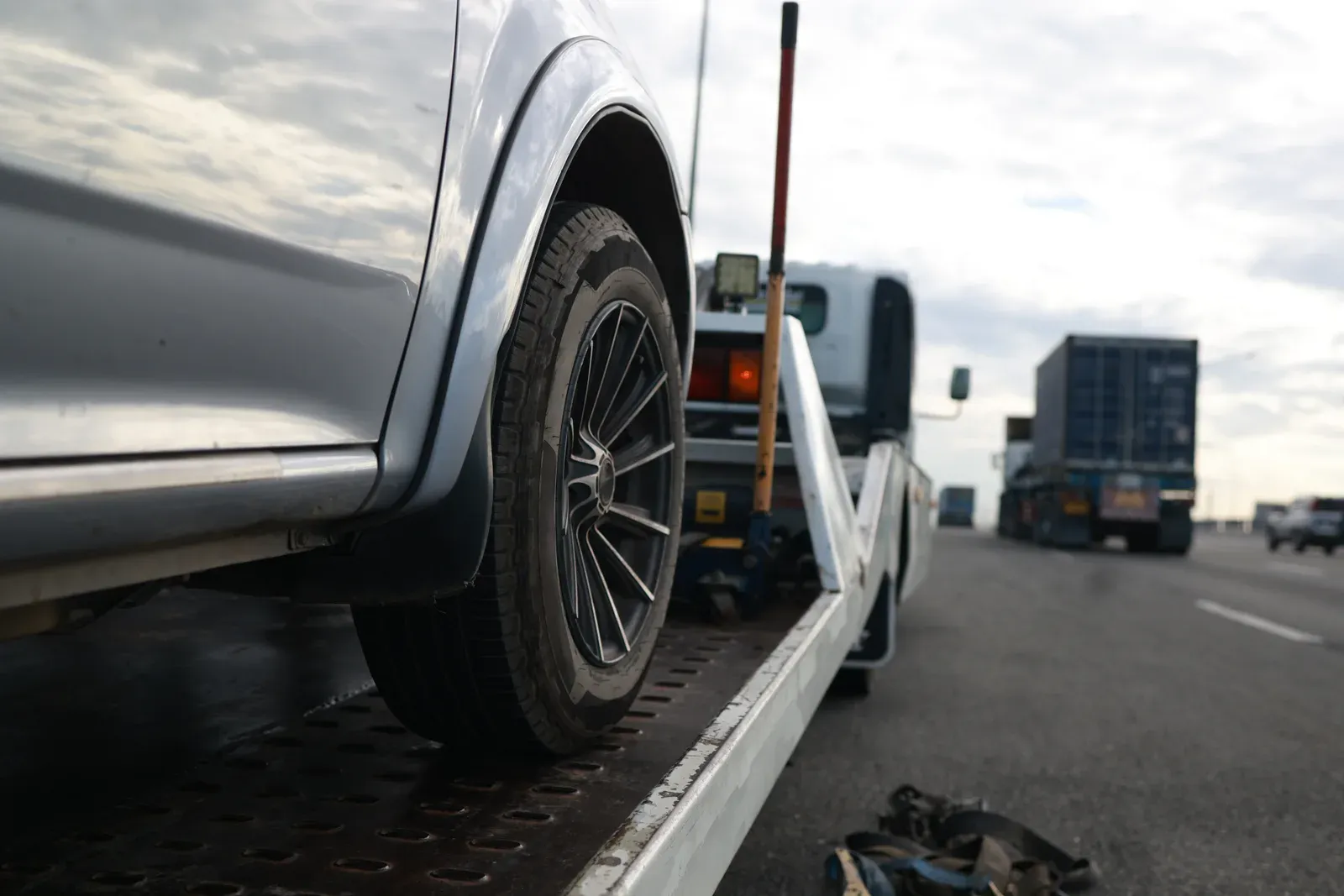
A truck you never called still needs your permission to touch the car
Nobody can tow your car off a collision scene simply because they got there first. Outside a police direction, the operator needs your consent, and you are free to say no and wait for the tow you arranged yourself, through a roadside plan, through your insurance company or through the shop you want the car repaired at.
Drivers on the 401 and the DVP are often surprised by how quickly a truck appears after a bump. Some of those trucks were sent by the province or the police to clear the road. Others heard about the crash and came on their own. The difference matters, so ask the driver plainly who sent them. A truck sent by police to clear live lanes is a different conversation from one that pulled in uninvited and is now asking you to sign.
If you do not want the second kind, say so politely and stay with your car somewhere safe. You do not owe an explanation. If the car can be driven and nothing is dragging or leaking, you may not need a tow at all; a cracked bumper cover is not a reason to accept the first hook offered.
Before the hook goes on, get four answers in writing
The moment to protect yourself is before the car leaves the ground, because after that the operator holds the car and you hold a receipt. Ontario requires tow operators, tow truck drivers and vehicle storage operators to be certified by the province, and a legitimate operator will answer these questions without fuss. Ask them, write the answers on the paperwork or photograph them, and only then authorize the tow.
Pay attention to how the questions are received. An operator who is vague about the yard address or the storage rate is telling you something useful. You can thank them and call someone else, even at the side of Highway 404 at dusk, because the delay of waiting for another truck is usually far smaller than the cost of a car parked in the wrong yard for a week.
- Show me your provincial tow certificate and the company name on the truck.
- What is the rate for this tow, and what extra charges could appear, such as winching or after-hours work?
- Where exactly is the car going, by street address, and what does storage cost per day there?
- Do you or your company have any financial connection to the yard or the shop you are suggesting?
The itemized invoice is the document your insurance company pays from
Every tow should end with an itemized invoice: the operator’s name and certificate details, the pickup and drop-off locations, the distance, and each charge on its own line. A single handwritten total is not enough, and you are entitled to ask for the breakdown. Ontario’s rules also require operators to accept payment by credit card, so a demand for cash only at the roadside is a warning sign in itself.
Keep the invoice with your claim papers and photograph it before you hand anything over. When the collision is covered, the coverage that pays for the damage normally pays a reasonable tow, and the adjuster will want the original breakdown. If you paid out of your own pocket at the roadside, that invoice is how you get reimbursed.
Take a picture of the car on the truck deck as well, with the truck’s name visible. If a bumper is scraped further during loading or a panel gets creased by a strap, that photo separates damage from the crash from damage done in transit.
You decide where the car goes, and the best answer is usually the repair shop
The destination is your decision, not the driver’s. Name the body shop you want to repair the car, give the street address, and the operator takes it there. Your insurance company may point you toward a shop in its network without being able to insist on it, and the tow operator gets no vote whatsoever.
If you have not chosen a shop yet, pick somewhere you can reach during business hours the next day, such as your own driveway if the car can sit there safely. What you want to avoid is a yard you have never heard of in an industrial strip off Highway 7 or past the 427, charging storage while you work out who to call. Every move after the first one is another tow.
If you want the car brought to us at Sheppard and Don Mills, give the operator our address, or call us and we will help arrange the tow. We coordinate the truck; we are not a tow company, so the operator, the invoice and the certificate are theirs, and your rights in this guide apply to them in full.
When police are directing the scene, the order of events changes
Your choice has one real limit. If police are directing traffic at the scene and need the lanes cleared, or the car is being held as part of an investigation, they can have it moved by an operator of their choosing to a place of their choosing. Arguing on a live highway helps nobody. Ask the officer where the car is going and get the operator’s name and the yard address before you leave.
Once the car is off the road and released, the choice comes back to you. The next move, from the yard to the shop you picked, is one you authorize, and the same expectations apply: a certified operator, rates disclosed, an itemized invoice. Let your adjuster know which yard is holding the car the same day you find out, because storage starts counting from the day it arrived.
If you believe an operator broke the rules, keep every document, write down the time and the truck number, and raise it with the province. Mention it to your adjuster too. A complaint is easier to support with paperwork collected at the roadside than with memory a week later.
Questions people ask
Can a tow operator refuse to tell me the price until the car is at the yard?
You should not accept that. Ask for the rate and any likely extra charges before you authorize the tow, and if the operator will not give them, decline and call another certified company. A price you only learn at the yard gate is a price you have no leverage over.
I signed something at the scene without reading it. What did I agree to?
Photograph or ask for a copy of whatever you signed and read it as soon as you can. It is usually an authorization for the tow and sometimes for storage at a named yard. It does not choose your repair shop, and you can still have the car moved to the shop you want, though the first tow and any storage to date will need to be paid.
Does my roadside assistance plan cover a tow after a collision?
Many do, but the distance and the type of tow covered differ by plan. Check your membership or the program that came with the car before accepting a stranger’s truck. If the plan comes through a motor club or the car’s manufacturer, the tow is handled outside your insurance claim; if it is a roadside endorsement on your auto policy, ask your insurance company how it is recorded.
The operator says my insurance company told them to take the car to their yard. Is that true?
Ask for the adjuster’s name and call your insurance company yourself to confirm. Your insurance company may recommend a destination, but the choice of repair shop is still yours. If nobody at the company has given that instruction, you are free to name a different address.