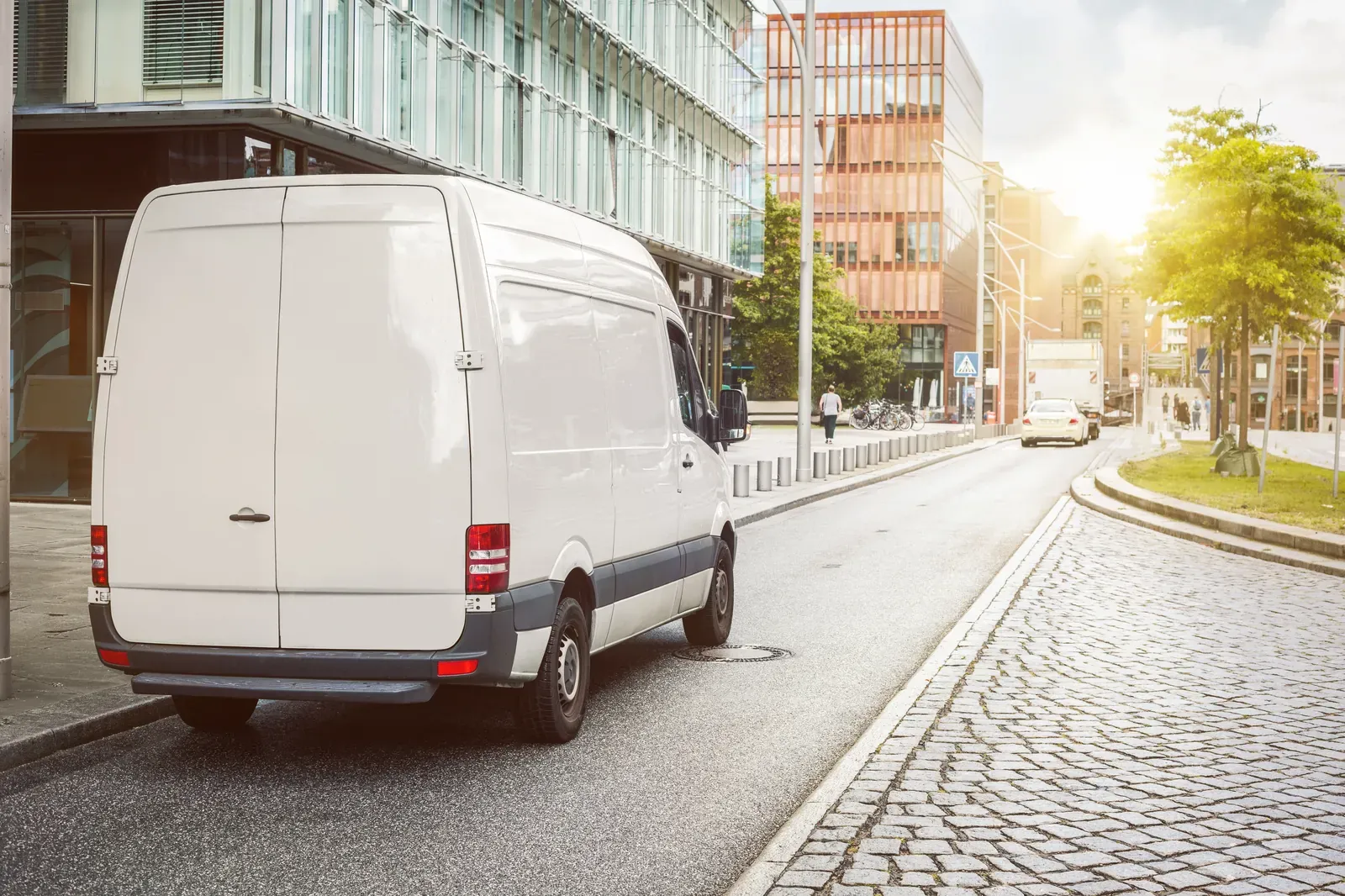
Everything painted on the truck is evidence, so photograph all of it
A commercial vehicle tells you who owns it, if you look. Photograph the door lettering, the company name and phone number on the box, the unit number that fleets paint on the cab or the rear doors, and the plate. On a tractor-trailer, the trailer has its own plate and its own number, so photograph both ends. Then take your own car in position and the road around it.
From the driver, ask for a licence, the vehicle permit and the insurance card. On a company vehicle the permit and the insurance are normally in the business’s name, which is what you want recorded. Ask who the driver’s dispatcher or supervisor is and how to reach them, because drivers change routes and phones and the company stays put.
Three variations change what you collect. A rented moving truck belongs to the rental company, so you want the renter’s licence and insurance and the rental agreement number. A courier delivering in a personal car carries a personal plate and a personal policy. A contractor’s pickup may be registered to an individual even with a logo on the door. Record exactly what the documents say, not what the lettering suggests.
Find the footage before it is recorded over
Many commercial fleets run forward-facing cameras and vehicle tracking, and the company may already hold a clip of the moment of impact. Tell your insurance company that the truck had a camera so it can be requested. If your own car has a dashcam, save the file to your phone before the loop records over it.
Then look around. Storefronts along a plaza, a gas station canopy, a doorbell camera on a residential street: each of these may have caught the truck turning or backing. Walk the block the same day, note which buildings have cameras pointed at the road, and ask. Most people will help, but most systems also overwrite themselves on a schedule.
Anyone hurt means 911 from the roadside and a wait for police. With no injuries, a report at the nearest Collision Reporting Centre, made promptly, is the step when the combined damage on both vehicles looks likely to pass the provincial reporting threshold. A driver who asks you to skip the report because of their job is understandable and still not a reason to skip it.
How the claim works when the other side is a business
Ontario makes the owner of a vehicle liable for the negligence of whoever it lets drive it, so a company cannot shrug off a crash by pointing at its employee. For your own car, though, that matters less than people expect. Under DCPD your own insurance company pays for the vehicle damage for the share you were not at fault, provided the truck is identified and insured by a company licensed in Ontario, or one that has signed the DCPD agreement.
That last condition is where commercial collisions get different. Long-haul trucks registered in Quebec or the United States, and some interprovincial fleets, may not meet it, and then the route changes. Your insurance company confirms which applies once it has the plate and the insurance details, so get those right at the scene.
You may hear from the business or its insurance company directly, sometimes with an offer to pay privately to keep the incident off a fleet record. You can refer any call to your own insurance company. Whatever you decide, notify your own company within the week; the policy expects it whether or not a claim follows. A logo on the door earns the truck no special treatment: the Fault Determination Rules read a commercial collision the same way they read one between two private cars.
A truck’s height puts the damage above your bumper
The bumper beam on a passenger car sits low, and the one on a box truck or high-roof van sits higher. When the two meet, the truck’s bumper or the corner of its cargo box tends to ride over your beam and land on the hood edge, the headlamp, the fender or the door. Those parts are not built to take a hit, so a slow bump from a truck can do more visible damage than a faster one from a sedan.
Backing trucks leave a different mark: a square-cornered push into a door or a quarter panel, sometimes with paint from the truck’s rear step or liftgate transferred into it. Wide right turns produce side damage, where the rear of a long truck tracks inside the corner and squeezes a car in the right lane against the curb, scraping the doors and pushing a wheel.
Behind the visible panels, a high hit can shift the headlamp support, the fender apron or the hinge pillar. That is why the car is measured and taken apart before the estimate is final, and why sensors in the bumper, grille or mirror may need recalibration after parts are replaced.
Vans and box trucks circle the Sheppard and Don Mills block all day
The loading docks behind Fairview Mall, the office parks along Consumers Road and the courier runs through the residential streets off Don Mills put a steady run of commercial traffic past the shop from morning to evening. If yours was hit nearby, or anywhere across the city, you choose where it is repaired, and we deal with the adjuster in English or Mandarin. If your own work vans are the ones that need body repair, the fleet guide linked below covers what changes for work vehicles.
Questions people ask
The driver begged me not to report it because they could lose their job. What should I do?
Be kind and still exchange full details. Reporting duties and notice to your insurance company do not depend on anyone’s employment, and a crash that goes unreported can leave you without the documents a claim needs if the damage grows once the car is taken apart.
The truck had Quebec or US plates. Does that change my claim?
It might. DCPD depends on the other vehicle being insured by a company licensed in Ontario or one that has signed the DCPD agreement. Give your insurance company the plate and the insurance details and let it confirm the route.
A delivery truck’s liftgate came down on my parked car while it was unloading. Is that the same kind of claim?
It is still contact with an identified vehicle, so record the company, the unit number and the driver exactly as you would after a moving collision, and notify your insurance company. Photograph the liftgate and the damage together, since the shape of the dent usually matches the edge that made it.