The first few hours decide how hard this is to undo
Before any cleaning, take the evidence. Photograph the paint or tar along each side of the car, behind each wheel and in the arches, then the stretch of road where it happened if you can safely go back: the fresh lines, the paint truck or paving crew, and whether there were cones, signs or a flag person. Note the street, the direction and the time. Once the car is clean, the claim has nothing to point at.
Then get water on it. A self-serve wash bay is the right tool: hold the wand back from the panel, work the lower doors, rockers and bumper corners from the top down, and let the water do the work rather than the pressure. Soft traffic paint often comes away in sheets at this stage. Keep the car out of direct sun while you do it, because heat sets paint and bakes tar into the clear.
Skip the automatic wash. Brushes drag hardened specks across the panel, and many traffic paints carry tiny glass beads for night reflectivity, which turn a brush into sandpaper.
Line paint, tar and crack sealant each behave differently
Telling them apart matters, because each comes off a different way. Fresh line paint is white or yellow, sprayed in a fan pattern behind each tire, and it dries hard and brittle. Tar and asphalt are brown-black, sticky on a warm day, and land as specks along the rocker and the leading edge of the rear arch. Rubberized crack sealant, the black lines poured into pavement seams in spring and summer, leaves soft strands on tires and inside the wheel wells.
Parking-lot sealcoat is its own case. GTA plazas and driveways get resurfaced with a black coating through the warm months, and a car driven across it before it has cured picks up a fine black mist on the lower panels and a heavy coat on the tires. It cleans up much like tar, only finer.
Run a clean palm lightly over the panel once it is dry. Anything you can still feel as a raised bump is contamination sitting on top of the clear. A smooth stain you can see but not feel has started to work into the finish, and that is the point where cleaning turns into polishing.
What never to put on automotive paint
The products that dissolve road paint quickly also dissolve car paint. A rag of solvent from the garage will take the yellow stripe off in seconds and leave a soft, dull patch where the clear used to be. The safe route is slower: a dedicated bug-and-tar remover tested first on a hidden spot, left to dwell, then wiped with a soft microfibre and no pressure. Embedded specks that remain can come off with a clay bar and lubricant once the panel is clean.
- Gasoline, lacquer thinner, acetone or brake cleaner on any painted panel
- Razor blades, plastic scrapers or a fingernail worked under a dried stripe
- Scouring pads, kitchen cleansers or the green side of a sponge
- Strong solvents on unpainted black trim or rubber door seals, which stain and swell
- Rubbing compound by hand on a panel that still has grit sitting on it
When the job moves from cleaning to polishing to refinishing
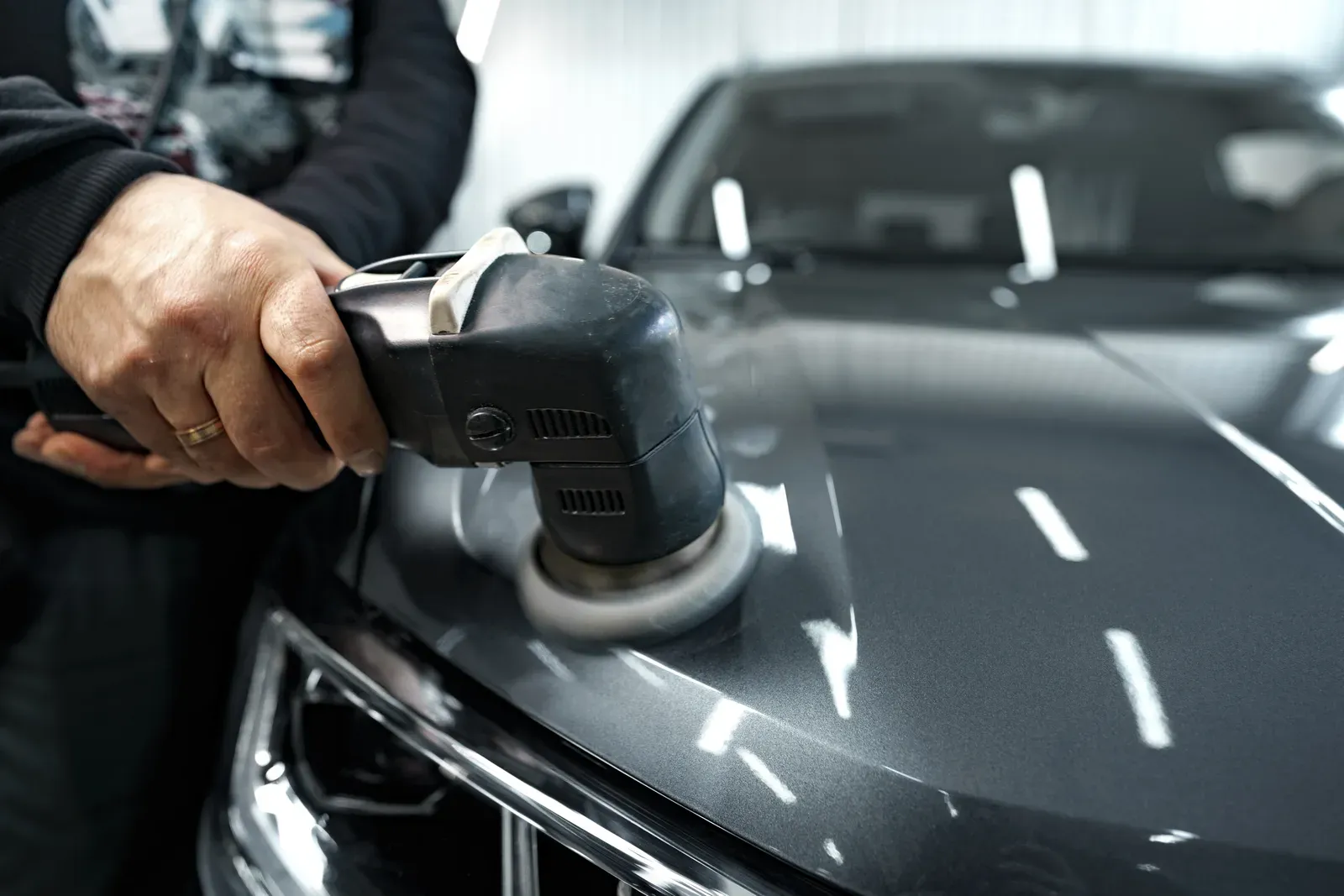
Most splatter caught early ends with a wash, a tar remover and a clay bar. The next step up is machine polishing: when the paint and tar are gone but faint outlines remain, a polisher removes a very thin layer of clear and takes the stain with it. That is careful work on the lower panels, where factory clear can be thinner and edges and body lines cut through easily.
Refinishing comes in when the clear has been softened by solvent, scratched through by scrubbing, or stained deeper than polishing can safely reach. Then the affected lower panels are prepared and resprayed, with colour blended into the panels above so the repair sits below the eye line.
Two other areas need their own answer. Textured unpainted plastic cladding holds paint in its grain and sometimes cannot be cleaned to an even colour, so it is refinished or replaced. Wheels with a machined or matte face need a gentler cleaner than a glossy painted wheel, and paint on the tire tread simply wears off within a few drives.
Claiming the cleanup from the city or the contractor
If fresh lines or new asphalt were laid with no cones, no signs and no flag person, the road authority or the contractor doing the work may be responsible for the cleanup. That depends on which road it was. Streets like Sheppard and Don Mills, and the DVP, belong to the City of Toronto. Regional roads north of Steeles belong to York Region. The 401 and the 404 are provincial. Municipal claims in Ontario carry short written-notice deadlines, so write to the right authority promptly with your photos, the location, the time and a written estimate.
If the zone was signed and coned and the car went through it anyway, expect the claim to be refused. Your own policy may or may not respond depending on its wording and your deductible, so ask your insurance company before assuming either way. A written estimate that lists the cleaning, polishing or refinishing panel by panel is useful whichever route you take.
Questions people ask
Will a regular car wash take dried road paint off?
Rarely, once it has hardened, and a brush wash can make things worse by dragging the specks and their glass beads across the finish. Hand cleaning with a tar remover and a clay bar is slower and much safer for the clear.
How long can tar sit on the paint before it causes damage?
There is no fixed window, because sun, heat and the type of tar all change it. Removed within a day or two, it usually leaves nothing behind. Left through a hot week, it is more likely to stain the clear and need polishing.
The contractor says the signs were up. Is it still worth writing to them?
If your photos show the work zone without proper signs or cones, yes, because the photos are the claim. If they show signs you drove past, a claim is unlikely to succeed, and the money is better spent getting the cleanup done before the contamination sets.