The roads that find Maple bumpers
Start at the rail crossing on Major Mackenzie beside the GO station. The gates come down for a Barrie-line train, a line of cars stops, and the driver at the back arrives a half-second late. The tap is slow, the rear bumper cover cracks at the corner, and the car in front gets a matching scuff. The same thing repeats at the hospital lights at Jane, where a left-turn arrow and an ambulance can stop traffic without warning, and at the 400 ramps on a Wonderland Saturday, where the off-ramp queue reaches back onto the highway and the front bumper meets a trailer hitch.
The other half of Maple bumper work never leaves the neighbourhood. The lip where the interlock driveway meets the road catches a low front cover on the way out. The plaza entrances on Rutherford have curbs placed at exactly bumper height. The third car at the curb is backed into by the household’s own second car. And on the older village streets around the GO station a delivery van reversing into a narrow spot takes a corner off whatever is parked behind it.
One clean crack is a repair; a crack through a sensor hole is a new cover
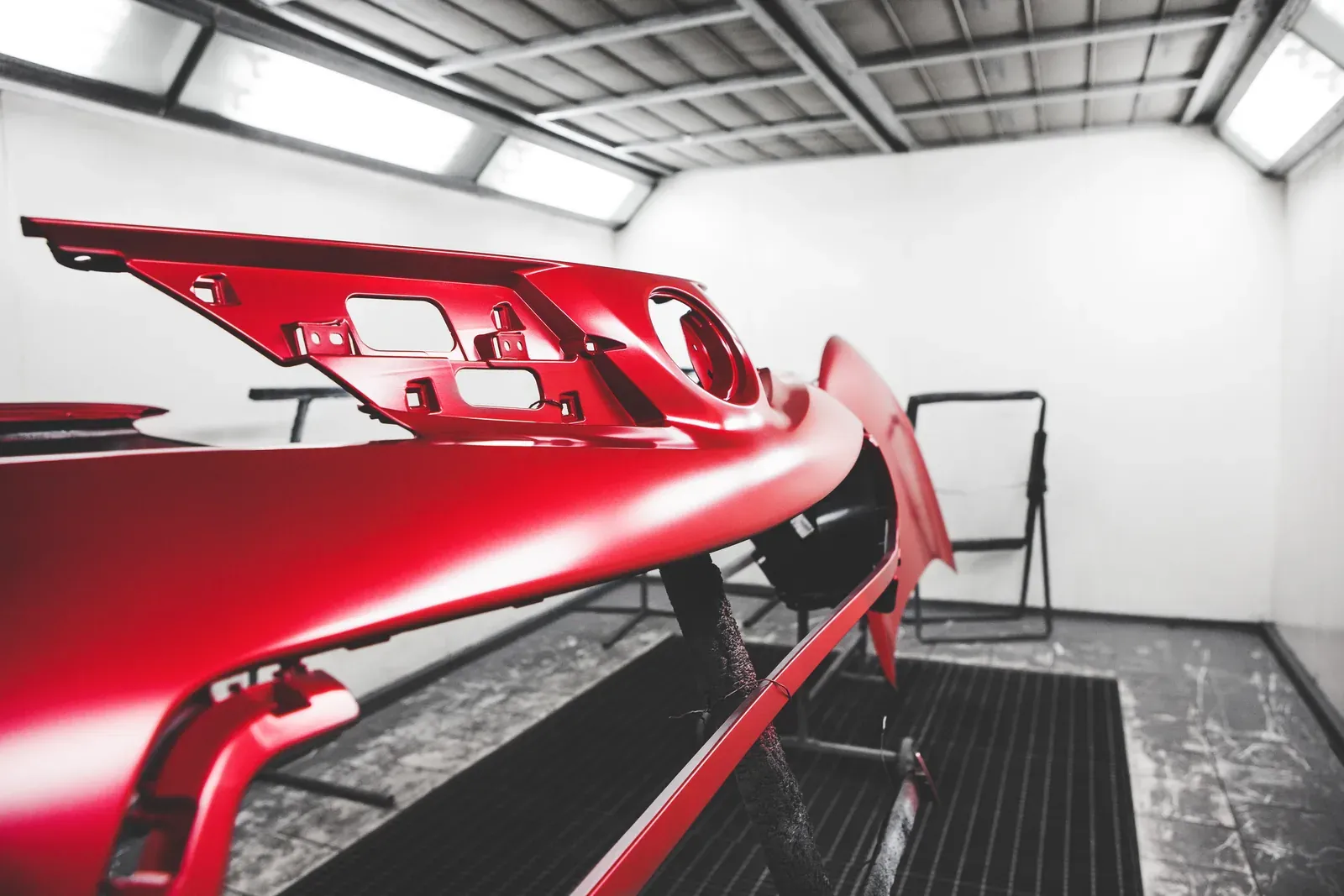
A bumper cover is a flexible plastic skin. Scuffs, scrapes and single clean cracks away from the mounting tabs are repaired: the crack is ground out, reinforced from behind, filled with a flexible material, then primed and refinished with the colour blended so the cover matches the fenders beside it. Torn mounting tabs, a crack through a sensor hole, or a cover that has been split in more than one place tip the decision toward a new cover, because the hours to rebuild it would pass the cost of the part and the result would be weaker.
The cover is the least important part of the bumper. Behind it sit the energy absorber and the steel or aluminum reinforcement bar, and a low-speed hit that barely marked the plastic can have crushed the absorber or bent the bar. Both are checked on every job and replaced where they have done their work, with OEM parts requested because they are part of the car’s crash design. Parking sensors, the rear camera and any radar behind the cover are tested after reassembly, and where the car uses them for driver assistance a recalibration may be required before the systems are trusted again.
- Plastic repair and blended refinish for scuffs and single cracks
- New cover where tabs are torn or the crack runs through a sensor mount
- Absorber and reinforcement bar inspected on every bumper job
- Sensors and cameras tested; recalibration arranged where required
Cold plastic cracks: winter on Teston and Dufferin
Bumper plastic gets brittle below freezing, and Maple’s winters give it plenty of chances. Teston and Dufferin run open between the subdivisions and drift shut in a north-west wind, and a snowbank that looks soft hides a ploughed-up ridge of ice that splits a front cover on contact. The windrow across the driveway mouth does the same at walking speed. A cover that would have flexed and scuffed in July shatters in January, and the fragments are usually still hanging off the car when it reaches us.
Cold changes the repair as well as the damage. A winter bumper job means the car sits in the shop long enough to come up to temperature before the plastic is worked, and paint cures in a heated booth on the same schedule as in summer, so the timeline does not stretch the way people fear. What does stretch is parts: a new cover for a common SUV is usually close by, while one for a less common model can add days, and our estimator tells you which case you are in when the estimate is written.
Questions people ask
The bumper is cracked at the corner but nothing is loose. Can I keep driving?
Usually, for a short time, if the cover is not dragging and no lights or sensors are affected. A cracked cover can catch wind at highway speed on the 400 and tear further, and a bent reinforcement bar behind it means the bumper will not do its job in the next hit. Send photos, get the estimate, and book it before the next cold snap makes the crack longer.
My truck backs a trailer by camera and radar. Does bumper work touch any of that?
It can. Ultrasonic parking sensors usually work as soon as they are refitted in the right position, but the camera and any radar used for trailering, cruise control or emergency braking may require recalibration once the cover has been off. We test everything after reassembly and arrange the calibration where the truck needs it, rather than assuming it is fine.
Is a low-speed tap at the Major Mackenzie crossing worth a claim?
If the other driver hit you, yes: your own insurance company pays under DCPD with no deductible in most policies, and there is no reason to absorb the cost. If you were the one who tapped, the answer depends on whether the estimate is worth your deductible, and a scuffed cover often is not. Our estimator writes the number so you can decide.