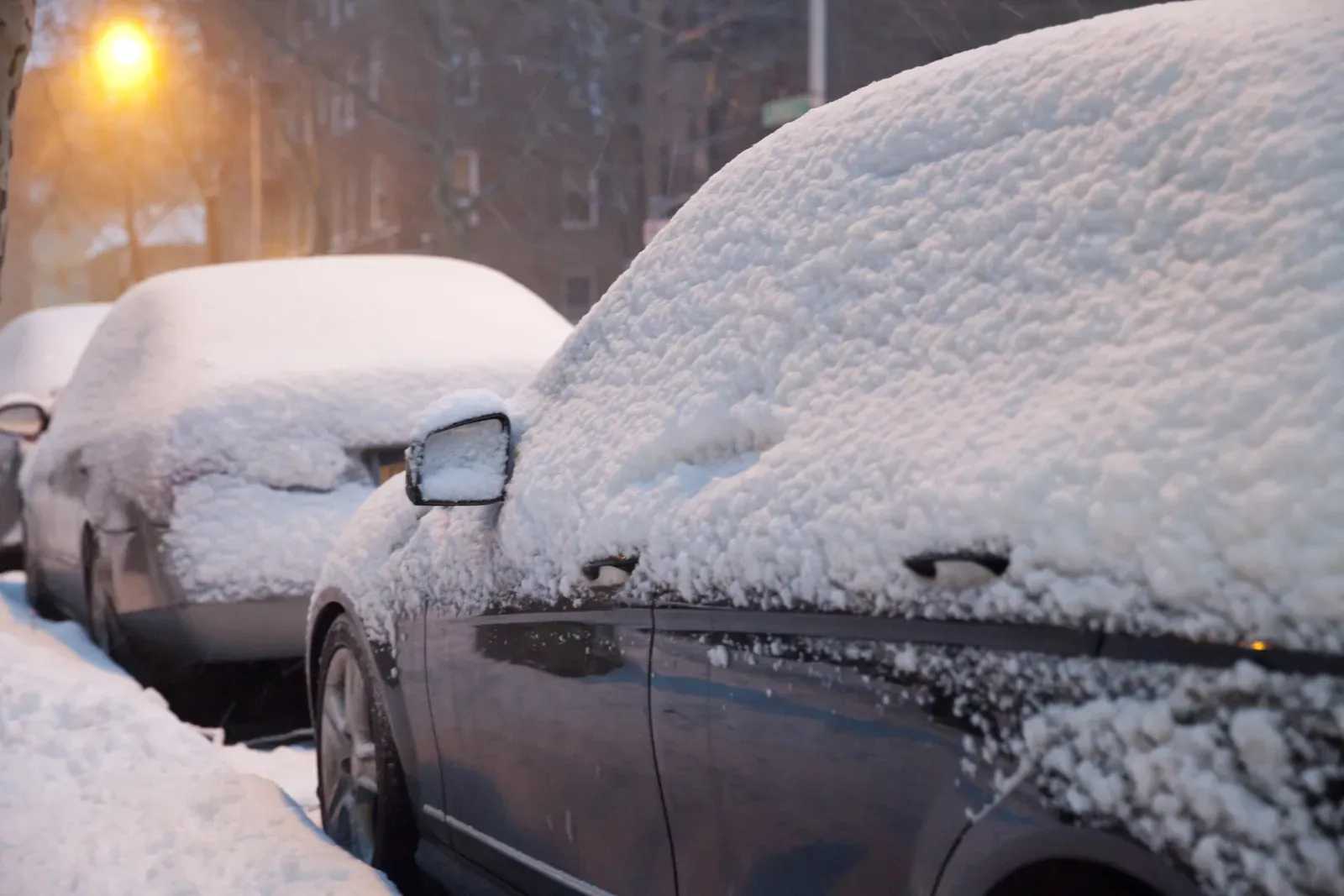
One storm fills the calendar before your car arrives
A body shop’s February is set by the weather more than by anything on the wall planner. One freezing-rain morning on the 401 and the DVP puts a run of damaged cars into every shop between Sheppard and the lake within the same forty-eight hours. Those bookings arrive as a block rather than a trickle, and the block does not vanish when the pavement dries — it works its way through the building for the next two or three weeks.
That is usually the whole explanation when the same damage that got you into a booth in days back in October now comes with a longer wait. The job did not get harder. The line in front of it got longer.
Winter also changes what kind of work walks in. Low-speed slides, windrow scrapes at driveway mouths, mirrors clipped in plowed-narrow lanes, bumper contact in a packed mall lot — all of it looks small on paper and still needs the full cycle of teardown, parts, refinish, reassembly and cleanup. Ten small jobs tie up a booth every bit as thoroughly as three large ones.
Salt has to come off before anyone can read the damage
A car driven through a GTA winter arrives with a white crust packed into every seam. Nobody can pull a bumper cover or judge a crease in a quarter panel until that is washed out properly — under the arches, along the rockers, inside the door shuts. Salt lies to you. It fills the low spot in a dent so the panel reads flatter than it is, and it turns a clean panel edge into something that looks like corrosion, or hides corrosion that is genuinely there.
The wash is an hour on paper and longer in practice, because a vehicle that comes in frozen has to thaw first or the water simply freezes in the cavities it was meant to flush. Panels also need to reach shop temperature before they are measured. Cold steel and warm steel do not sit against a gauge the same way, and sealers and adhesives do not behave the same on either.
This is not a step worth skipping. Sanding or spraying over trapped salt buys you a repair that fails from underneath, usually in the second winter, usually along the edge nobody thinks to check.
Parts travel the same bad roads you do
The estimate is one document; the parts order is the one that drives your calendar. In January and February that order is exposed to everything the season throws at freight.
- Deliveries coming across the 401 corridor sit still whenever a storm closes it, which pushes a shipment by a day or two at a time.
- Backorders stretch when the whole region orders the same bumper cover, headlamp or fender in the same week.
- Hidden damage found at teardown starts a second order — a supplement — and that order joins the queue at the back, not where the first one was.
- A recycled panel, an aftermarket part and the factory part each carry different lead times, and the one that arrives soonest is not always the one that belongs on the car.
Paint needs heat, and heat is not instant
Refinish is chemistry, and chemistry watches the thermometer. A booth holds a set temperature and airflow, and in deep winter it is starting from a bay whose door has been opening onto a cold lot all morning. Bringing the booth, the car and the loose parts up to temperature is real time before the first coat is sprayed.
The cold fights you on the prep side as well. Filler and primer both want a warm, dry surface to sand cleanly, and both behave differently against steel that has been sitting near freezing since the tow truck dropped it off.
Then there is the difference between dry and cured. A panel can be dry to the touch long before the film underneath has hardened enough to sand, polish, or take a badge and a clip without printing a mark. The bake cycle is followed by a rest, and the rest is what keeps the gloss from dying back a month later. Rushing that produces a repair that looks correct under shop lights and disappoints in April.
What actually shortens the wait
Some of the calendar is weather and some of it is paperwork, and the paperwork is the part you can move.
- Send photos the day it happens. The estimate can be written while the car is still in your driveway.
- Approve the parts list quickly. On most afternoons, more cars are waiting on an approval than on a technician.
- Ask for the supplement to be sent the moment it is written, and follow up with your insurance company yourself if it goes quiet.
- If the car is safe to drive, keep driving it until the parts land. A stall occupied by a car waiting on a headlamp helps nobody, least of all you.
- Line the rental up with the drop-off date rather than the estimate date.
What we will tell you, and when
You will get an honest range rather than a promised day, and you will get the reason behind it. If a fender is on backorder somewhere in the Midwest, that is what we say. If the car is in the booth and the cure schedule pushes pickup to the following morning, we say that too, because a car handed over a day early with soft paint is a car coming back.
Our estimator reads the photos, writes the estimate and stays on the claim, so the person telling you about the delay is the person who can do something about it. Ask for the parts status any time — it is a two-minute answer, and it is usually the real story.
Questions people ask
Is a repair done in winter lower quality than one done in summer?
No. Inside the building the conditions are controlled, so a panel refinished in January is sprayed and baked under the same conditions as one done in July. What changes is the clock, not the result — thawing, washing, warming panels and holding a full cure cycle all take time that the summer version of the same job does not need.
Can I just wait until spring to get the damage fixed?
If the paint film is unbroken and the damage is cosmetic, waiting is reasonable. If bare metal is showing, a seam is opened up, or a panel edge is folded, salt gets into the wound every day you drive, and a paint repair quietly becomes a panel replacement by April.
Why does the car have to be washed before the estimate is finished?
Because road salt hides and fakes damage in equal measure. A washed, thawed car lets the damage be measured rather than guessed at, which means fewer surprises at teardown and fewer supplements holding your car in a stall later.
Does the rental stay covered if parts are delayed?
Rental days come out of the coverage you have, and they are usually tied to the repair period your insurance company agrees to. When a backorder pushes the schedule, tell the claim handler early — the days are far easier to extend before they run out than after.