Lexus repairs run on the same Toyota statements, and that strengthens your claim
Your Lexus is covered by the same manufacturer documents as a Toyota. Toyota’s position statement on pre- and post-repair system scanning is written for Toyota, Lexus and Scion vehicles together, and so is its statement on replacement parts. An RX 350 with a pushed-in front cover from a Highway 7 merge therefore gets the same scan at the start, the same scan at the end and the same written reasons for both on the estimate.
The parts statement is the one to know when the estimate comes back. Toyota does not recommend alternative parts for these brands and says genuine parts are built to the same specifications as the ones installed at the factory. It also says the Toyota and Lexus factory warranty does not cover salvage or imitation parts, or neighbouring parts and systems those pieces cause to fail or rust. On a newer NX still inside its warranty, that sentence is a practical reason to care what gets bolted on.
Ontario allows an insurance company to write for like-kind-and-quality parts, and nothing in provincial law requires original ones. You can ask for genuine Lexus parts and pay any difference, and the shop can dispute a substitute that does not measure up. Where the part supports a sensor or manages crash energy, we make that case on your behalf with the manufacturer’s statement attached.
Lexus Safety System+ comes in versions, and the calibration must match yours
Lexus Safety System+ is not one fixed package. It has been sold in several versions across model years and trims, and calibration has to follow the procedure written for the version your car actually has. That is why the first question on a Lexus estimate is which system is fitted, read from the build data behind the vehicle identification number, before anyone talks about aiming anything.
The trade reference kept by I-CAR for Lexus lists which Safety System+ components need calibration and what triggers it. The front camera is tied to windshield work, so an ES 300h that took a stone on the 401 and needed new glass may require its camera recalibrated. The millimetre-wave radar is tied to front bumper and radar-bracket work, so a cover removed to replace a crushed absorber may put radar calibration on the plan. Neither is a certainty on every car; the procedure for the operations performed decides it.
When a calibration needs targets or equipment we do not keep, it is sent to a specialist and the car returns to you finished, with the calibration record in your file. You should not have to arrange that leg of the repair yourself.
An “h” on the badge adds an isolation step before the panel work begins
The Lexus hybrids, the RX 350h, NX 350h and ES 300h among them, share Toyota’s approach to high voltage. The service plug is removed, the technician waits for the capacitor to discharge, and only then does work continue near the orange cabling. On a straightforward bumper or door repair this adds a little time on the first day and a separate line on the estimate.
Mention the hybrid when you send pictures, along with any warning that appeared on the display after the hit. It changes the order in which the car is taken apart, and it is easier to plan from the start than to discover at the bench.
How to tell an invisible Lexus repair from one that only looks fine in a garage
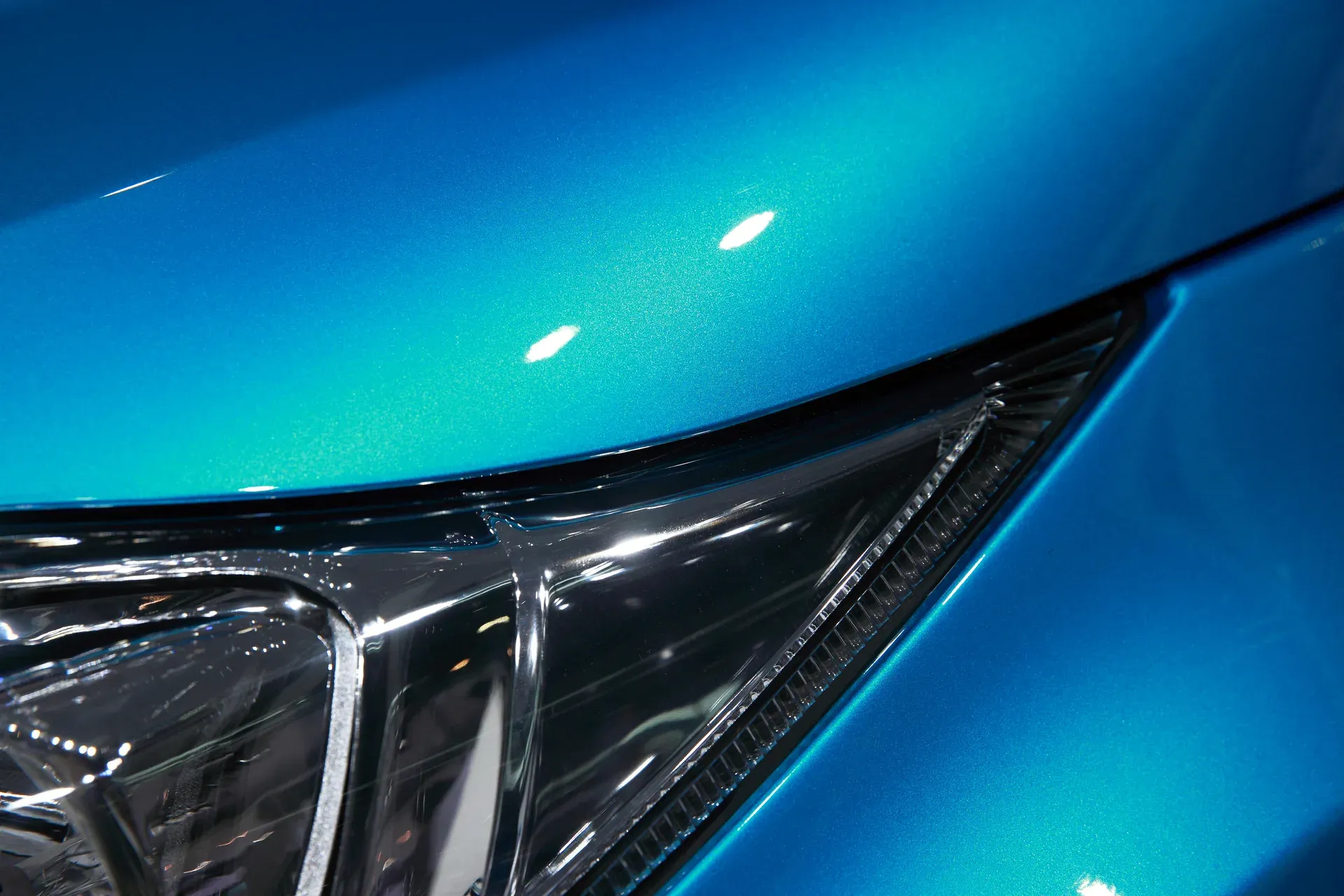
Owners of a luxury finish are right to be fussy, and you do not need a painter’s training to judge the result. Do it outdoors. The fluorescent tubes in a condo parking level or a mall garage flatten reflections and hide the exact flaws you are looking for, so step into daylight, or at least under bright, even light, and walk the car slowly.
Crouch at each corner and look along the side so the panels act like a mirror. A building edge or a lamp post should run across the door and onto the fender as one unbroken line. Then compare texture: factory clear coat has a faint, even ripple, and the repaired panel should carry the same ripple as its untouched neighbour, neither glassier nor coarser.
- Reflected straight lines stay straight where one panel meets the next
- Gloss and ripple on the refinished panel match the factory panel beside it
- No hazy band or dull patch where the blend was faded out
- Hood, fender and headlamp gaps look even from one side to the other
- Rubber seals, badges and chrome strips are free of overspray
- On a replaced door or hood, the jambs and inner edges carry the body colour too
- Adaptive cruise and lane tracing behave normally on the drive home along the 404
- The post-repair scan report and any calibration printout are in your file
Questions people ask
Is a Lexus dealer’s body shop the only place that can follow Lexus procedures?
No. The Toyota-group repair information that covers Lexus is published for the trade, and Ontario lets you choose any shop. Crash Consultant is independent and holds no Lexus authorization; we work from the published procedures for your model.
Why did my insurance company write aftermarket parts on my RX estimate?
Ontario permits estimates written for like-kind-and-quality parts. You can ask for genuine Lexus parts and pay the difference, and on safety-related pieces we argue for genuine parts using Toyota’s statement, which also notes the factory warranty’s exclusion for imitation parts.
How do I find out which Lexus Safety System+ version my car has?
It depends on model year and trim, so the reliable answer comes from the build data tied to your vehicle identification number. We check it before calibration is written onto the estimate, because the procedure differs between versions.
Is it fine to inspect my repaired Lexus in my building’s underground garage?
It is a poor place to judge paint. Overhead tubes hide texture differences and soft blend edges. Look the car over in daylight before you leave, and if anything bothers you later in the sun, bring it back under the paint warranty.