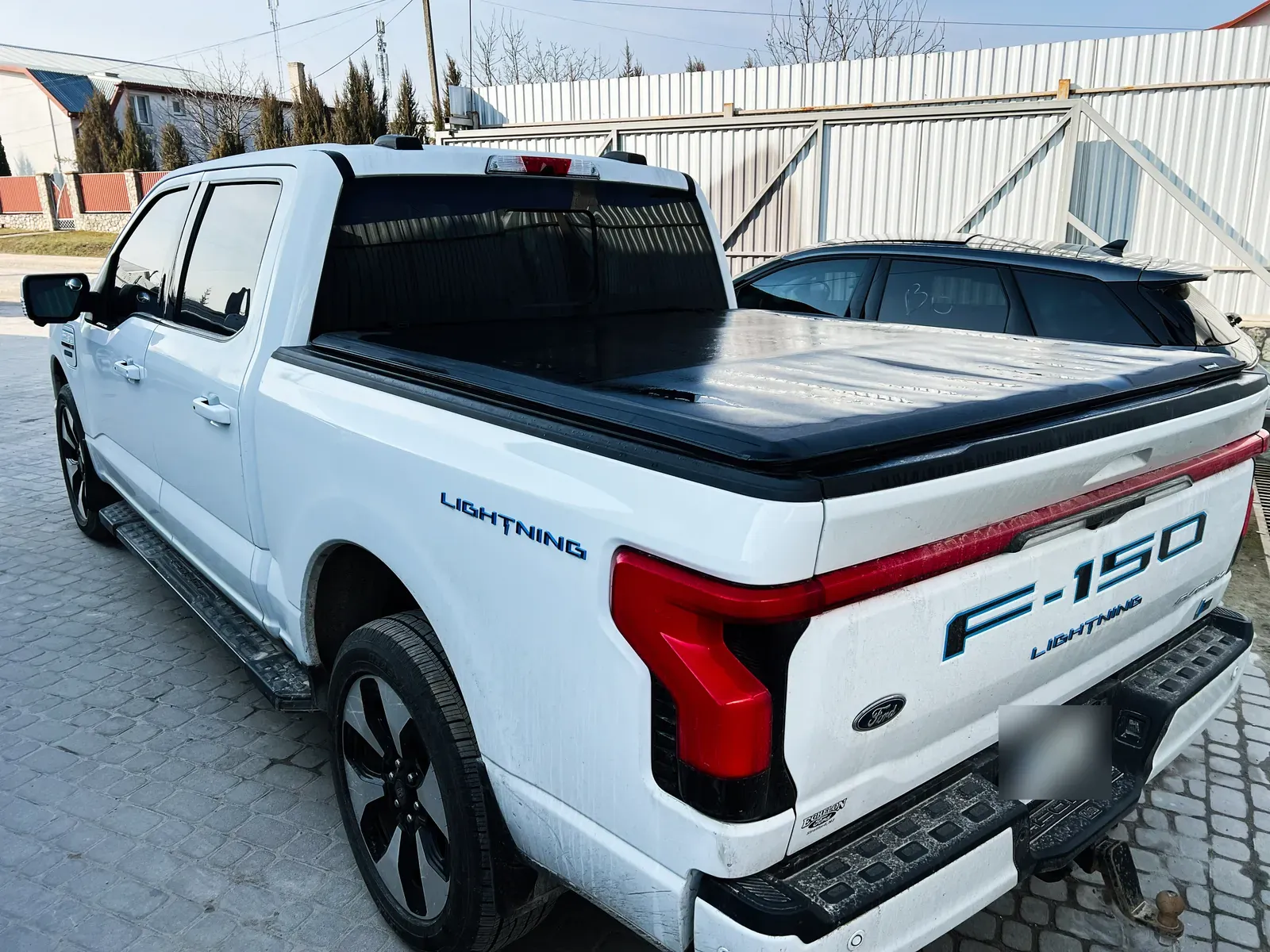
Ford draws a clear line between cosmetic work and aluminum structural repair
Start with what matters most for an F-150 owner deciding where to take the truck: Ford says aluminum structural repairs belong at an Aluminum Structural Certified Collision Center in its own network. Crash Consultant is not in that network and is not Ford-certified, so if the damage reaches the structure of an aluminum-body F-150, the estimate says so and the structural part of the job goes to a shop that holds that certification.
Ford also bans recycled, salvaged, aftermarket and reconditioned parts in those structural repairs. That is a stricter line than Ontario sets. Ontario lets an insurance company price most jobs with non-Ford parts it considers equivalent, so on an F-150 structural repair Ford’s own statement is the paper that answers that choice.
Below the structural line there is plenty of ordinary work: a scuffed bumper fascia, a mirror, a tail lamp, a dented bolt-on panel, refinish and blending. That is the work this page is mostly about, and it still comes with Ford rules attached.
An aluminum F-150 panel is softer than steel and has less memory, which is why it cracks if it is worked twice
From the 2015 model year the F-150 body has been a 6000-series aluminum alloy, bed and tailgate included, which took up to about 700 pounds (roughly 320 kg) off the 2014 truck. The trade-off arrives at the body shop. Aluminum is softer than steel, but it has little memory: push a dent out and it does not spring back toward its pressed shape. Worse, it hardens and turns brittle as it is worked, so repeated pulling or hammering in the same spot can crack it.
When Ford launched the aluminum truck, its repair program asked shops for kit dedicated to aluminum: a pulse MIG welder, a dent-extraction system with a stud welder made for aluminum, wet-mix dust extraction, a self-piercing rivet gun, and a curtain or room that keeps aluminum work apart from steel. That separation matters because steel dust left on aluminum starts corrosion under the paint.
A fair question to put to any shop, ours included, is which of those tools it has and where the aluminum work is done. If the answer does not satisfy you, the panel should go where it does. On a truck that commutes the 401 every day and sits through a salted winter, a poorly separated aluminum repair tends to show itself as bubbling paint the following spring.
A sensor-equipped Ford bumper fascia gets topcoat only, and a cracked one is replaced
This is the Ford rule that surprises owners most. Ford’s position statement on bumper fascias with driver-assistance sensors allows a topcoat-only refinish, with total paint film up to about 12 mils (300 microns). It bans body filler, reinforcement tape, hot staples and plastic welding on those fascias. If the plastic itself is damaged, the answer is a new Ford fascia, not a repair.
On an F-150, Escape or Bronco Sport with radar or parking sensors in the front or rear fascia, that turns a common repair-and-paint into a replacement whenever the substrate is cracked or gouged. Picture the classic GTA damage: a fascia cracked on a frozen windrow at the end of a driveway in February, or split on a concrete bollard in a plaza lot. On a sensor-equipped Ford, those are replacement jobs under Ford’s rules.
Paint thickness is measured, because a fascia that has already been refinished once may be close to the limit before any new paint goes on. On metallic colours the new fascia is painted as a complete part and the adjoining panel is often blended so the colour reads as one piece.
- Scuff with intact plastic: topcoat refinish within Ford’s film-build limit.
- Crack, tear or gouge in the plastic: new Ford fascia.
- Previously refinished fascia: film thickness checked before more paint is added.
- Sensors removed and refitted: scanned, with calibration where Ford’s procedure calls for it.
Ford requires a scan at the estimate and another at the end, on every model
Ford’s scanning position statement covers all Ford vehicles in a collision: a pre-repair diagnostic scan during estimating and a post-repair scan when the work is done. Ford refreshed its ADAS and scanning statements effective October 1, 2025, and the requirement for both scans stands.
That applies to an Escape with a scraped rear corner as much as to a truck with front-end damage. The first scan finds stored faults the dash may not show and feeds the estimate; the final scan confirms the modules are clear before the keys go back. If a calibration is needed after fascia, glass or alignment work, it is listed separately so you and the adjuster can see it.
The F-Series was Canada’s best-selling vehicle again in 2025, for the 16th year running, and the Escape was in the top ten too, so these rules touch a lot of driveways between the 401 and Steeles. On the claim side nothing about a Ford is special: if you are not at fault and the other vehicle is identified and covered by an Ontario-licensed insurance company, DCPD has your own insurance company pay for the damage (unless the policy carries OPCF 49, which removes that coverage), and you pick the shop either way.
Questions people ask
Can you fix the structure of my aluminum F-150?
No. Ford sends aluminum structural repairs to its Aluminum Structural Certified Collision Centers, and we are not one. If the estimate shows the damage reaching the structure, we tell you then, so the truck goes to the right place from the start.
Why won’t a shop plastic-weld the crack in my Escape’s front bumper?
Ford’s fascia statement bans plastic welding, filler, reinforcement tape and hot staples on bumper fascias with driver-assistance sensors. A damaged substrate on those fascias means a new Ford part.
Is aluminum harder to dent than steel?
No, aluminum is softer. The problem is that it does not spring back and it work-hardens, so it can crack if the same area is worked more than once. That is why aluminum dents are worked slowly or the panel is replaced.
Does my Bronco Sport need a scan if only a tail lamp was broken?
Ford’s position is that every Ford in a collision gets a pre-repair and a post-repair scan. A rear hit can store faults in parking-sensor or blind-spot modules even when only the lamp looks damaged.