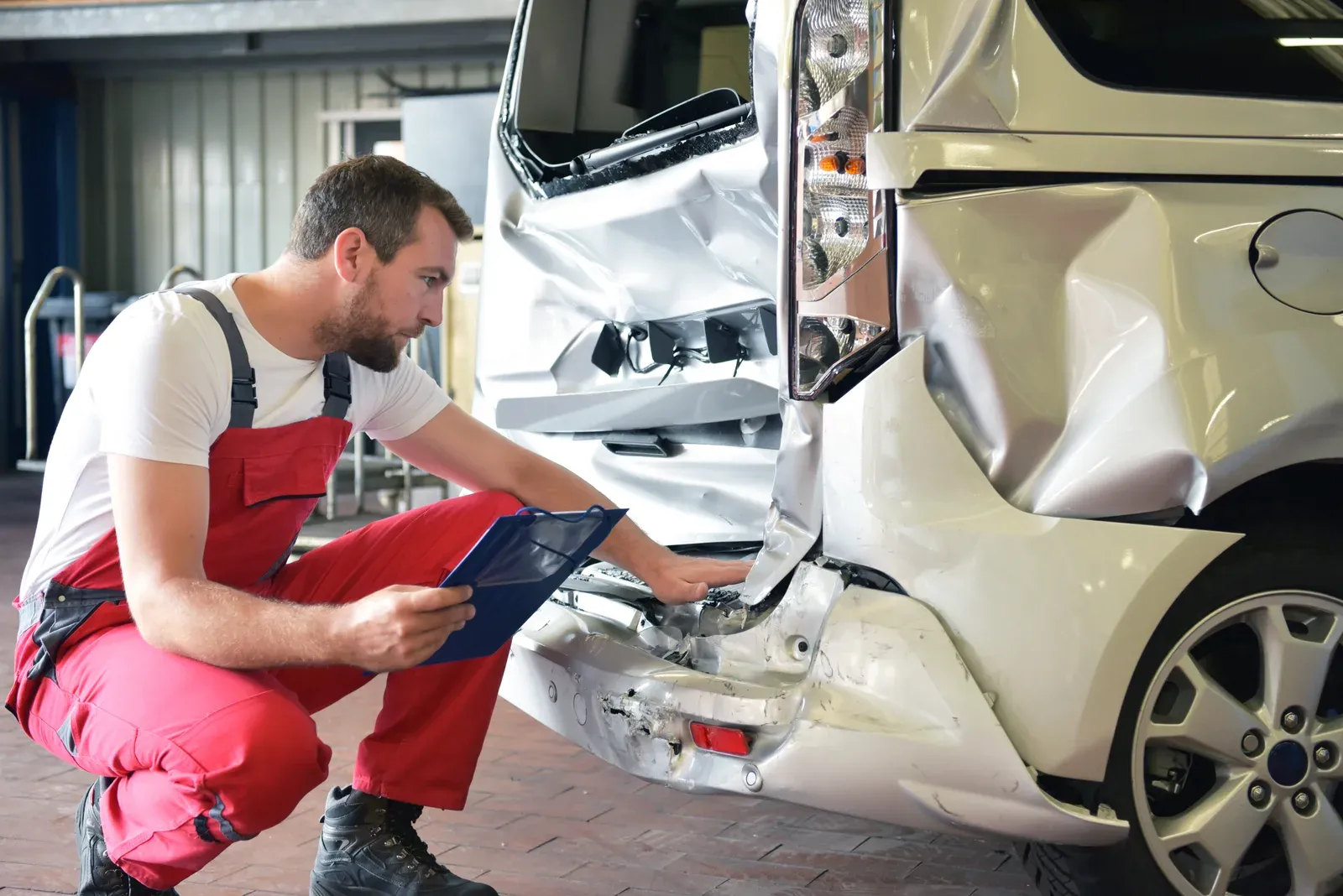
Hyundai moved repair scans from “recommended” to “required”, and that changes your estimate
The short version for a Tucson or Elantra owner: if your estimate has no scan lines on it, ask why. In 2025 Hyundai Motor America rewrote its position statement on diagnostic scanning so that scanning before and after the repair is required after a collision on any vehicle with electronic systems. The earlier statement, from 2018, already told repairers to scan every vehicle, but it framed the scans as a recommendation. The new wording removes the wiggle room.
The reason is practical. A Hyundai can store a trouble code from a crash without lighting anything on the dash. A bumper hit in a Fairview Mall lot can leave a fault in a radar module or a seat-belt pretensioner circuit while the instrument cluster looks perfectly normal. Hyundai’s point is that the pre-repair scan finds those codes before the estimate is finished, so the parts and labour on paper match what the car really needs. The post-repair scan then confirms that nothing was left behind and that nothing new was introduced while panels and connectors were off.
One caution belongs here. The statement was published in the United States and is not an Ontario regulation; nothing in Ontario law obliges an insurance company to fund a particular repair step. What it does give you is a document from the company that built the car, and that is the kind of evidence an adjuster weighs when a scan line is challenged.
A light front-end hit can leave a SmartSense sensor looking somewhere it should not
SmartSense is Hyundai’s name for its driver-assistance package: forward collision-avoidance assist, lane keeping, smart cruise and the blind-spot features, depending on trim. Those systems lean on a forward radar, usually behind the lower grille or the bumper cover, and a camera mounted high on the inside of the windshield glass. Whether a given repair needs a calibration depends on what was touched, so the answer is “sometimes”, never “always”.
The cases that most often lead to one are easy to picture on GTA roads. A rear-end tap in DVP stop-and-go that pushes the front fascia into the radar bracket. A windshield replaced after a stone off a gravel truck on the 404. A bracket bent by a curb in a condo garage. Even a refinish over the radar area matters, because extra paint film in front of a radar can change what it sees. Hyundai’s repair information lists the triggers for each model, and the plan follows that list rather than guessing.
Where Hyundai’s procedure does call for a calibration, it appears as a separate entry on the estimate rather than being folded into the bumper or glass labour. Static calibrations use targets set at measured distances in a level bay; dynamic ones need a road drive at set speeds on roads with clear lane markings, which can be harder to find in a salty Toronto February.
- Bumper cover or grille removed or replaced near the front radar.
- Windshield replacement under the lane-keeping camera.
- Wheel alignment changed after suspension parts were bent.
- Any trouble code the post-repair scan reports for a driver-assistance module.
The Ioniq 5 has a paint-heat ceiling written into Hyundai’s own repair information
Paint on an Ioniq 5 is not cured the way it is on a gasoline Tucson. Hyundai’s repair information sets a limit for heat treatment after painting: no more than 70°C for up to 30 minutes, or no more than 80°C for up to 20 minutes. Longer exposure can reduce the performance of the high-voltage battery. That is a model-specific figure from the manufacturer, and it is the number the booth is set to when an Ioniq 5 is in it.
Welding brings a second rule. Before any welding on an Ioniq 5, best practice is to unplug the 12-volt battery and pull the high-voltage service disconnect as well, using the shut-off sequence laid out in Hyundai’s service information. That isolation is done and recorded before a technician strikes an arc.
The cap has a practical consequence: the cure is planned around a gentler, time-limited heat cycle instead of a full hot bake. Ask at drop-off how the paint on your Ioniq 5 will be cured inside Hyundai’s limit, so the schedule you are given reflects it.
Most Tucson, Elantra and Kona repairs are bolt-on work, but the brackets and scans decide the quality
Most Tucson, Elantra and Kona repairs are ordinary collision work: a bumper cover, a fender, a headlamp, a door skin. The Tucson was one of Canada’s ten best-selling vehicles in 2025, so plenty of them share GTA parking lots and stop-and-go lanes. What separates a careful Hyundai repair from a sloppy one is the bracket work behind those panels and the scans on either side of it.
Parts choice comes into it too. No Ontario rule requires Hyundai parts, so an insurance company may price a line with an aftermarket or recycled piece it considers equivalent. For a cosmetic trim piece that can be reasonable. For a radar bracket, a headlamp that carries a sensor mount or anything structural, we argue for Hyundai parts and give the adjuster the reasons in writing. On any line, you are free to ask for the Hyundai part and cover the price gap yourself.
Crash Consultant is not a Hyundai dealer and holds no Hyundai certification; we are independent, and we work from Hyundai’s published repair information. In Ontario the choice of shop is yours, even if your insurance company recommends one of its own preferred shops.
Questions people ask
My Tucson’s dash looked normal after the bump. Why does Hyundai still want it scanned?
Because Hyundai requires one. Its position statement points out that codes can be stored without any dash light, and the opening scan is how the estimate catches a damaged module before the car is taken apart rather than after.
Can an Ioniq 5 go through a normal bake cycle after a fender is painted?
Not a full hot bake. Hyundai’s repair information caps post-paint heat at 70°C for up to 30 minutes or 80°C for up to 20 minutes to protect the high-voltage battery, so the cure is planned inside that limit.
Does Hyundai’s scan rule bind my insurance company in Ontario?
No. It is a manufacturer position from Hyundai Motor America, not Ontario law. It is still strong support when a scan or calibration line is questioned, because it states what the carmaker expects after a collision.
Will replacing my Elantra’s windshield affect the lane-keeping camera?
It can. The camera is mounted to the glass, so a new windshield may require a camera calibration under Hyundai’s procedure for that model year. Ask whoever replaces the glass whether the calibration is part of the job.