Soul Red Crystal changes colour with the light, and a repair has to change with it
Owners of a red CX-5 or Mazda3 usually notice the problem before we mention it. The colour looks deep and almost wet in direct sun, then drops toward a dark cherry once the car sits in the shade of a parking garage. That shift is the point of the paint. It is also why a door or fender refinished the way a shop would handle a plain red can look fine outside at noon and wrong under the lights of an underground garage.
The finish is built in layers. There is a dark colour coat, a high-brightness aluminum flake layer, then clear on top, and a Mazda spokesperson has described it as more complicated than other paints at its price point. Each layer changes what the next one looks like. A small difference in how thick the flake layer goes on, or how the colour coat is tinted, shows up as a panel that matches from one angle and looks too dark from another.
The paint supplier’s published procedure for the colour is what the painter follows, layer by layer. Treating it as a single-stage or ordinary two-stage red is where most mismatched Soul Red repairs start.
How we approach a Soul Red panel, and what we will not promise
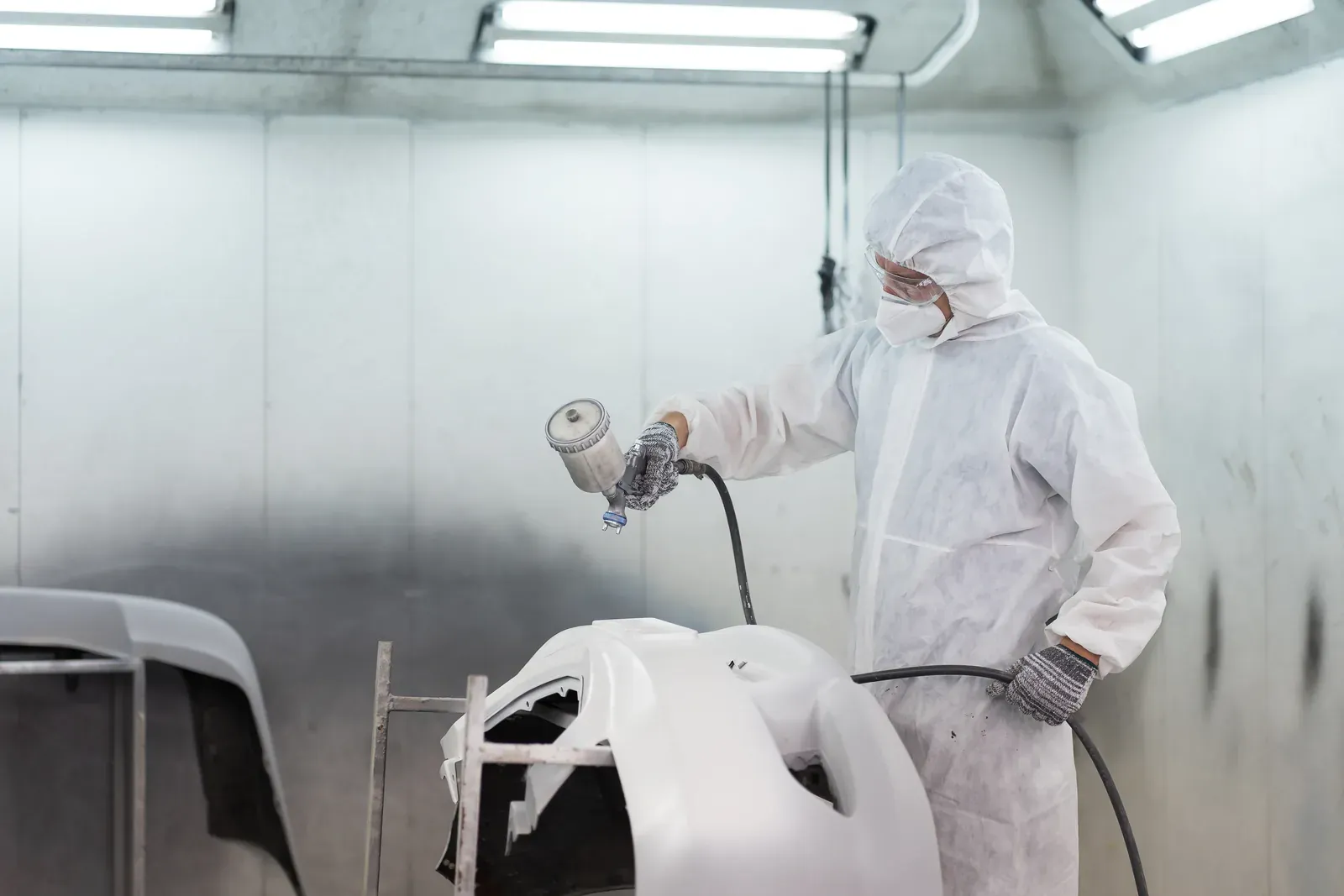
The work on a Soul Red repair is mostly in the preparation before anything is sprayed on your car. The painter makes test panels, called spray-out cards, using the supplier’s layered procedure, then compares them against the car at several angles and under different light: booth lighting, daylight at the door and a shaded corner. If the card reads dark at a low angle, the mix or the layer count gets adjusted and another card is made.
Blending is the usual answer on this colour. The new paint is faded into the next panel so the eye never meets a hard line between old and new. On Soul Red, a front cover is usually refinished whole off the car, and the fender next to it is often blended because plastic takes flake and colour a touch differently from steel, which can read as a step between the two. Expect the estimate to show blend time on panels that were not damaged.
We will not promise a perfect match on Soul Red before the cards are sprayed, and neither should anyone else. What we can promise is the process: the supplier’s layered procedure, test cards checked in more than one light, and blending where it helps. If a card does not convince our painter, it does not go on your car.
Mazda’s scan rule applies even when the dash looks clean
Mazda’s position statement says a pre-repair and a post-repair scan with a genuine Mazda scan tool is essential after any collision, whether or not a warning lamp is on. A 2026 update goes further and calls the two scans required for safety and for the vehicle to work properly. That is the manufacturer setting the minimum, not a shop adding a line to pad an estimate.
On a typical CX-30 that has been tapped at a light on Don Mills Road, the pre-repair scan is what tells us whether a module logged a fault from the impact. The post-repair scan, done after the bumper is refitted and any sensors are reconnected, shows the car is leaving clean. Both reports belong in the claim file with the Mazda statement beside them, so the adjuster can see where each scan line comes from.
i-Activsense uses several kinds of sensor, and many need targets in a large level bay
i-Activsense is Mazda’s umbrella name for its driver-assistance features, and it relies on several different detection devices spread around the car: a forward camera at the windshield, radar units on equipped trims, and parking sensors in the bumper covers. Which of them a repair touches depends on where the damage landed and what was removed to fix it.
Many Mazda models need static calibration of those devices, using targets set at precise distances and heights from the car. That takes a large, level, uncluttered work area and a car set to the right ride height with the correct tire pressures. When a procedure needs targets, floor space or equipment the job cannot get in our bay, the calibration is booked with a facility that has them and kept inside your repair schedule.
Winter adds one practical wrinkle. A car that spent January on the 401 comes in with salt film over its sensor faces and camera area. That gets cleaned before any calibration, and the cover and grille areas around the sensors get the same attention in paint: film thickness over a radar zone is kept within what the procedure allows.
- Forward camera at the top of the windshield: affected by windshield replacement or bracket damage
- Radar units on equipped trims: affected when a cover, bracket or mount near them is removed or replaced
- Ultrasonic parking sensors in the covers: affected by cover repair, refinish and replacement
Questions people ask
Why did my Soul Red fender look perfect at the shop and darker at home?
Probably because it was checked in only one light. This colour shifts more than most between direct sun and shade, so a repair that matches under bright light can drop dark under softer light. Spray-out cards should be checked in several lights and at low angles before the panel is painted.
Does my CX-5 need a scan if the only damage is a scuffed rear bumper?
Mazda’s position is that any collision calls for a scan before and after repair, so yes. A rear cover can carry parking sensors and, on equipped trims, blind-spot radar. The scan confirms whether anything logged a fault and that the car leaves clean.
Is touch-up paint from the dealer enough for a stone chip on Soul Red?
For a small chip it can protect the metal, but it rarely looks invisible. The colour depends on its layers and the flake inside them, which a brush or pen cannot rebuild. Touch-up is a rust-prevention step on this paint; a panel refinish is what restores the look.
Will the insurance company pay to blend panels that were not damaged on my Mazda3?
Often, yes. Blending is a recognised repair operation when a colour needs it, and Soul Red often does. Our estimator lists blend panels with the reason, so the adjuster sees why an undamaged door or fender is on the estimate.