GM wants two scans on every collision job, because a dent can hide a module fault
GM’s position is simple to state: any vehicle assessed for collision repair is scanned for diagnostic trouble codes during the estimate and rescanned after the repair. The first scan finds what the crash stored. The second confirms the faults were fixed and that the repair did not add new ones.
GM backs that with a broader warning. It says even minor body damage, or a glass replacement, can damage safety systems, and that many sensors and control units need a calibration or a learn procedure when they are replaced. For an Equinox with a pushed-in rear bumper after a slow reverse into a post at a Don Mills plaza, that can mean parking-sensor and rear-camera checks the owner never thought to ask about.
In 2026 GM refreshed a group of its collision position statements, including an updated statement on ADAS considerations. The detail differs by model and system, so the procedure for the exact vehicle and year is what decides whether a calibration is needed. We do not assume one, and we do not skip one the procedure calls for.
GM’s 2026 parts wording is “strictly prohibited”, and that is a stronger line than Ontario draws
On March 9, 2026 GM issued an aftermarket-parts statement, then revised it in mid-2026 to say that salvage, recycled, used and non-genuine GM parts are “strictly prohibited” in collision, structural and system-dependent repairs. The wording leaves no room for interpretation.
Ontario has not changed its rules to match. An insurance company here may still price a GM repair with aftermarket or recycled parts it judges equivalent, and GM’s statement, published through GM’s US parts site, is a manufacturer position rather than Canadian law. What it changes is the conversation. When a recycled reinforcement bar or a copy headlamp with a sensor mount shows up on a Silverado estimate, the shop can quote GM’s own wording back to the adjuster.
Warranty adds weight. GM says damage caused by non-GM parts, whether aftermarket, salvage, recycled or reconditioned, is not covered by the GM New Vehicle Limited Warranty. On a truck or SUV still inside that coverage, that exclusion is worth weighing before accepting a non-genuine part on a system-dependent line.
- Structural sections and reinforcements: genuine GM, per GM’s statement.
- Parts that carry or aim a sensor, such as headlamps and radar brackets: genuine GM.
- Purely cosmetic trim: the line where a like-kind-and-quality part is more often accepted.
- Any line you want changed to genuine GM: you can request it and pay the difference.
The Silverado mixes aluminum closures with a high-strength steel cab
From the 2019 model year, the Chevrolet Silverado’s doors, hood and tailgate are aluminum, inner and outer panels alike, while the cab uses advanced high-strength steel. GM calls this a mixed-materials approach. For repair, it means one truck can need two different sets of rules.
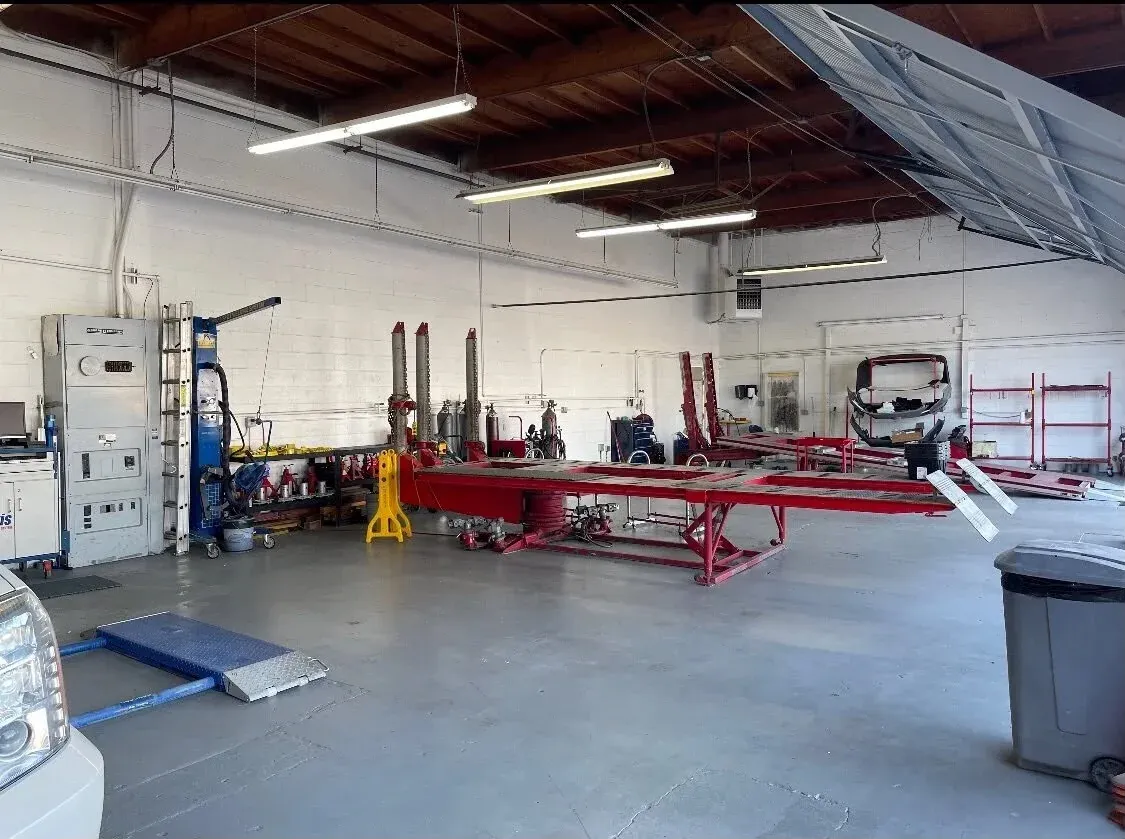
The aluminum closures behave like any aluminum panel: softer than steel, little spring-back, and prone to cracking if the same area is worked twice, so dents are worked slowly or the panel is replaced. The high-strength steel in the cab is the opposite problem. Some of those grades do not tolerate heat or straightening, and the GM procedure decides whether a section is repaired, sectioned or replaced whole. That is why a cab hit on a Silverado is measured on a bench like the one in the photo before anyone talks about the repair.
We are careful not to stretch those facts to other GM trucks. The material mix described here is the 2019-and-later Silverado; for a Sierra, the build is checked in GM’s repair information for that model and year rather than assumed from its Chevrolet cousin.
Silverado and Sierra fill GTA driveways, so these rules come up every winter
The Silverado and the GMC Sierra were both among Canada’s five best-selling vehicles in 2025. Between contractor trucks on the 404 and family pickups in Markham and Scarborough driveways, a good share of GM collision work is truck work, and a good share of it arrives in winter: tailgates backed into snowbanks, fender flares cracked on windrows, doors creased by a slide on black ice at a parking-lot exit.
An Ontario claim on a GM vehicle runs the same as any other. The shop is your decision, even when your insurance company suggests one of its own. When you are not at fault and the other driver is known and insured by a company licensed in Ontario, DCPD sends the damage claim to your own insurance company. The GM-specific part is making sure the estimate carries both scans, the right part types and any calibration GM’s procedure requires.
Crash Consultant has no GM certification or factory approval. We work from GM’s published procedures and position statements, and we show you where each estimate entry follows them.
Questions people ask
Does GM’s ban on salvage parts mean my insurance company has to pay for genuine GM?
Not automatically. GM’s statement is a manufacturer position, not Ontario law, and insurance companies here may still price equivalent non-GM parts. It does give the shop a strong, written reason to ask for genuine GM on structural and system-dependent lines.
Will an aftermarket part void my Silverado’s warranty?
GM says damage caused by non-GM parts is not covered by its New Vehicle Limited Warranty. That exclusion covers the damage the part causes; for anything wider, the warranty booklet and GM itself are the authority.
Which panels on my 2021 Silverado are aluminum?
On 2019 and later Silverados, the doors, hood and tailgate are aluminum, inside and out. The cab is advanced high-strength steel. A fridge magnet will confirm which is which on your own truck.
My Equinox only had a windshield replaced. Why is a scan on the invoice?
GM says glass replacement alone can affect safety systems, and the forward camera on many GM models mounts to the windshield. The scan, and a camera calibration where the procedure calls for one, confirms the system is working.