Bolts hold a fender on; spot welds make a quarter part of the body
Walk around any sedan or crossover and the difference shows up at the seams. The front fender ends at a gap beside the door, and under the hood you can see the row of bolts along its top edge. Remove those, a couple more inside the wheel opening and behind the bumper, and the fender lifts away. A new one goes on, gets aligned to the door and hood gaps, and is painted.
The rear quarter panel has no such gap at the roof. Its outer skin flows up into the C-pillar and the roof rail, down into the rocker below the rear door, and back to the tail panel under the trunk or liftgate. At the factory it was spot-welded and bonded to the inner wheelhouse, the door opening and the trunk floor edge. It is a structural skin, not a cover, and it carries part of the load that keeps the rear door opening square.
That one difference sets everything else in motion. A fender can be replaced without disturbing anything the factory sealed, while a quarter cannot come off without opening the body itself. The hours, the parts list, the paint area and the risk of doing it badly all grow from there.
Cutting out a quarter is a structural repair with a long list of steps
When a quarter panel has to be replaced, the work follows the manufacturer’s body repair manual, which shows where the panel may be cut and how it must be joined. On many cars the procedure calls for a partial replacement, called sectioning, at a specified line on the pillar or the rocker rather than removing the whole skin.
Before any cutting, the inside of the car is stripped back: rear seat, trunk trim, sometimes the headliner edge, the rear lamp, the bumper cover, and on many models the fixed quarter glass or rear window. The factory spot welds are drilled out one by one, the old skin comes off, and the new section is fitted and checked against the door and trunk gaps. It is joined with the welds, rivets or adhesive the procedure specifies, and every joint is then seam-sealed so water cannot track along it.
The step owners never see is inside the cavity. The factory coated the inner surfaces against corrosion, and drilling and welding burn that protection off. A proper repair restores it with weld-through primer during the joining and cavity wax afterward, sprayed into the closed sections with a wand.
- Interior trim, lamps and bumper cover removed, often the glass too.
- Factory spot welds drilled out and the damaged skin or section removed.
- New panel fitted and measured to the door, roof and trunk openings.
- Joined to the manufacturer’s method, then seam sealer laid along every joint.
- Cavity wax inside the closed sections, then primer, colour and clear.
In a Toronto winter, the hidden seams are where a bad quarter replacement shows up
The reason all that sealing matters is salt. A quarter panel sits directly behind the rear wheel, which throws brine from Steeles and the 401 onto the inner wheelhouse every time the roads are wet from November to April. A factory seam is sealed and coated. A replacement seam that missed the cavity wax, or a bead of sealer that was skimped, gives that brine a path into bare metal on the inside of the panel.
It does not show for a winter or two. Then rust bubbles appear along the wheel arch lip or at the bottom of the quarter near the rocker, coming from the inside out. That pattern on a car with an older collision repair is often the first sign the quarter was replaced in a hurry. The rust repair page covers what happens then.
That is why a shop will often repair a quarter rather than cut it out
Given the choice, a quarter panel with a repairable dent is better repaired than replaced. Repairing keeps every factory weld, every factory seam and the original corrosion coating inside the cavity untouched. The metal is pulled and worked back to shape from outside, often with stud welding or glue pulling where there is no access from behind, then refinished and blended into the rear door and sometimes the roof edge.
Replacement wins when the metal is torn, creased tight into a body line, or stretched so far it will not hold its shape, and when the inner structure behind it has moved. That call is made at teardown, sometimes only once the bumper and trim are off, and the estimate may change as a result. The cost and time difference between the two routes is large, which is why an insurance company’s appraiser and the shop sometimes discuss it at length.
A front fender rarely raises that debate. If it is badly damaged it is simply replaced, because new bolts and a new panel cost less than hours of metalwork. Ask our estimator which way your quarter is heading, and why, before the work starts.
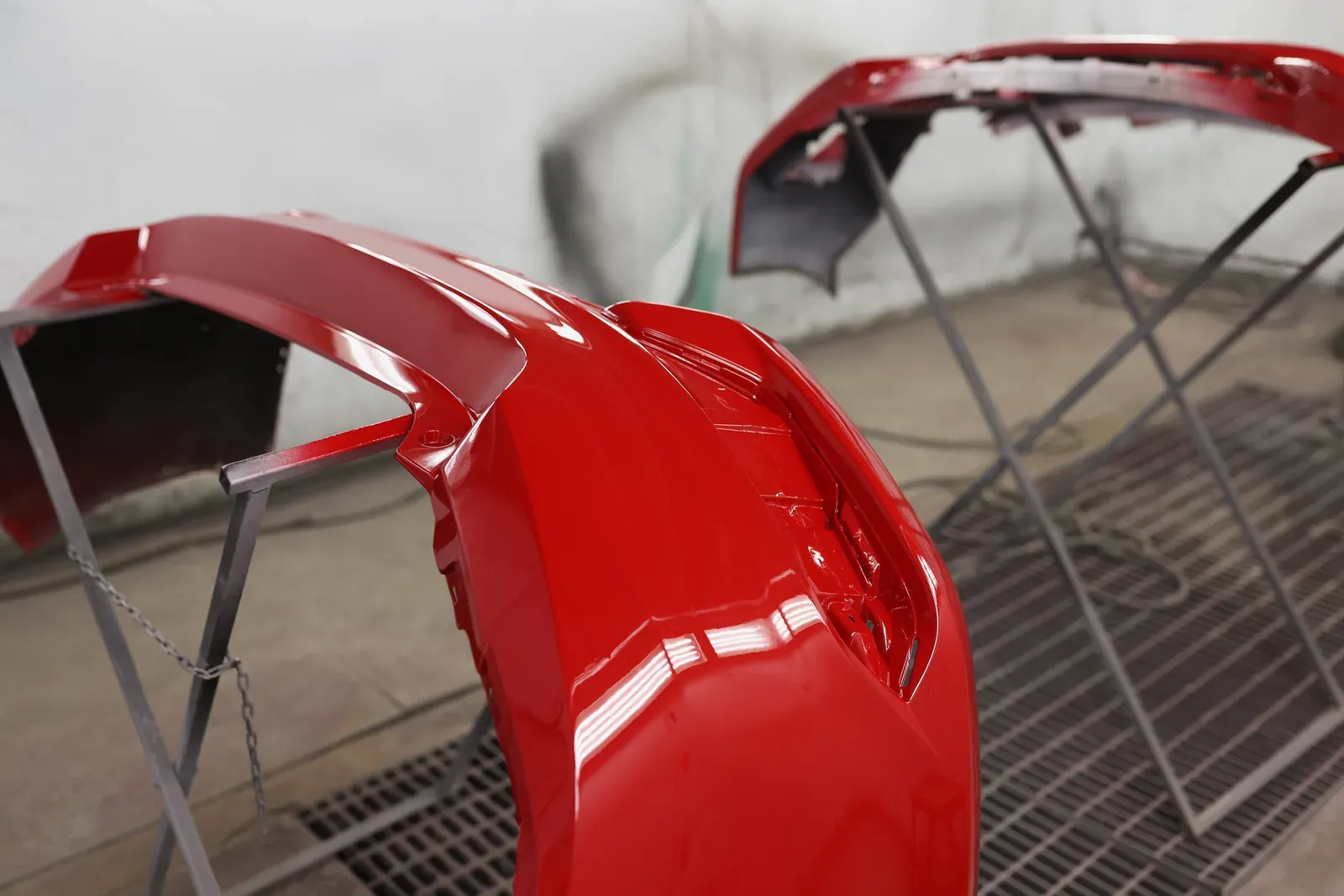
The rear bumper cover adds a wrinkle on many cars. It tucks under the lower edge of the quarter, so even a repaired quarter often means the cover comes off for access and goes back on with new clips, a line owners sometimes question on the estimate.
Questions people ask
Will a replaced quarter panel show up on a vehicle history report?
A history report records claims and reported damage, not which panels were replaced. A buyer’s inspector may spot non-factory seam sealer or weld marks inside the trunk, which is one more reason the seams should be finished to look like factory work.
Why does my quarter panel estimate include painting the roof edge?
The quarter flows into the roof pillar without a gap, so there is no natural edge to stop the paint. The colour is blended into the neighbouring surfaces so the eye cannot find where new meets old.
Is a quarter panel replacement a structural repair on my car’s record?
It involves cutting and welding the body, so it is treated with the same care as structural work, and the shop should keep photos and any measurements. Whether it affects resale depends far more on the quality of the repair than on the line on the estimate.