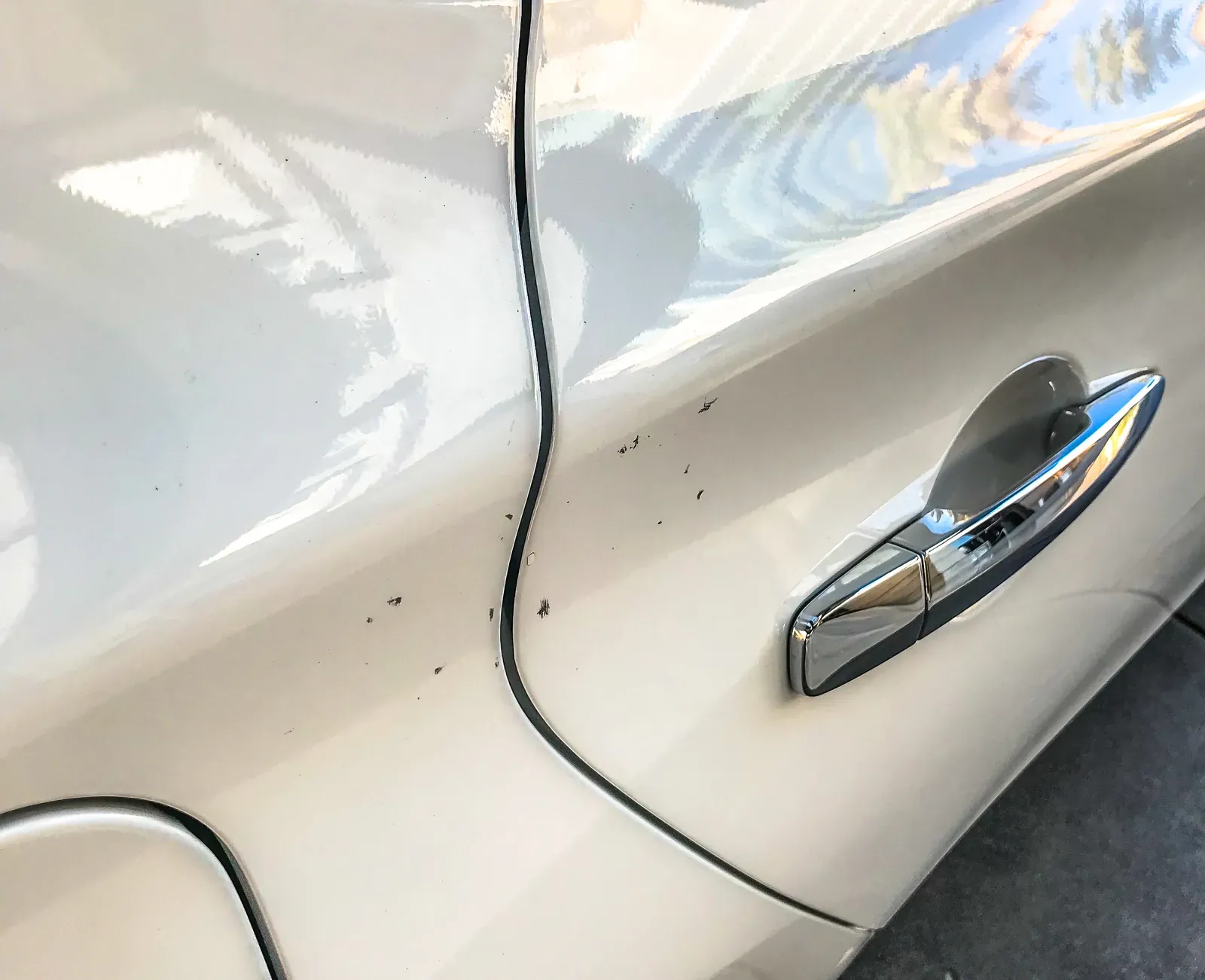
Most small dents are not worth a claim, but check three things first
For most small dents the honest answer is no. A single door ding or a shallow dent in a fender is usually repaired without paint, and the cost of that work often lands close to a typical collision deductible. When the repair costs less than the deductible, there is nothing for the insurance company to pay and a claim only adds a note to your file. When it costs a little more, you are paying most of it anyway and taking on a claim for the remainder.
Before you decide, gather three pieces of information. The actual repair cost, which comes from a written estimate rather than a guess. The deductible on your policy, which is on the declarations page or in your insurance company’s app. And whether anyone else was involved, because that decides which coverage applies and how the claim is recorded. With those three answers in hand, the decision usually makes itself.
Send us three photos of the dent and our estimator writes the estimate the same business day. There is no charge and no commitment. A good number of drivers ask for the estimate purely to make this call, and that is a perfectly good reason to ask.
Your deductible sets the floor
Start with the deductible because everything else sits on top of it. Collision coverage pays for damage you caused, minus the deductible. Comprehensive coverage handles things like a runaway shopping cart or a falling branch, minus its own deductible, which many drivers set lower. A dent from another vehicle while yours was parked — even one nobody witnessed — is vehicle contact, which sits under collision coverage, not comprehensive.
Set the estimate against that number without rounding in your own favour. A dent that needs paint costs more than one that does not, and a dent on a body line or an aluminum hood costs more again. On the other hand, a paintless repair on a steel door is among the least expensive jobs a body shop does. The page on paying out of pocket versus going through insurance covers the general trade-off; here the point is that a small dent very often falls below the line where a claim makes sense.
If the estimate comes back well above your deductible, the picture changes. That usually means the dent is deeper than it looked, the panel needs refinishing, or a second panel is involved. At that point a claim may be reasonable, and the questions about fault become the deciding ones.
At-fault and not-at-fault claims are recorded differently
How the dent happened matters as much as what it costs. An at-fault claim, however small, is something your insurance company can weigh at renewal, and it stays on your record for years. Backing into a pillar in the Fairview Mall garage counts. A not-at-fault claim under DCPD, where another driver hit you and your own insurance company pays for the damage, is recorded as not-at-fault and treated very differently. The page on whether a claim raises your rates goes into how each one is weighed.
So if someone else dented your car and you have their information, the answer flips. You are not spending your own claim history to fix damage you did not cause. You still pay whatever deductible applies to your DCPD coverage, and on many policies that deductible is zero. Check yours rather than assuming.
The awkward case is the unknown driver: a dent in a lot with no note and no witness. Reported properly, that is usually handled as not-at-fault, but the deductible and the paperwork are real, and a small dent may still not justify the effort. The page on hit-and-run claims in Ontario walks through what reporting looks like.
- At fault, repair below the deductible: pay for the repair yourself.
- At fault, repair slightly above the deductible: usually still pay yourself, because the claim costs more over time than it returns.
- Not at fault, other driver identified: claim under DCPD; your record shows not-at-fault.
- Unknown driver: report it, then decide once you know the deductible that applies.
What happens when you decide to pay yourself
Nothing changes on our side. Our estimator writes the same estimate whether an insurance company or you is paying, and the repair is the same repair. If the dent is a candidate for paintless dent removal we do it that way and the factory finish stays untouched. If it needs paint we say so and explain why, rather than pushing a cheaper method that will not last.
You can take the estimate to your own insurance company and ask how a claim would be treated. Asking is not filing. Some drivers are surprised to learn that a question can be logged as an inquiry, so ask plainly whether it will be before you give details. Then book the repair, drop the car at Sheppard and Don Mills, and the dent is gone, often the same day if it is paintless.
One last consideration is time. A paintless repair is often done while you wait. A painted repair takes a few days for prep, paint and cure. If a claim would have covered a rental and you decide against filing, plan the drop-off for a day you can manage without the car.
Questions people ask
Will asking my insurance company about the repair count as a claim?
Asking a question is not filing a claim, but some insurance companies log inquiries. Say up front that you are only asking how a claim would be handled and confirm nothing is being opened. If you would rather keep it entirely separate, get the estimate from us first and decide without calling.
Does a small dent from a parking lot count as at-fault?
If you backed into something stationary, yes, it is an at-fault collision claim. If another driver hit your parked car and can be identified, it is their fault and your DCPD coverage responds as not-at-fault. If nobody knows who did it, the damage is vehicle contact all the same, so it runs under your own collision coverage, rated not-at-fault once it is properly reported.
Can I fix a small dent now and claim it later if I change my mind?
Not realistically. Once the dent is repaired there is nothing for an adjuster to inspect, and a claim needs the damage documented. If you are unsure, send the photos to us, keep them, and decide before the work is done.
How small is “small”?
Roughly, a dent you can cover with your palm on a flat or gently curved panel, with the paint unbroken. Anything on a sharp body line, an edge, or with the paint cracked usually needs paint, which moves it out of the small category regardless of size.