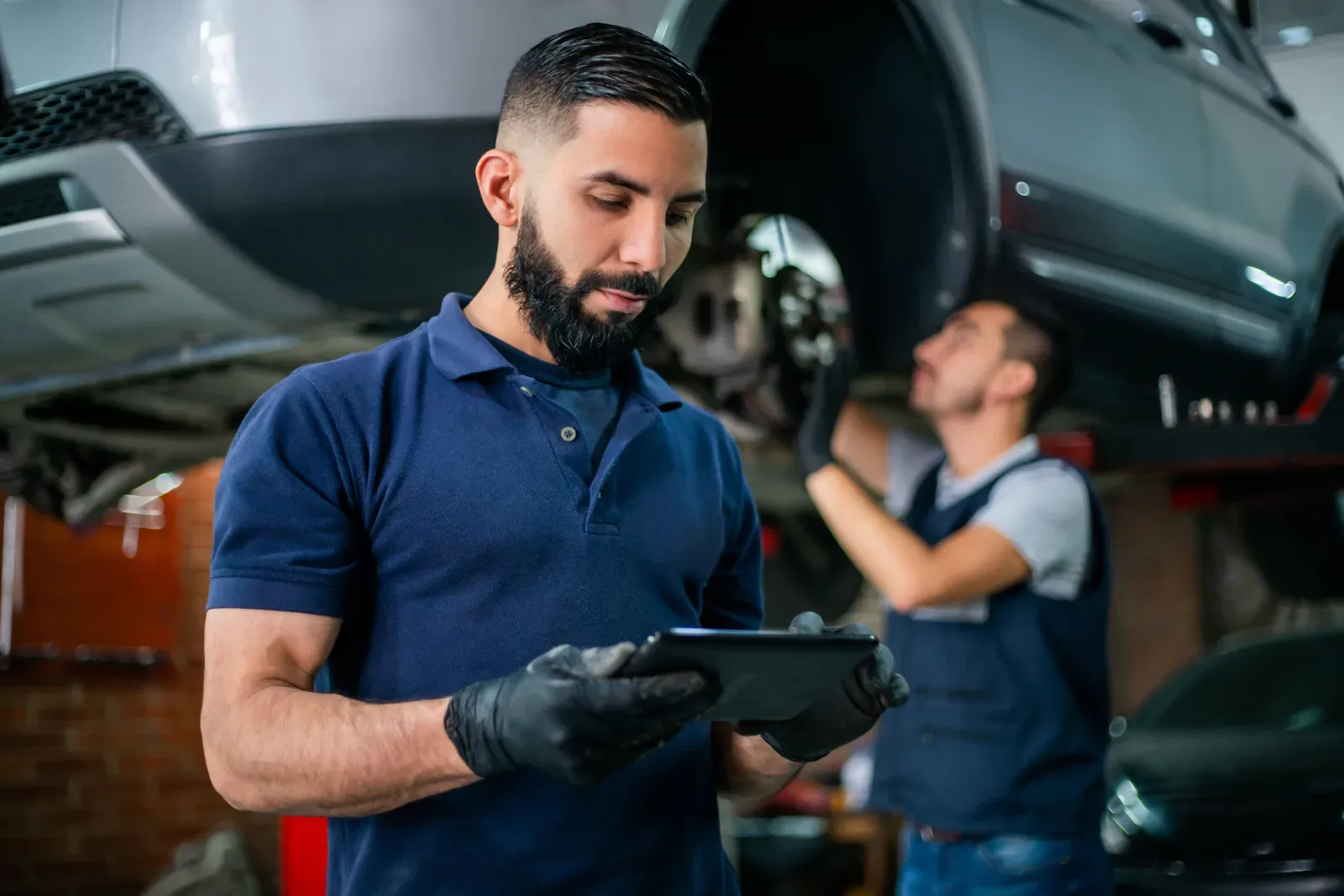
Ask at drop-off, in writing, and the parts get set aside for you
The simplest way to keep your old parts is to say so before anything comes off the car. Write it on the repair authorization or ask the estimator to note it on the work order: “customer wants replaced parts returned.” Ontario’s consumer protection rules on motor vehicle repairs give you the right to have replaced parts returned, apart from warranty parts and parts traded in as a core, and asking up front makes it a routine instruction for the technician instead of a search through the scrap pile on the day you collect the car.
Timing matters more than people expect. A crumpled bumper reinforcement or a cracked headlight is bulky, and once a job is done those parts go to recycling with everything else from that week. A request made at drop-off is easy to honour. A request made at pick-up, after the bin has gone, often is not.
Be specific about what you want. Most people do not want a crushed bumper cover in their trunk, but they may want the bent control arm, the broken mirror housing or the old sensor bracket so they can see why the line was on the estimate.
If you are not sure yet, say “hold them until I have seen them.” Parts held for inspection are tagged with your work order and kept until you have looked, then either go home with you or go to recycling. That middle option suits most people, and it costs nothing to ask for.
Seeing the damaged part is the clearest way to check an estimate line
The real value of old parts is proof. An estimate says “replace lower control arm, left front” and you have to take that on trust. Holding the arm, with its visible bend near the ball joint, answers the question better than any explanation at the counter. The same goes for a radiator support with a cracked mount, a headlamp with a snapped tab, or an absorber that folded where it was designed to.
Old parts also help when you compare the final invoice to the approved estimate. If a replacement line was billed, the original should exist. A shop that resists showing you a replaced part is a shop worth asking more questions of. Going over an estimate with the removed part on the bench beside it is one of the better conversations an owner can have with a repairer, and we are happy to have it.
- Suspension and steering parts, where the bend is easy to see.
- Brackets, tabs and mounts that explain why a headlight or cover was replaced.
- Sensors and their housings, if the estimate replaced rather than reset them.
- Anything you plan to sell yourself, such as an undamaged wheel or trim piece.
Cores, warranty parts and hazardous items are the usual exceptions
Some replaced parts are not the shop’s to give. A rebuilt part, common for steering racks, alternators and some wheels, is priced on the understanding that the old one goes back to the rebuilder as a core. If you keep it, the core charge appears on your bill. A part replaced under a manufacturer’s warranty or a recall usually has to be returned to the maker, which wants to examine it.
Then there are parts nobody should carry around casually. A deployed airbag module, refrigerant-bearing air-conditioning components and damaged high-voltage battery modules from a hybrid or EV are handled under disposal rules rather than handed across the counter. Used oil, coolant and other fluids are in the same category. We will explain which parts fall into these groups before the work starts, so nothing is a surprise.
Sensors sit in a grey zone. A parking sensor or blind-spot radar that was replaced is usually yours to take, but it has no resale value once removed from a damaged bumper, and most owners settle for seeing it. If a part might go back to the supplier on a warranty or return, the estimator says so on the work order, so you know in advance which items stay with the shop.
On an insurance claim, the parts are usually yours to see but ownership can shift
On a routine DCPD or collision claim, the insurance company pays for new parts and rarely has any interest in the old bumper or fender. Asking to keep them is normally fine, and the adjuster will not usually object. Where the adjuster has asked to re-inspect a damaged part before approving a supplement, that inspection comes first; it is often the reason the part was kept aside in the first place.
A total loss is the case that changes the picture. Once the insurance company pays you the car’s value, it owns the vehicle and its salvage, including the damaged parts still on it. If you want something from a written-off car, such as aftermarket wheels you paid for, a roof rack or a dash camera, raise it with the adjuster before the payout is settled. The answer on keeping a car after a total loss covers buying back the whole vehicle.
One more practical point. If you would rather not carry a greasy control arm or a cracked lamp home in the back seat, ask for a photo of it on the bench instead. A clear photo with the part number visible does the same checking job and keeps your hatch clean.
Questions people ask
Can I take my old bumper cover and get it fixed somewhere cheaper later?
You can take it, but a cover that was replaced was usually replaced because the tabs or the plastic were beyond repair. If the insurance company paid for a new one, the old one is scrap in practical terms.
Will keeping the old parts cost me anything?
Only if the part was a core exchange. Then you pay the core charge the rebuilder would otherwise have credited. Ordinary replaced panels and brackets carry no charge to return.
What if I forgot to ask and the car is already finished?
Ask anyway. If the parts are still on site they can usually be pulled out of the recycling area. If they are gone, ask whether photos were taken during teardown; on a claim they often were, because the adjuster wants to see the damage too.