The settlement cheque goes to whoever holds the lien before it reaches you
When a financed or leased car is written off, the insurance company pays the lender or leasing company first. Your policy names the finance company as loss payee, which means its interest in the vehicle is cleared out of the settlement ahead of yours. Only money left over after that balance is paid comes to you.
On a lease, the leasing company owns the car outright, so the whole settlement goes to it, and the lease agreement decides what happens to any surplus or shortfall along with any early-termination terms. On a loan, you own the car and the lender holds a lien; the insurance company asks the lender for a payout statement, sends that amount, and pays you whatever remains.
The paperwork usually runs in this order: you sign the ownership over to the insurance company, the lender discharges its lien once paid, and the vehicle moves from the shop or tow yard to a salvage buyer. Plates stay with you in Ontario. Take the 407 ETR transponder, garage remote and everything in the trunk out of the car before it leaves wherever it is stored.
Negative equity is the distance between what the car was worth and what you owe
Actual cash value measures the car the day before the crash. Your loan balance measures something else: the price you paid, plus tax, plus anything rolled into the financing, minus what you have repaid so far. In the first years of a long loan the second number is often the larger one.
Several things widen that distance: a small down payment, a long amortization, a balance carried over from a previous car, an extended warranty or protection package financed into the loan, and heavy kilometres from a daily run on the 401 or 404, which pull market value down faster than payments pull the balance down.
The deductible matters too. On an at-fault total loss, the collision deductible normally comes off the settlement, which makes the shortfall bigger. Before arguing about the debt, make sure the valuation itself is right; the guide on negotiating a total loss covers comparable listings and trim errors. This page picks up once that number is settled.
Gap coverage pays the leftover debt, while OPCF 43 raises the settlement itself
Gap products are usually sold at the dealership’s finance desk when the car is bought, as a contract separate from your auto policy, and some leases build one in. A gap contract responds after the insurance company has paid, covering some or all of the remaining balance according to its own terms. Because it is separate, you file a separate claim with that provider, and it will ask for the settlement letter, the payout statement and the bill of sale.
OPCF 43, titled Removing Depreciation Deduction, is an endorsement on your own policy. For an eligible vehicle within the period the form allows, the settlement is worked from the purchase price instead of the depreciated value, which can leave little or no shortfall. OPCF 43A is the version written for leased vehicles. Neither creates coverage you did not have; they improve a settlement under coverage already on the policy.
Either one is easy to sign for at delivery and forget about. Go through the glovebox folder and the finance contract and look for these points:
- Does the gap contract cap its payment, or exclude a balance rolled in from a previous vehicle?
- Does it cover your deductible, or only the remaining loan?
- Are overdue payments or late fees left out of what it pays?
- Is there a deadline after the loss for filing the gap claim?
- Was OPCF 43 or 43A on the policy on the date of the crash, or had its window already closed?
Keep paying the loan until the lender confirms the account is closed
Stopping payments the day the car is written off is an expensive mistake. The loan does not pause while the claim settles, and a total loss takes longer to close than a repair because valuation, lien discharge and signatures all have to line up. A payment missed in that window is a missed payment on your credit history.
Call the lender, tell them the car is a total loss, give them the claim number and ask them to send the payout figure to the adjuster. Ask the dealer or provider, too, whether financed add-ons such as an extended warranty or a rust-protection plan can be cancelled for a refund of the unused portion, since the car they covered no longer exists. Some contracts allow it.
If you carry OPCF 20 for a rental, ask the adjuster for the exact date it ends. Loss-of-use coverage commonly stops shortly after the total loss offer is made, so the clock on finding another car starts sooner than most people expect.
Rolling a shortfall into the next car loan starts you underwater again
If a balance remains, a dealer will often offer to fold it into the financing on the replacement. That makes the next loan start below water on day one, which is exactly the position that produced the shortfall. Where you can, pay the remainder from savings, ask the lender for a repayment arrangement on the leftover balance, or buy a less expensive replacement so the combined debt stays manageable.
If you do roll it in, put protection on the new car from the start: a gap contract, or OPCF 43 or 43A arranged with your broker in the week you take delivery rather than after something happens. A larger down payment, if one is possible, brings the loan closer to the car’s value and shrinks the risk.
What the body shop contributes while the total loss file is open
If the car came to us before the write-off decision, our estimator hands the adjuster the teardown photos and an itemized estimate, which is the evidence that repair cost crossed the line. Where a repair is borderline and the car can be fixed properly, saying so early keeps a lease or loan running as before instead of forcing a settlement that leaves a balance behind.
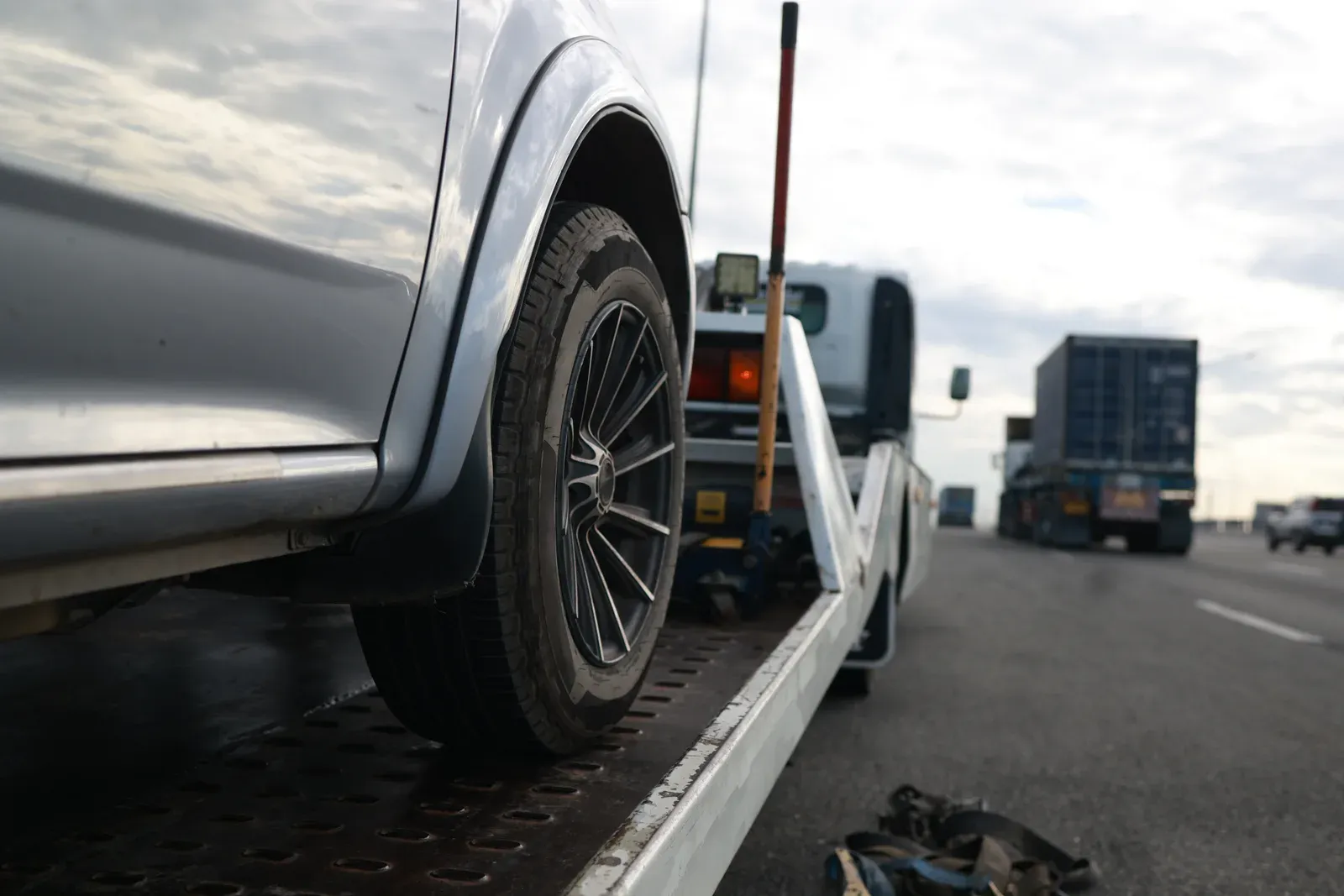
If the car is sitting in a storage yard after a highway crash, settle where it goes quickly, since storage is usually charged by the day. The guide on getting a car out of a tow storage yard explains who pays and how release works.
Questions people ask
Do I get anything back if the settlement is more than the loan?
Yes. Once the lender’s payout figure is covered, the rest of the settlement is paid to you. That is more common on older loans and larger down payments, where the balance has dropped below what the car would sell for.
Can the lender still come after me for the shortfall?
Yes. The loan is a debt you agreed to repay, separate from the car itself. If the settlement and any gap contract do not clear it, the lender expects the remainder, and you arrange with them how it gets repaid.
My financed car was stolen and never recovered. Does the same apply?
Largely. An unrecovered theft is settled as a total loss under comprehensive coverage, the lender is paid first, and any shortfall is handled the same way. Theft files often take longer because the insurance company waits for a period in case the car turns up.
Is a leased car handled differently from a financed one?
The leasing company owns a leased car, so it receives the full settlement and the lease contract sets what you owe on early termination. Check whether the lease included gap protection and whether OPCF 43A was on your policy.