The hours are in the preparation, so that is what the quote is measuring
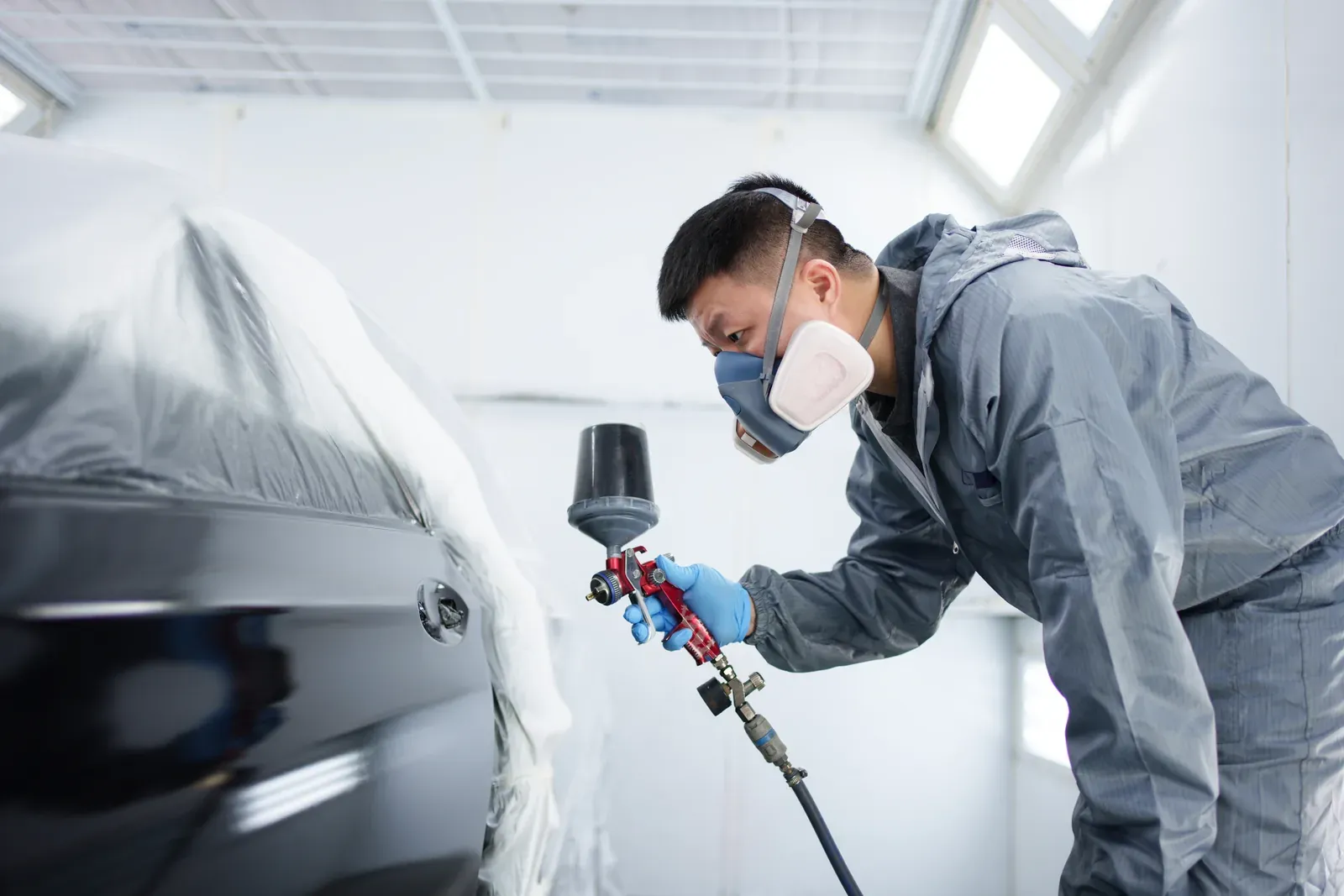
Spraying a car is the short part of a repaint. Most of the time goes into what happens before the booth: washing and degreasing, removing trim, sanding every painted surface so the new coat can bond, fixing dents and chips, priming and blocking the low spots, and masking whatever is staying on the car. A quote that seems high usually reflects more of that work, and a quote that seems low usually reflects less.
The biggest single choice is how much comes apart. On a careful repaint, bumpers, lights, mirrors, door handles, emblems and much of the exterior trim are removed so paint wraps the edges the way it did from the factory. On a quicker job, those parts stay on and are taped over. Taping is faster, and from three metres away it can look similar, but the tape lines show up on rubber seals and around handles, and edges are where peeling usually starts.
Same colour or a new one changes the whole scope
Repainting in the original colour lets the shop leave the door jambs, the inside of the trunk lid and the underside of the hood alone, because they already match. Change the colour and every place you can see when a door or lid is open has to be painted too, or the old colour shows each time you get in. That means taking off or masking hinges, weatherstrips and wiring, and it adds a large amount of labour to the job.
The paint system matters as well. Older and classic cars were often finished in single-stage paint, where colour and gloss come in one layer. Almost everything built in recent decades uses basecoat and clearcoat: a colour layer and a protective clear on top. Three-stage pearls add a mid-coat between the two, and each extra stage adds material and booth time. Some colours are also harder to get even across a whole car, especially silver and light metallics, which streak if the gun technique varies from panel to panel.
- Trim and parts removed versus masked in place
- Original colour, or a colour change with jambs and openings
- Single-stage, basecoat-clearcoat, or a three-stage pearl
- Number of dents, chips and stone pits to repair first
- How far rust and peeling clear have spread
Rust and peeling clear coat have to be dealt with before any paint goes on
A car that has spent several winters on salted GTA roads usually has something waiting under the paint. Bubbles low on the doors, along the sills and around the back wheel openings mean rust has started from the inside, and painting over them only hides it for a season. Those spots need cutting out or treating and sealing properly, which is metalwork rather than painting and is quoted separately.
Failing clear coat is the other common reason owners ask about a full repaint. Roofs, hoods and trunk lids take the most summer sun, so they often go first: the clear turns chalky, then lifts in sheets. New paint cannot simply be sprayed over a surface that is coming apart. The flaking layer has to be sanded back to something solid, and on a badly failed panel that can mean going down to primer. The more panels that have reached that stage, the more the job moves toward a full strip.
Stone chips are a smaller version of the same problem. A car that commutes on the 401 or the 404 collects a spray of pits across the hood, the leading edge of the roof and the front bumper. Each one is a tiny crater that has to be sanded smooth or filled, or it will print through the new colour as a dimple. A hood that looks fine from the driveway can hide dozens of them, and the shop counts that time in the prep.
When a partial refinish is the smarter money
Plenty of cars that come in for a full-repaint quote leave with a smaller plan. If the clear coat has failed on the roof, hood and trunk but the doors and fenders are sound, refinishing only the horizontal panels, and blending into the sides where needed, gives a uniform look for a fraction of the work. If one side has a long scrape from a parking-garage pillar, refinishing that side alone is a repair, not a repaint.
A full repaint makes more sense when most panels are failing, when you want a different colour, or when the car is a keeper you plan to drive for years and the original finish is beyond polishing. It rarely makes sense right before a sale, because buyers often treat a fresh full respray with suspicion and ask what it is hiding.
The best first step is a look at the car in daylight with our estimator, who can tell you which panels need paint and which only need polishing. Whichever scope you pick, the refinish carries our lifetime paint warranty, and the auto painting page explains how the booth work is done.
Questions people ask
Does insurance ever pay for a full repaint?
Only for damage a policy covers, such as widespread vandalism or hail across most panels. Faded or peeling paint from age and sun is maintenance, and no policy pays for it.
Will a repaint look as good as the factory finish?
A careful repaint with parts removed can look excellent. Factory paint is baked on a bare body before assembly, so a respray on an assembled car follows a different process, and the result depends heavily on how much is taken apart.
How long is the car off the road for a full repaint?
Much longer than a panel repair, because of the prep, the sanding between coats and the reassembly. Ask for a timeline with the quote, and expect it to stretch if rust repair is found once the trim is off.
Is a vinyl wrap cheaper than a repaint?
It can be, depending on the film and the car, but a wrap needs sound paint underneath to stick to. A car with peeling clear coat usually needs that fixed before it can be wrapped.