Highway 7 between Dufferin and Jane: six lanes of stopping
The bumper hits in Concord come from a road that never settles into a speed. Highway 7 from Dufferin west to Jane is six lanes of driveways, dock entrances, left-turn lanes and lights, with trucks that stop slower than the cars behind them expect and vans that pull out of yards across two lanes. The 407 on-ramp at Dufferin and the 400 ramps at Highway 7 stack in the morning, and the tap at the bottom of a queue is our most common Concord file. Centre Street toward Dufferin is the slower version with the same result, usually at a plaza entrance.
The rest is yard work: a pickup reversed into a bollard, a van’s rear cover pushed in by a trailer tongue, a car on a townhouse street clipped by a delivery truck making the corner. The speeds are low, and the cover bounces back to shape, hiding a snapped tab that lets the corner droop months later.
Plastic covers, steel step bumpers and the hardware behind both
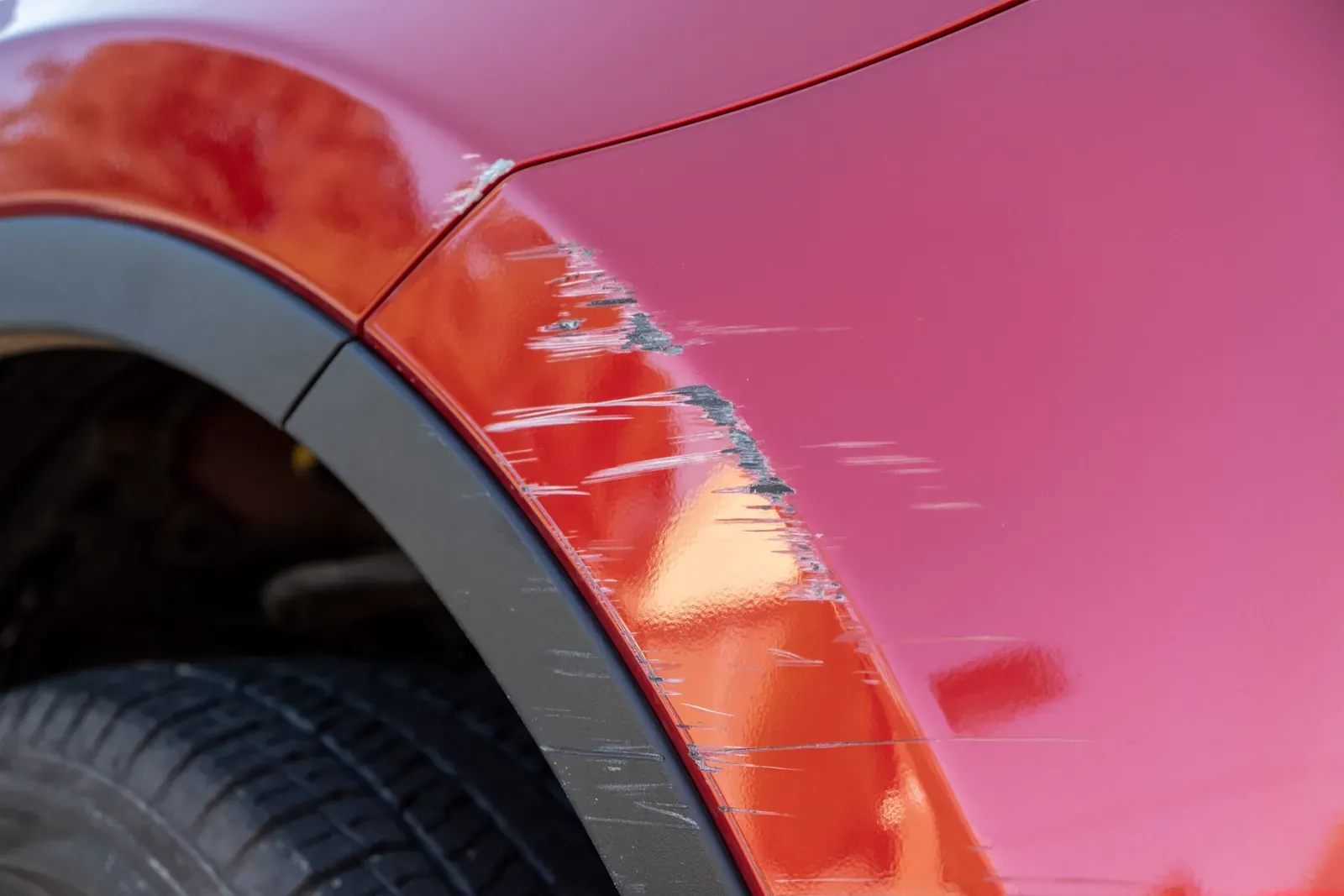
A car or a van bumper is a painted plastic cover over an energy absorber and a reinforcement bar. A split in the open face of the cover is welded from the inside, ground flush, refinished and covered by the lifetime paint warranty. When the break reaches a tab, a corner or a sensor pocket, the cover is replaced; one that cannot sit tight against the fender is not a repair, it is a delay. Behind the cover sit the parts that decide the real bill: an absorber that crushes once and is finished whether or not it looks it, a bar that takes a set from a hit that never marked the paint, and the clips that hold the corners tight, which cost almost nothing and are why a repaired bumper sags the next summer if they are skipped.
A pickup is different. The rear bumper is often a chrome or painted steel step with a hitch receiver behind it, bolted straight to the frame. It does not spring back; it bends, and a bent step bumper on a truck that tows means checking the receiver and the frame horns it bolts to before anything is straightened or swapped. Once a cover with sensors or a radar in it has been off, those systems may require recalibration before they can be trusted, and the estimate says so up front. Where the bar or a sensor bracket is safety hardware, the OEM request to your insurance company goes in writing.
- Cover welded and refinished when the split is in the open face
- Replacement when a tab, corner or sensor pocket is broken
- Step bumpers, receivers and frame horns checked on pickups
- Sensor and radar recalibration noted on the estimate up front
One trip east and back on the route
A bumper is the job most likely to be finished in a single visit, provided the parts are waiting. So the order matters: photos first, our estimator’s written estimate back the same business day, the cover or the step bumper ordered from that estimate, and the vehicle booked only when the box is on the shelf. Highway 7 to the 404 and south to Sheppard is fine with a secure cover; if a corner is hanging or rubbing a tire, stay off the 407 — we help arrange a flatbed and you tell the operator to bring it to Sheppard and Don Mills.
A cover-only refinish usually belongs out of pocket. A cover, absorber, bar and recalibration is a real number, and if another driver caused it, DCPD puts the bill with your own insurance company rather than with you. We open that claim from our counter, and the rental — a like vehicle if your loss-of-use allows it — is ready at the drop-off hour.
Questions people ask
The step bumper on my pickup is bent from backing into a bollard. Can it be straightened?
Sometimes, if the bend is mild and the chrome or paint has not cracked; more often a steel step bumper is replaced, because straightening a heavy bar rarely leaves it true. What matters more is behind it — the hitch receiver and the frame horns it bolts to are checked before anything is ordered, since a truck that tows needs those straight more than it needs a pretty bumper.
Our van’s rear sensors keep beeping after the cover was pushed in. Is that a bumper problem or an electrical one?
Usually the bumper. A pushed-in cover moves the sensors out of the angle they were aimed at, and some are cracked or unseated inside their pockets. Once the cover is repaired or replaced and the sensors reseated, the system may require recalibration before it reads correctly; that goes on the estimate.
The cover is cracked but still on. Can I keep driving the van on its route until you have the part?
Generally yes, so long as every lamp works and no part of the cover is near a tire. Keep it on Highway 7 rather than the 407, where a loose cover flexes at speed, and bring it in on the booked day. A hanging corner or a lamp that wobbles in its mount means park it — we will arrange the flatbed.