The Leslie ramp at eight in the morning
If you live in Bayview Village and work anywhere along the 401, your day starts on one of two ramps. Southbound Leslie feeds the eastbound and westbound 401 through a stacked interchange where the queue stretches back past the Sheppard intersection some mornings, and Bayview does the same on a smaller scale. The stop-and-go on those ramps is where most of the bumpers we see from this neighbourhood get hurt: a glance at the phone, a car ahead that did not roll forward, and two covers meet at the speed of a fast walk. Coming home, the Sheppard exit from the 404 backs up in the evening and produces the same tap from the other direction.
None of those hits looks like much from ten feet away. The cover pops back, the paint is scuffed, and the driver wonders whether it is worth mentioning. Underneath, though, the foam absorber may be crushed, the plastic tabs that hold the cover to the fender may be sheared, and the parking sensors may have been pushed out of their mounts by a few millimetres, which is enough to make the system read the road as an obstacle. On the newer vehicles common around the Shops, the radar for adaptive cruise sits behind the cover too.
A clean crack gets welded; a torn mounting tab means a new cover
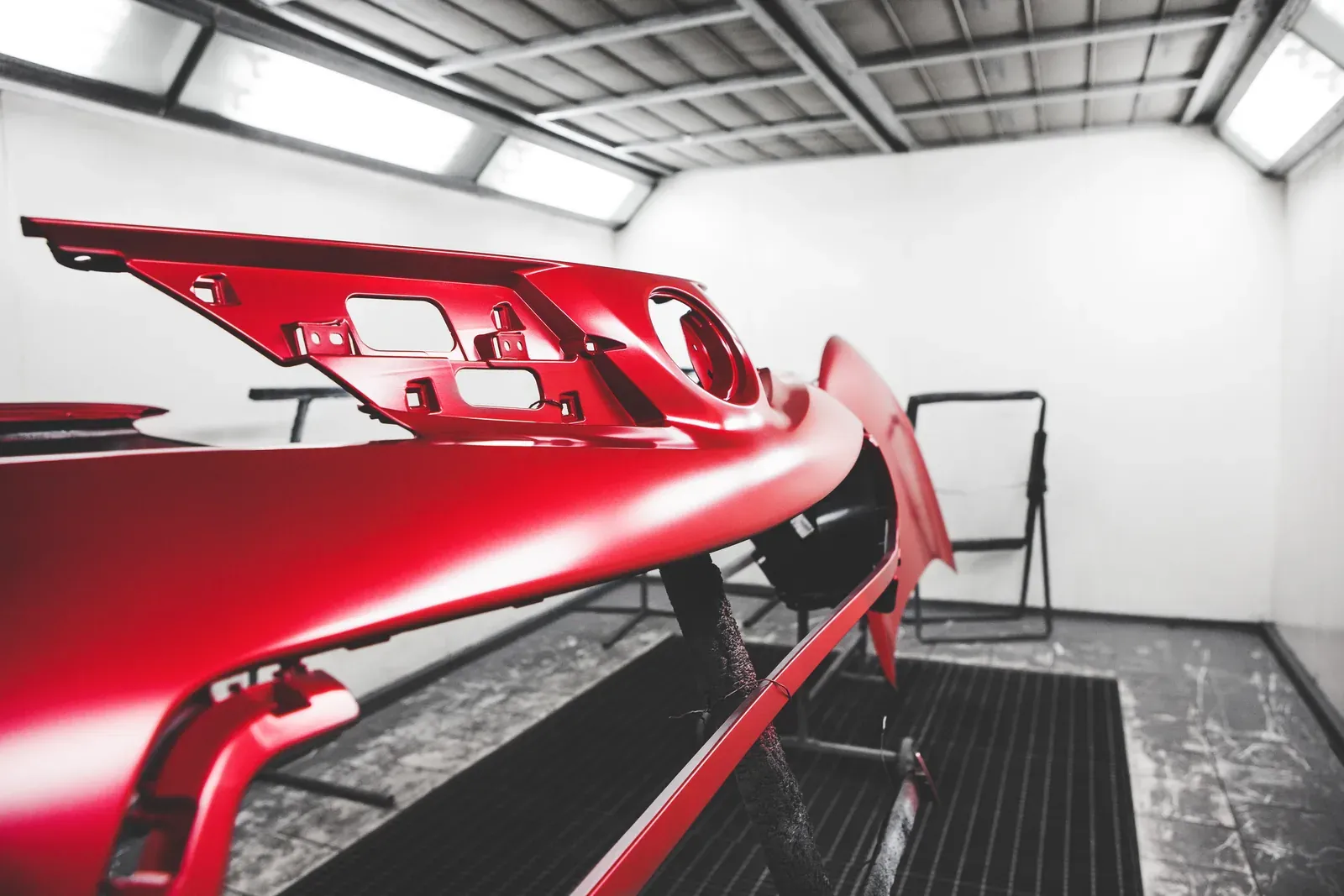
A bumper cover is a flexible plastic skin over a steel or aluminum reinforcement bar. When the cover is scuffed, gouged or cracked cleanly in a place we can reach from behind, it is repaired: the crack is ground out, plastic-welded or bonded with a flexible filler, sanded, primed and refinished with the flex additive that stops the paint cracking at minus twenty. When the mounting tabs are broken off, the crack runs through a sensor hole, or the cover has been torn, replacement is the honest answer, and the new cover is painted off the car on a stand and then fitted so the gaps to the hood and fenders are even.
What is behind the cover gets decided separately. A crushed absorber is replaced, not reshaped. A bent reinforcement bar is replaced, because it is the piece that protects the rails in the next hit. Sensors are refitted in their mounts, and where the vehicle’s procedures call for it, the parking sensors and the front radar may require recalibration before the car goes back, so the system sees what it is supposed to see.
- Cracks and gouges repaired with plastic welding and flexible refinish
- Broken tabs, torn covers and sensor-hole cracks mean a new cover
- Absorber and reinforcement bar inspected and replaced where crushed
- Parking sensors and radar checked and recalibrated where required
Deductible arithmetic and who you tell
A scuffed corner from the Shops lot or a crack from a windrow on your own driveway is a one-car event, and most people pay for it directly if the estimate lands near their deductible. A ramp rear-end is a two-car event with a fault split, and if the other driver is found at fault your own insurance company pays under DCPD; if you have the OPCF 49 endorsement, DCPD and collision are both gone and the repair stays with you. Either way, our estimator writes the estimate from your three photos the same business day and says plainly which side of the deductible it sits on. If you claim, we open the file and send the teardown photos when the cover comes off. The drive is about five to nine minutes east on Sheppard, and a bumper job usually keeps the car a couple of days for the paint to cure.
Questions people ask
After a tap on the Leslie ramp my parking sensors beep constantly. Is that a bumper problem?
Almost certainly. The sensors sit in the cover, and a small shift in their mounts changes what they read. When the cover comes off we refit or replace them, and the system may require recalibration afterwards; that step is built into the estimate rather than left as a surprise.
Can I drive with a cracked bumper cover until my appointment?
If it is secure and nothing is dragging, generally yes for a short while. A cover hanging by one tab can catch on a windrow or a speed bump and tear away, and cold weather makes the plastic brittle, so do not put it off through February.
I backed into the yellow bollard by the Bessarion garage ramp and nothing beeps or looks broken. Why check anything?
Because a bollard hit is concentrated in one spot at exactly bumper height, and sensors and their brackets can be shifted without throwing a warning until weeks later. The check is quick: the cover comes off, the absorber, brackets and sensor seats are inspected, and only what was actually disturbed goes on the estimate. Recalibration is added only where the vehicle’s procedures call for it.