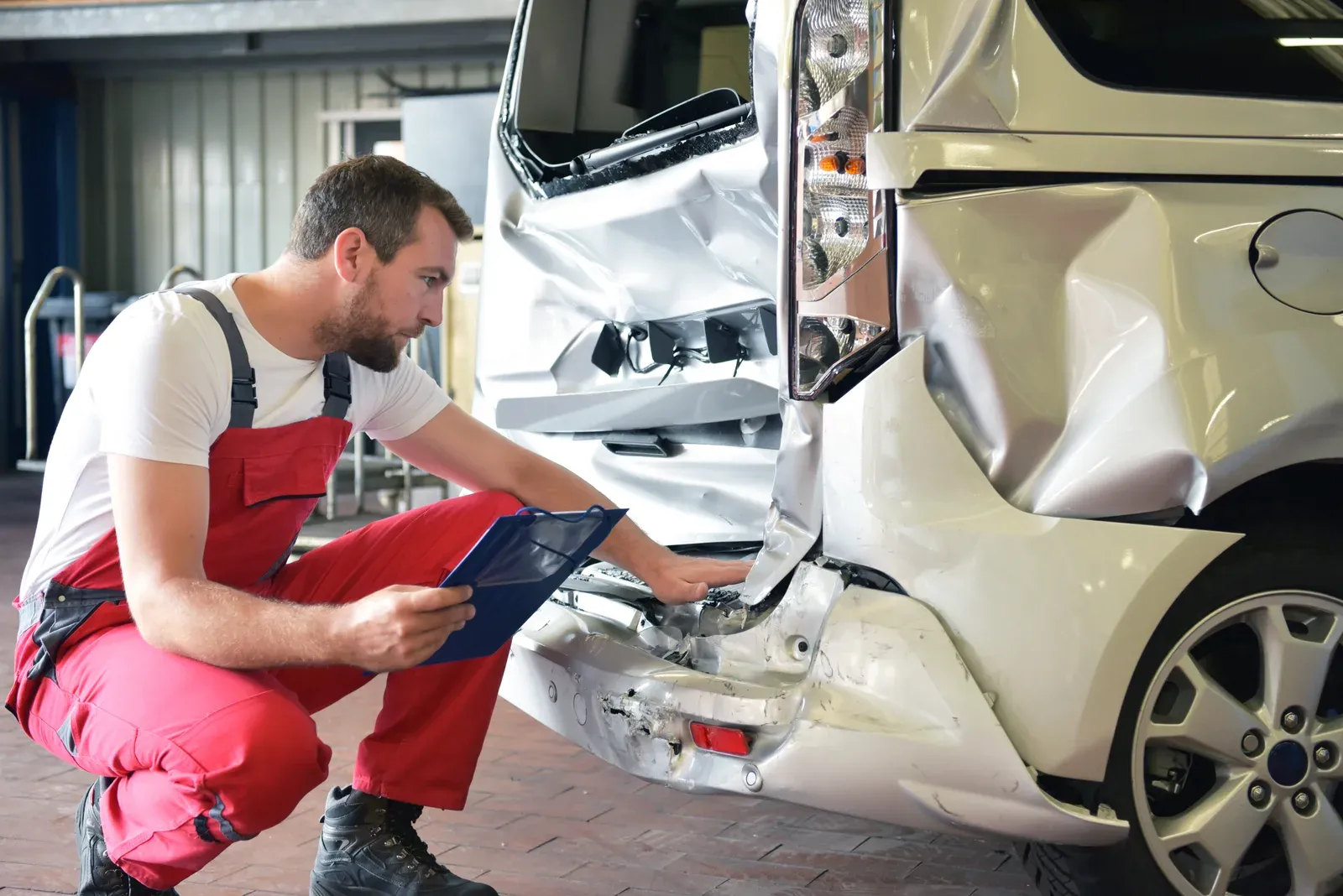
With one car and a fixed object, the fault has nowhere else to go
A single-vehicle crash into something that does not move is treated as your accident. There is no second driver for the Fault Determination Rules to weigh against you, so the insurance company records the loss against your policy, pays it from collision coverage (or All Perils, if that is what you carry), and takes the deductible off the top. A light standard on Sheppard, a concrete bollard at the end of a mall garage aisle, the steel rail on a 404 ramp: all of them produce the same classification.
That rating is about how the claim is filed, and nobody at the insurance company is calling you a bad driver. It still matters, because an at-fault collision is the kind of claim that can affect your premium at renewal. If you are weighing whether to claim a small scrape at all, the estimate and your broker are the two things to have in front of you before deciding.
If you carry no collision coverage, or you signed OPCF 49, a single-car crash leaves the repair with you. Liability coverage only pays for damage to other people’s property, which is the next point.
Black ice, slush and a bad bend do not change the rating
Weather is not a defence for insurance purposes. A slide on a frozen Don Valley crossing into the rail, a car that would not stop on a slick downhill and met a hydro pole, a wheel that caught a windrow and pulled the bumper into a curb: each is a collision claim and is normally rated at fault. Winter tires, a careful speed and a perfect record do not move it. The rules on fault are written to ignore road conditions and look only at what the vehicles did.
The case that can change the answer is another vehicle. If a driver cut across your lane and you swerved into the guardrail without touching them, tell the insurance company exactly that, with their plate if you got it. Whether fault shifts then depends on identifying that driver and on what witnesses or a dash camera show. Without any of that, the claim almost always stays a single-car loss.
Animals are the other split. Hitting a deer is comprehensive, with no fault attached. Swerving to miss the deer and hitting the guardrail instead is a collision claim, because the car never touched the animal. It feels backwards, but that is how the coverage lines are drawn.
- Pole, guardrail, curb, bollard, parking-garage column, frozen snowbank: collision coverage, usually at fault.
- Deer, coyote or other animal that the car actually struck: comprehensive, no fault.
- Swerved around an animal and hit a fixed object: collision, usually at fault.
- Forced off the road by a vehicle you can identify: tell the adjuster; fault may be assessed against that driver.
The pole has an owner, and the owner may send a bill
Damaging public or utility property can bring a second claim that has nothing to do with your car. The owner of a knocked-over light standard, a bent guardrail or a cracked hydro pole can bill the driver for the repair. In Toronto that might be the city for a rail on the DVP or the Gardiner, a utility for a pole, and on the 401 or the 404 it is provincial highway property. Private property counts too: a plaza owner whose bollard you flattened can send an invoice.
That bill belongs to your liability coverage, the part of the policy that pays when you damage someone else’s property. Do not pay it yourself and do not ignore it. Forward the letter to the adjuster handling your car, quote the claim it belongs to, and let the insurance company answer the property owner. Paying privately can complicate what the insurance company will later reimburse, and the letter often arrives weeks after your car is fixed, when it is easy to forget the two are connected.
The damage to that property also counts when you think about reporting. A crushed guardrail section plus a front end often clears the provincial reporting threshold on its own, so with no injuries, head to the nearest Collision Reporting Centre promptly, generally within 24 hours. Any injury changes that: phone 911 where you are and wait for police. If a downed pole or wire is on the road, stay in the car, keep clear of the wire, and call 911.
A pole folds the front into a V, while a guardrail chews down the whole side
A pole concentrates the whole impact into a narrow strip, which is why these cars look worse than their speed suggests. The bumper cover folds around the post, the reinforcement bar behind it bends in a V, and the force goes straight into one frame rail or the radiator support instead of spreading across the front. A guardrail does the opposite: it drags along the side, chewing the fender, both doors and the quarter panel, and often bends a wheel and a suspension arm at the corner that touched first.
Neither leaves a car you should judge from the curb. We put a fixed-object car on the frame bench to measure whether the rail or the subframe has moved, check the front sensors and cameras for the recalibration a bumper or windshield job may require, and look at the wheels and steering before any paint is mixed. The repair is then written to what the measurements say. If the claim is going through your insurance company, the estimate goes to the adjuster with those numbers attached, so the at-fault rating at least comes with a correctly priced repair.
Questions people ask
I hit a frozen snowbank that the plow left at the end of my street. Is that still my fault?
For insurance purposes it is a single-vehicle collision, so it is normally rated at fault. A windrow, however annoying its placement, is treated like any other fixed object the car struck.
Do I have to tell anyone if I knock over a light pole and nobody is hurt?
Report it. A pole down is a hazard, so call 911 if it is blocking the road or wires are down, and otherwise report to police or a Collision Reporting Centre. Tell your insurance company too, because the pole’s owner is likely to bill you.
Can I pay the city’s guardrail invoice myself to keep it off my record?
Talk to your insurance company first. The property claim usually sits alongside your collision claim from the same crash, and settling it privately does not erase the accident from your insurance history.