Three brands, and each one says what the car is allowed to do
A brand is a status the province attaches to a vehicle’s registration after serious damage, usually after an insurance company writes it off. Most cars never get one. A car that is damaged, claimed and repaired in the normal way keeps a clean status, however large the repair was. Branding is for vehicles that went through a total loss, and the damage itself, measured against provincial criteria, decides which brand applies.
Irreparable is the end of the road. The vehicle cannot be registered or driven on Ontario roads again, no matter how well it is fixed. It can be dismantled for parts or scrapped. Salvage is the middle state. The car can be repaired, but it has no right to plates until it passes a structural inspection. Rebuilt is the brand a salvage vehicle earns once it has passed that inspection: it can be registered, insured and driven, with the history attached.
- Irreparable: parts or scrap only; can never be plated again.
- Salvage: repairable, but not road-legal until a structural inspection is passed.
- Rebuilt: formerly salvage, inspected, and allowed back on the road.
- No brand: the usual status, including most cars repaired under a claim.
Going from salvage to rebuilt takes a repair and a structural inspection
The path is fixed. First the car is repaired, properly, to the manufacturer’s methods. Then it goes to an inspection station licensed by the province to do structural inspections, where an inspector examines the body, welds, measurements, airbag and restraint parts, and the paperwork behind the repair. If it passes, the station issues a Structural Inspection Certificate and the brand changes to rebuilt at ServiceOntario. After that, like any used vehicle being licensed, it needs a Safety Standards Certificate before plates go on.
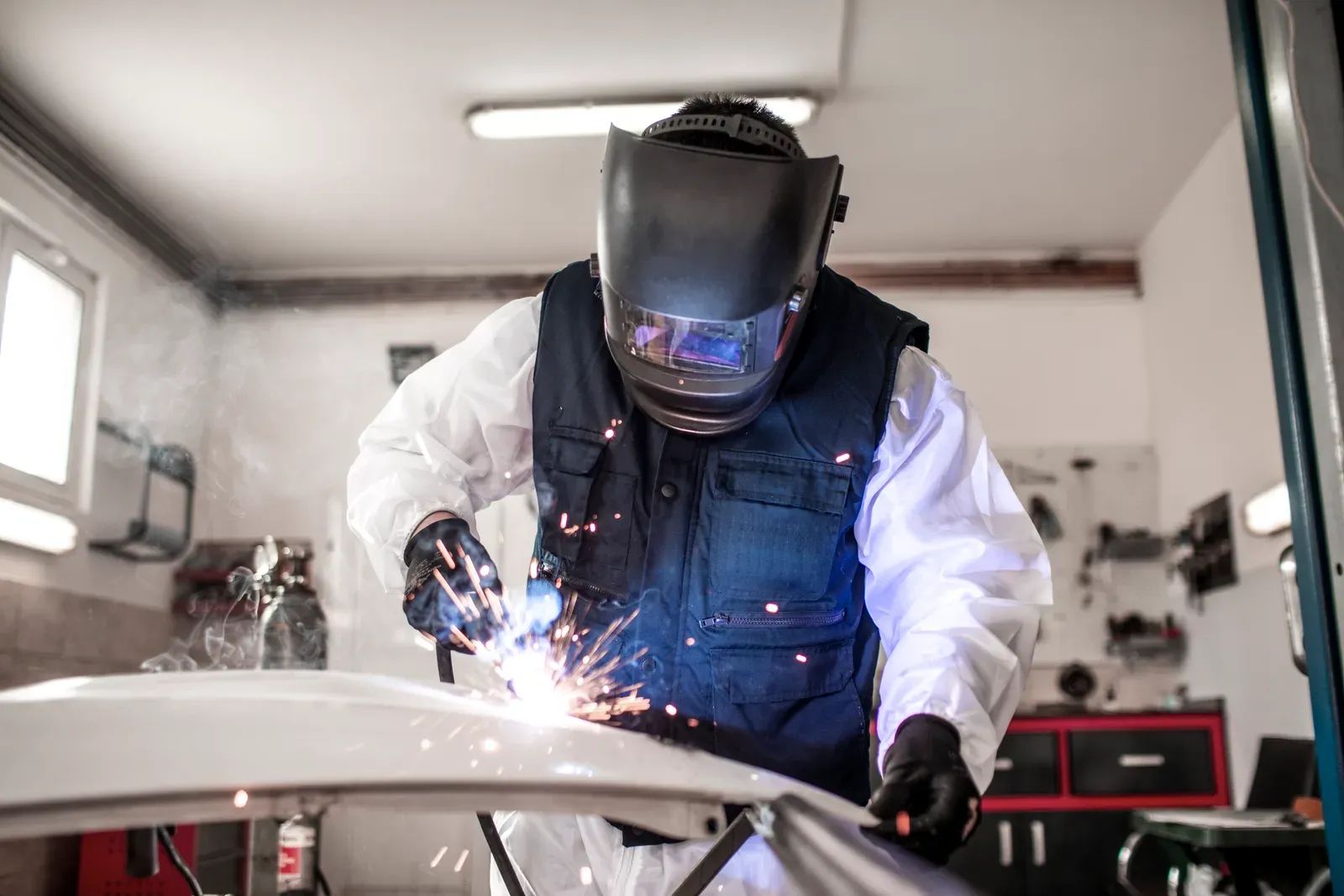
The paperwork carries as much weight as the welding. Inspectors want receipts for the major parts and evidence of where they came from, and a record of what was done to the structure. When we take a salvage car through a rebuild, the frame measurements before and after, the photos of every structural step and the parts invoices are kept as a file for the inspection. A car repaired with no paper trail is a car that may have to be partly opened up again to prove what is inside.
There is no route back from irreparable, and no route from salvage that skips the inspection. Any seller who tells you a salvage car just needs a safety to be plated has the order wrong.
What a brand means once the car is back on the road
The brand never comes off. A rebuilt car shows that status on its ownership and on the Used Vehicle Information Package a private seller must provide, and a history report will show the total loss behind it. That has three practical effects.
Resale is lower. A rebuilt car trades below an unbranded twin, because buyers discount the unknown even when the repair was excellent. Financing can be harder, since some lenders are cautious about branded vehicles. And insurance needs a call before you buy: some insurance companies write full coverage on a rebuilt vehicle, others limit what they offer, and some ask for the inspection certificate or photos first. Ask your broker before money changes hands.
None of that means a rebuilt car is unsafe. It means the quality depends entirely on who did the rebuild and how, and the brand is a flag telling you to ask.
It also shrinks the pool of buyers when you sell. Some people walk away the moment they see the word on the UVIP, so the lower price is worth counting on the way in rather than discovering on the way out.
Checking a used car for a brand before you buy it
In a private sale in Ontario, the seller has to hand over a UVIP, and the brand is on it. Read that section before anything else. A dealer has to disclose a brand too. If you are looking at a car from a listing in Scarborough or Vaughan priced well under its neighbours, the brand is the first thing to rule in or out.
Then look at the car. On a rebuilt vehicle, ask for the structural inspection certificate and the repair file, and have an independent shop look at panel gaps, welds in the door jambs and under the carpet, and whether the airbag light behaves. We can put a car on the frame bench and tell you whether the structure measures where the manufacturer says it should. That is useful on any used car with a history, branded or not, and it is far cheaper than finding out after a second collision.
Take extra care with a vehicle brought into Ontario from another province or the United States. A write-off recorded elsewhere may be described differently on paper, so ask for the full history and a structural check before you commit.
Questions people ask
Can I drive a salvage car home from the auction?
Not on the road under its own power. A salvage-branded vehicle cannot be plated until it has passed the structural inspection and been rebranded rebuilt, so it has to be trailered or towed.
If my car was repaired under a normal insurance claim, is it branded?
No. Branding follows a total loss. A car that was damaged and repaired without being written off keeps its normal status, although the claim itself may appear on a history report.
Can an irreparable brand be appealed or removed after repairs?
Repairs do not change it; an irreparable vehicle cannot be registered for the road again. If you believe the brand was applied in error, the place to raise that is with the insurance company that reported the loss, before the car is sold for parts.