Contact or a rollover is collision; almost everything else that damages the car is comprehensive
The test is what touched the car and how. If the car struck something, or something on wheels struck the car, or the car left its wheels and went over, that is collision. If weather, an animal, a thief, a vandal, fire, water or a falling object did the damage, that is comprehensive. The standard Ontario Automobile Policy groups both under the part of the policy that deals with loss or damage to your own vehicle.
Neither one is mandatory. Ontario requires liability, accident benefits, direct compensation for property damage and uninsured automobile coverage on every policy, but collision and comprehensive are optional. That surprises people who financed a car, because the lender almost always made both a condition of the loan, so it feels compulsory. A driver who owns an older car outright may have dropped one or both years ago and forgotten.
Two variations sit on the same page of the policy. Specified Perils is a narrower version of comprehensive that covers only a named list of causes, such as fire, theft, hail and windstorm. All Perils combines collision and comprehensive under a single deductible. Your declarations page shows which of the four you carry, and that line, not the conversation you had with a broker years ago, is what the adjuster will read.
Where the losses we see from North York and York Region usually land
Most claims sort themselves once you describe what happened in plain words. These are the patterns that come through the door most often, with the coverage that normally applies to each.
- A concrete pillar in a condo garage, a bollard at a gas station, a curb you slid into on black ice: collision, single vehicle, usually rated at fault.
- A wheel and control arm bent in a February pothole on Don Mills Road: collision, because the car struck the road surface.
- A parked car hit by someone who drove off without leaving a note: collision, rated not at fault, with a police or Collision Reporting Centre report attached.
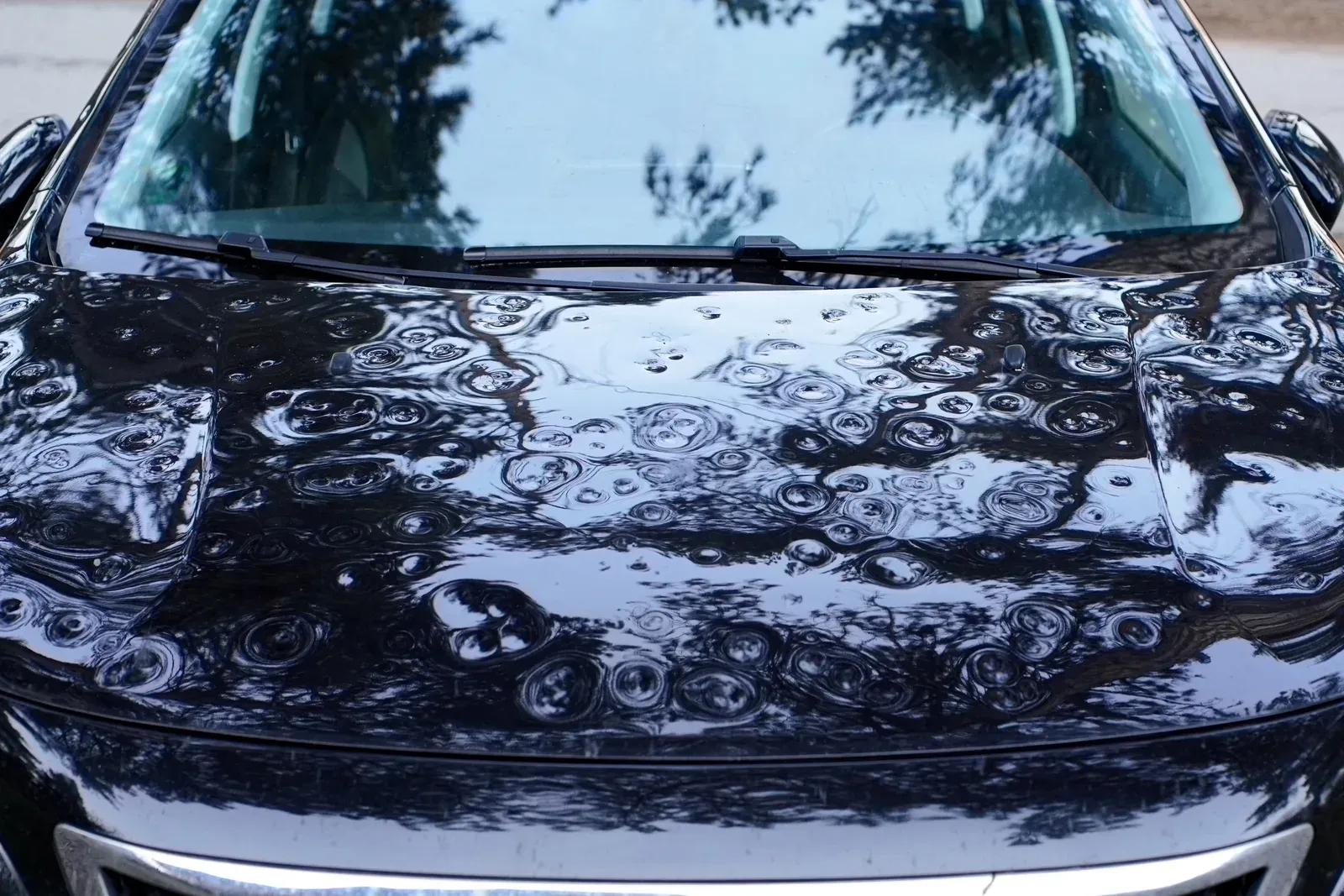
- Dimples across the roof and hood after a summer hailstorm: comprehensive.
- A deer on a concession road north of Aurora: comprehensive, with no fault recorded against anyone.
- A stone thrown up by a gravel truck on the 401 that cracks the windshield: comprehensive, at the normal comprehensive deductible.
- A door keyed in a mall lot, or water rising into an underground garage after a storm: comprehensive.
The coverage line decides which deductible comes off the repair
Collision and comprehensive each have their own deductible, chosen separately when the policy was written. The adjuster opens the claim under one coverage, and that coverage’s deductible is the one you pay at pick-up. If the claim were opened on the wrong line, you would pay the wrong amount, which is why it is worth asking the adjuster, in the first call, which coverage the file sits under.
The bigger risk is a gap rather than a wrong number. A driver who kept comprehensive but dropped collision on a paid-off car is covered for the deer and the hail, and has nothing for the pillar in the parking garage. A driver who signed OPCF 49 has given up collision, All Perils and direct compensation together, so no collision of any kind is paid, whoever caused it; only comprehensive or Specified Perils can remain on that vehicle.
When another identified car insured in Ontario hits you and you are not at fault, the damage runs under direct compensation instead of your collision line. It is still a collision event, but a different coverage pays it, and that coverage often carries no deductible.
Comprehensive claims carry no fault, which changes what happens at renewal
Fault only exists for collisions. The Fault Determination Rules describe how cars meet each other, and a hailstorm or a deer does not fit any of the diagrams. So a comprehensive claim does not put an at-fault accident on your insurance history. A single-vehicle collision with a pole or a curb is different: there is nobody else to share the blame, and it is normally rated as at fault.
That does not make comprehensive free to use. Insurance companies watch claim frequency, and several small comprehensive claims close together can still affect how your file is priced. For a cosmetic comprehensive loss that sits close to the deductible, the arithmetic is the same as for any small claim: compare the written estimate with the deductible before you open anything.
Some losses sit between the two, and the adjuster makes the call
A few situations can be read either way, and the adjuster decides which line they belong on. Trees and water show the problem well. A maple limb that comes down on a parked car in a windstorm is a falling object; a limb already lying across a dark side street that you drive into may be treated as striking an object. A car sitting in a garage when the water rises is a flood loss; a car driven into a flooded underpass can be classified another way. Describe the event plainly, step by step, before anyone names a coverage. Guessing on the phone and then revising the account later causes more trouble than the classification ever would.
From our side, the repair does not change with the coverage. The estimate lists the same operations whether the claim is collision, comprehensive or direct compensation; what the claim number tells us is which deductible to confirm before the car goes into the booth, and we tell you that number before any work starts.
Questions people ask
If I only carry comprehensive, am I covered when another driver hits me?
For your not-at-fault share, usually yes, through direct compensation, which every Ontario policy includes, as long as the other car is identified and insured in Ontario and you have not signed OPCF 49. Any share of fault placed on you falls to collision coverage, and without it that part is yours to pay.
Is a car fire covered by collision or comprehensive?
A fire on its own, such as an electrical fault in a parked car, is a comprehensive loss. A fire that starts because of a crash is generally handled as part of that collision claim. Tell the adjuster what came first.
Does my lease or car loan require both coverages?
Nearly always. Lease and finance agreements commonly require collision and comprehensive for the length of the contract, and the lender is usually listed on the policy. Dropping either before the contract ends can put you in breach of it, so read the agreement first.
Where do I find which coverages I have?
On the declarations page or coverage summary of your policy, which lists each coverage with its deductible. The pink liability card in the glovebox does not show them.