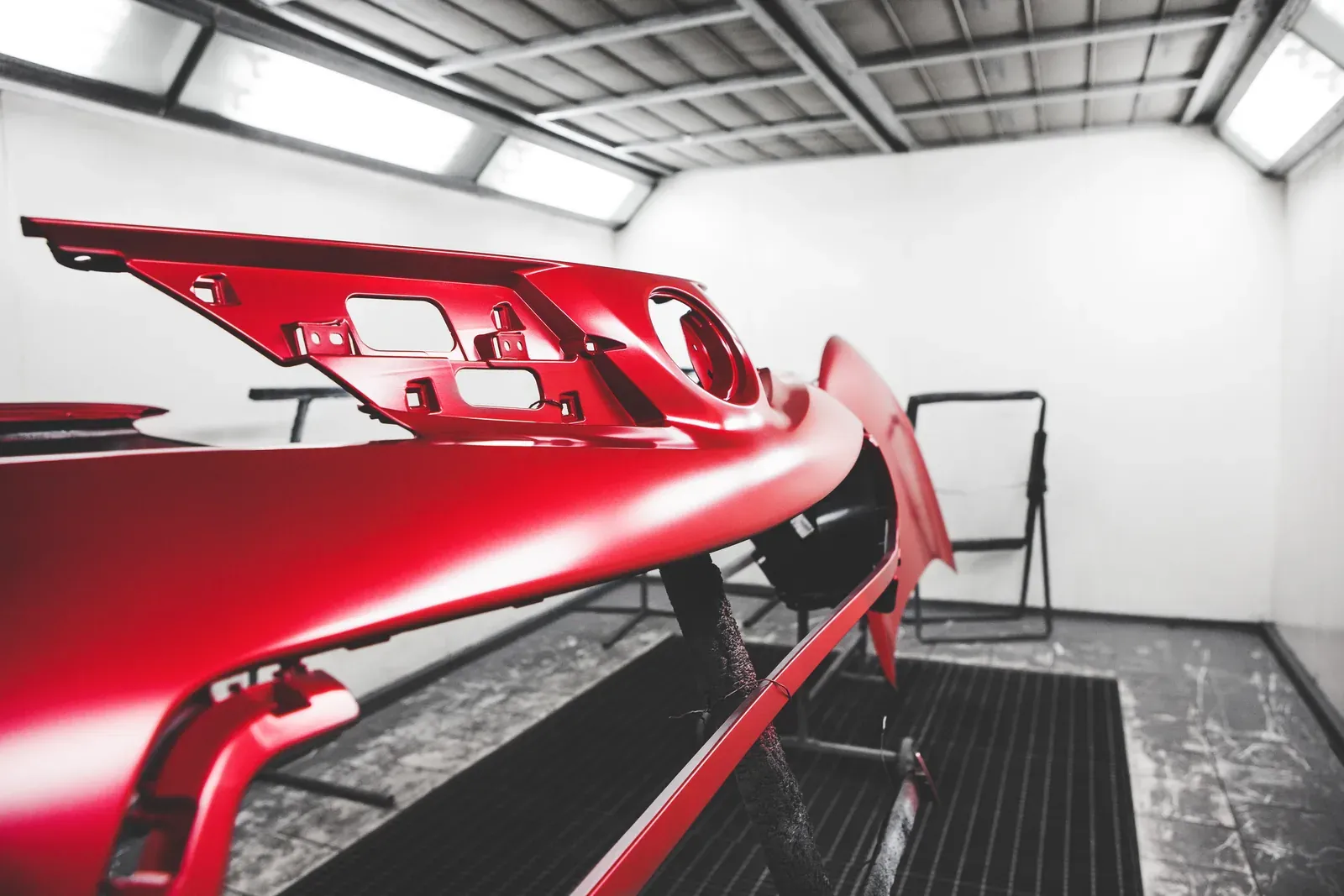
Most bumper jobs land in one of four time bands
The time depends on which kind of bumper job you have, and the kind is usually clear once the cover is off. A cosmetic scuff where only the paint needs redoing is the quickest. A split or tear that can be plastic-welded takes a little longer because the repair has to set before it is shaped and primed. A cover that has to be replaced brings a wait for the part. And a hit that reached the absorber, brackets or sensors adds parts and possibly a calibration appointment.
- Scuff or scrape, cover intact: commonly two to three working days, mostly paint and cure
- Crack or small tear that can be welded: often three to four working days
- New cover needed: the shop days above, plus however long the cover takes to arrive
- Cover plus brackets, absorber or sensors: add parts time and possibly a day for calibration
Inside the shop, paint and cure take more of the time than the plastic repair
A bumper cover usually comes off the car for the repair. That lets the technician weld or reshape the plastic from behind, sand it, and spray it on a stand in the booth where every edge can be reached. Removal itself can be an hour or two, because headlights, wheel-well liners and the splash shield may need to come off first.
The repair work on the plastic is often the shorter part of the job. Preparing the surface, applying adhesion promoter to bare plastic, priming, then base colour and clear coat each need drying time between them, and the finished cover needs to cure before it is handled and bolted back on. The cover itself is normally refinished whole rather than spotted. With a metallic or pearl colour, the shop will often also blend into the neighbouring fender, since plastic and steel hold the same paint slightly differently and an unblended cover can look a shade off in sunlight. That blend means the car itself goes into the booth too, which can add part of a day.
When the cover is on order, the wait happens before the car comes in
If the cover has torn mounting tabs, a large hole or a tear through a sensor opening, it usually needs to be replaced. New covers generally arrive unpainted or in primer, so they still go through the same paint steps as a repaired one. The difference is the lead time. Covers for common models are often available within a few days; covers for newer or less common vehicles, or covers with a specific sensor-hole pattern for one trim level, can take longer.
If the car is safe to drive in the meantime, the sensible approach is to keep driving it and bring it in once the part has arrived. A cracked cover that is still firmly attached is usually drivable for a short time; one hanging off at the corner, or dragging a liner, is not. The answer on driving with a damaged bumper covers how to tell the difference. Waiting this way means the shop days start when everything is on the shelf, and any rental is not spent waiting on a delivery.
Brackets, sensors and calibration can add the last day
Behind the cover there are often small parts that break at the same time: the side guides that hold the cover to the fenders, the sensor holders bonded inside it, and the absorber. These are sometimes ordered after teardown, once they are found, which can add a short wait mid-repair if they are not in stock locally.
If the car has parking sensors, blind-spot radar or a forward radar behind the cover, the repair may require a recalibration afterward. Whether it does depends on the car and what was moved. Some systems are calibrated on a target set in the shop; others need a road drive on clearly marked pavement, which is easier on a dry day than on a slushy one. Calibration is often booked with a specialist, so it can add a day to the end of an otherwise simple bumper job.
February bumper cracks take longer than August ones
Late winter is the busy season for bumpers in the GTA. Snowbanks and frozen windrows at the end of driveways crack lower covers, cold plastic is more brittle than warm plastic and splits more easily, and salt-caked cars have to be washed and dried before any repair or masking can start. Shops are also fuller, so the next open booth slot may be further away than in summer.
If you are on a claim, add the approval step. The insurance company has to approve the estimate before work starts, and if teardown finds a cracked absorber or a broken sensor holder, a supplement has to be approved before those parts are ordered. A quick adjuster keeps that to a day or so; in a storm week it can stretch.
Questions people ask
Can the bumper be done while I shop at Fairview Mall for the afternoon?
Not if it needs paint. Even a small refinish needs drying and cure time before the cover can be refitted, so plan on leaving the car for a few days. The mall and Don Mills station on Line 4 do make the drop-off and pick-up easy without a second car.
Does a cracked cover take longer than a scuffed one?
Usually by about a day. A crack has to be welded or reinforced from behind and allowed to set before it is shaped and primed, while a scuff can go straight to sanding and paint.
Do I need to leave the car with you while the new cover is on order?
No, as long as the cover is firmly attached and the car drives normally. We can order the part, call when it arrives, and book the car in then, so you are without it only for the shop days.