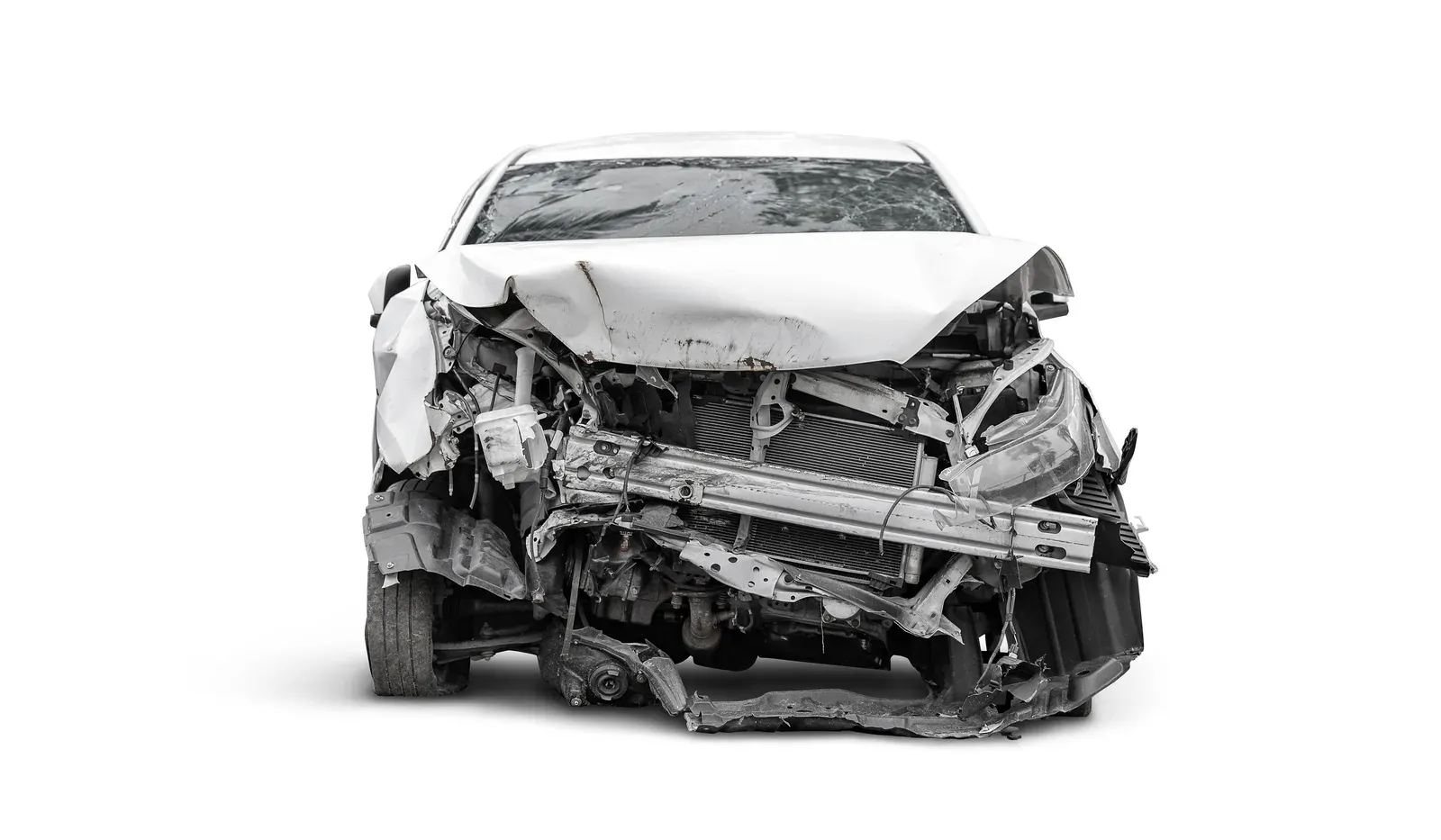
A split finding cuts the repair invoice into two claims on one car
One collision, one estimate, two pieces of coverage. That is what a partial fault finding does. Ontario does not leave fault as a matter of opinion; the Fault Determination Rules describe dozens of collision types with diagrams and assign each driver a fixed share. When the rule that fits your crash lands somewhere between zero and 100, the adjuster splits the approved repair cost according to that share.
The portion you are not responsible for is paid under Direct Compensation – Property Damage, by your own insurance company. The portion you are responsible for is paid under your collision coverage, if you have it. Both pieces come from the same company and the same adjuster, so from the driver’s seat it still feels like one claim. On paper it is two lines, each with its own deductible rules.
The other driver goes through exactly the same arithmetic with their own company. Nothing passes between the two insurance companies afterward. Each one pays its own customer according to the finding, and that is the end of the money side.
Working through 25, 50 and 75 percent on the same estimate
Picture one approved estimate and run it through each split. At 25 percent at fault, three-quarters of the repair is a DCPD payment and one quarter falls to collision coverage. At 50 percent, the two halves are equal. At 75 percent, only a quarter is DCPD and the bulk sits on your collision line. The total repair does not change; only who pays which slice does.
Deductibles follow the slices. Under the standard Ontario policy, the collision deductible is generally applied in proportion to your share of fault, and any deductible you chose on DCPD is applied in proportion to the share you were not at fault for. Many drivers carry no DCPD deductible at all, which makes the not-at-fault slice cost nothing out of pocket. Ask the adjuster to write the calculation out for your file; it is a simple sum, and seeing it on paper stops surprises at pickup.
Where a partial finding hurts most is the driver who dropped collision coverage on an older car to save on premiums. DCPD still pays the not-at-fault slice, so a 25 percent finding leaves you funding a quarter of the repair yourself. A 75 percent finding leaves you funding most of it. That gap is worth knowing before the car goes on the hoist.
- 25 percent at fault: DCPD pays three-quarters; collision pays one quarter, with its deductible scaled to match.
- 50 percent at fault: an even split between DCPD and your collision coverage.
- 75 percent at fault: collision carries three-quarters; DCPD pays the remaining quarter.
- No collision coverage on the policy: whatever share is yours is paid by you, and the DCPD share is still paid.
The GTA crashes that most often end up split
Shared findings cluster around a handful of situations, and most of them happen on roads within a few kilometres of us. Two drivers moving into the same middle lane at once on the 401 collector near Leslie. A merge on the 404 at Highway 7 where nobody can say who drifted first. Chain reactions in the DVP stop-and-go, where the middle car was hit from behind and also struck the car ahead. Parking garage reversing crunches at the mall.
In each of these the rules look at what both cars were doing, not at who was more upset or who apologised. If the adjuster cannot match the collision to any diagram in the rules, fault is decided under ordinary negligence law instead, which can also produce a shared finding. Either way, a split is not a punishment. It is the rules saying both drivers had a part.
What a partial finding means when your policy renews
Assume it counts. A share of fault, even the smallest one, can be recorded as an at-fault accident on your insurance history, and whether it moves your premium depends on how your own company rates it. Some companies draw the line at a particular percentage and some do not, so the only reliable answer comes from your broker or the company itself. Accident forgiveness, where you bought it, may absorb the first one.
The rating question is separate from the repair. Paying the at-fault slice yourself instead of claiming it does not erase the finding, because the adjuster has already applied the rules to the reported collision. If you think the finding itself is wrong, that is a dispute to raise with the company, with evidence, rather than something to fix by skipping the collision line.
How a split claim moves through our shop
For the repair itself, a 50/50 car is handled exactly like a zero-fault car. We write one estimate, the adjuster approves one estimate, and the parts and paint are the same either way. The split lives in the adjuster’s payment, not in the workmanship. What changes for you is the deductible you settle at pickup, and the rental: the not-at-fault portion supports a replacement car, while the at-fault portion depends on whether your policy carries OPCF 20 loss-of-use coverage.
It helps to have the fault finding in hand when the car is booked in, so the deductible and the rental you plan around match the real numbers. If the finding is still open, the repair can often go ahead on the approved estimate; the adjuster sorts the payment lines once the rule is settled.
Questions people ask
Can the other driver and I agree between ourselves to call it 50/50?
You can agree on anything at the roadside, but it binds neither insurance company. Each adjuster applies the Fault Determination Rules to the facts reported, which may produce a different split from the one you shook hands on.
If I’m 25 percent at fault, do I pay the whole collision deductible?
Generally not. The standard Ontario policy applies the collision deductible in proportion to your share of fault, so a quarter share usually means a quarter of that deductible. Confirm the calculation with your adjuster, since your policy wording governs.
Does a split finding change where I can get the car repaired?
No. Your choice of shop is the same at zero, 50 or 75 percent. The adjuster may review the estimate more closely when the collision line is paying a share, but the shop remains your decision.