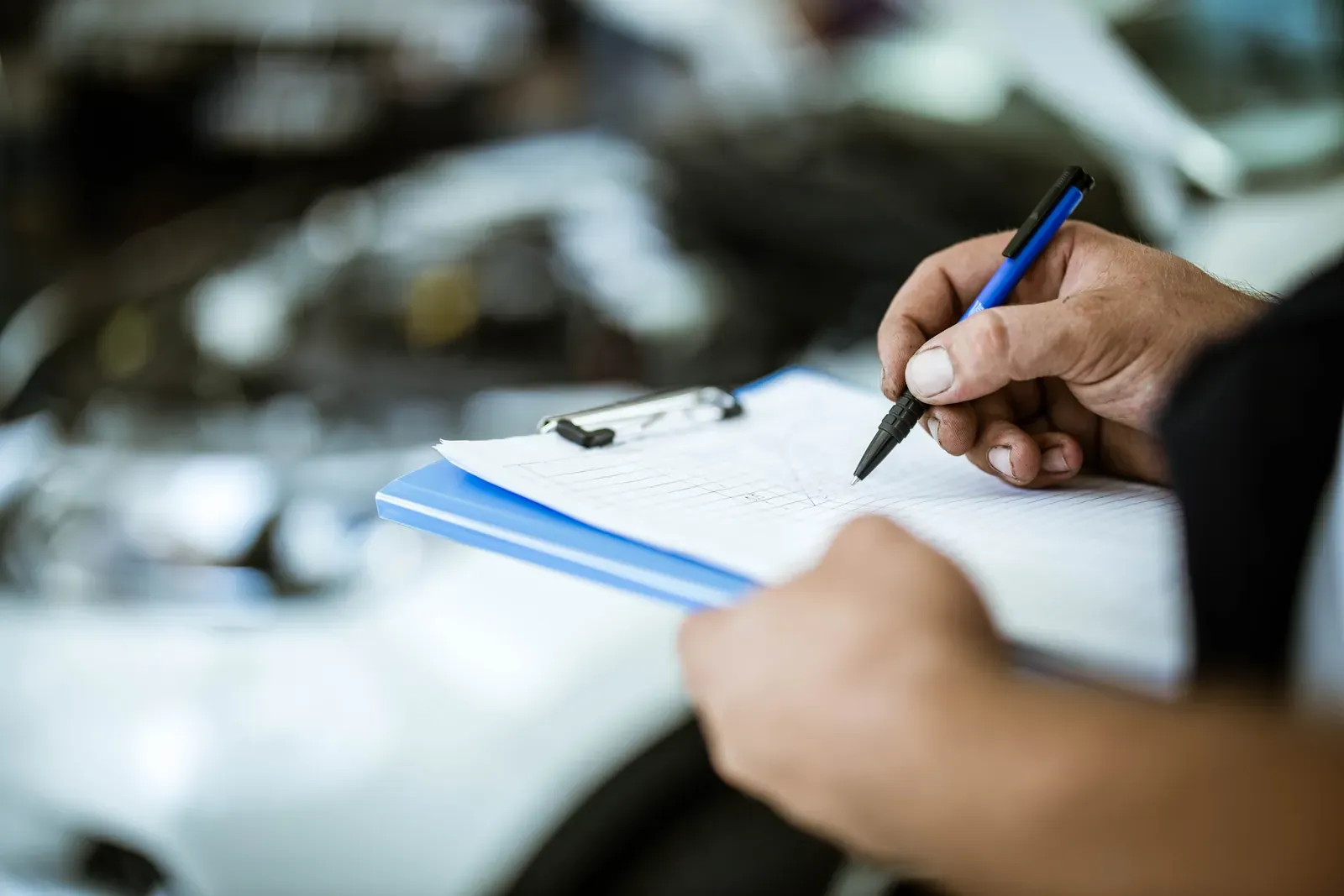
Three documents should already be in the car before anything happens
A claim file starts with the papers Ontario requires you to carry: your driver’s licence, the vehicle permit (the ownership), and proof of insurance. Ontario allows electronic proof of insurance where your insurance company offers it, alongside the printed pink liability card, but a dead battery at the side of the 401 is a good argument for keeping the paper too.
One more document belongs at home in a place you can find it: the policy’s coverage summary, often called the declarations page. The liability card shows your insurance company and policy number, and nothing about deductibles, collision coverage or whether you carry OPCF 20 for a rental. When the adjuster asks which coverage you want to use, that page answers it.
Tell your insurance company promptly, since the standard Ontario policy expects notice within seven days, and a claim number arrives the day you report. Treat it as the folder’s title: write it on the cover, put it in the subject line of every email, and quote it on every call. Shops, appraisers, rental branches and tow operators all look your file up by that number, and a message without it tends to sit in a general inbox.
From the other driver, photograph documents instead of copying them by hand
Handwritten notes taken in the rain at Victoria Park and Ellesmere are where claims lose a digit. Ask to photograph the other driver’s licence, liability card and ownership, then write down what a photo will not tell you. If the other driver refuses, record the plate and a description and let the police or the reporting centre take it from there.
Pay attention to the province on the plate. Direct compensation only works when the other vehicle is identified and insured by a company licensed in Ontario, so a Quebec, Michigan or New York plate on the 401 means your insurance company will need to confirm how that car’s coverage fits before the claim can be routed. The more of their insurance details you record, the faster that check goes.
- Full name, address and phone number of the driver
- Registered owner, if different from the driver: common with leased, company and family cars
- Licence number and the plate, with the province if it is not Ontario
- Make, model and colour of the other vehicle
- Their insurance company and policy number exactly as printed
- Names and phone numbers of anyone who stopped and saw it
- The street, nearest intersection, lane and direction each car was travelling
The report number is the piece most stalled claims are missing
If anyone was injured, police attended after a 911 call and the officer gives you an occurrence or incident number. With no injuries, and combined damage that looks likely to pass the provincial reporting threshold or a driver who left, you report at the nearest Collision Reporting Centre and leave with a report number. Many insurance companies will not finalize a claim of that size without it.
Write the number on the inside cover of your folder and send it to the adjuster as soon as you have it. If the centre photographed your car, note that too; those images become part of the record. For anyone more comfortable reading forms in Mandarin, our counter can go through the English paperwork with you line by line.
Receipts get reimbursed only if they still exist when the adjuster asks
The money side of a claim is paid against paper. A tow invoice should be itemized and name the operator; keep it even if the shop is billing the tow through the file. Storage charges from a compound, rental agreements, and transit or taxi receipts, where your policy allows them, all belong in the folder in the order you received them.
Save dashcam footage to your phone or computer the same day, because many cameras loop and record over older clips once the card fills. Keep receipts for equipment you added to the car, such as a roof rack, a remote starter or a set of winter tires on rims in the trunk, since a claim for them is easier to support with proof of purchase. If the car is leased or financed, add the lender’s name and account number.
Some insurance companies send a proof of loss form to sign before paying. Read it against your own records before you sign, and keep a copy. If anyone was hurt, accident benefits run on a separate set of forms with their own deadlines; do not let the vehicle paperwork crowd those out.
What stays in the folder after the car comes home
When the repair is done, the folder changes purpose. It stops being evidence for the claim and becomes the car’s repair history. Add the final itemized invoice, every version of the estimate and its supplements, any scan or calibration reports, the alignment printout, the written paint warranty and the receipt for your deductible.
Keep a short log of who you spoke to and when: adjuster, appraiser, rental branch. Hold the whole file at least until the two-year limitation for property-damage claims has passed, and longer if you still own the car. When you sell, a buyer looking at a history report that shows a claim is reassured far more by a tidy folder than by an explanation.
Questions people ask
Is a photo of the other driver’s liability card enough, or do I need a copy?
A clear photo is enough for the claim. Make sure the insurance company name, policy number, expiry date and vehicle description are all readable in the image. If it is blurry, write the details down before you leave the scene.
The other driver’s ownership shows a different name from their licence. Does that matter?
It matters for the file, not as a problem. Leased cars, company vehicles and cars registered to a parent are all common. Record both the driver and the registered owner, because the insurance company covering that car is tied to the owner’s policy.
I lost the tow invoice. Can I still be reimbursed?
Often yes, with some effort. Call the towing company and ask for a duplicate itemized invoice; certified operators keep records. If the tow was billed through the shop or through your insurance company directly, the charge may already be on the file without you needing the receipt.
Does my insurance company want original documents or copies?
Copies, nearly always. Photos or scans emailed with your claim number in the subject line are the normal route. Keep the originals in your folder, and only send a paper original if the adjuster specifically asks for a signed form.