Nose-in on Yonge, and the reverse that follows
The angled parking in downtown Aurora is charming to look at and hard on rear bumpers. Every car along Yonge between Wellington and Mosley sits nose-in, and leaving means reversing into a live lane you cannot see until the rear bumper is already in it. The corner that goes first is the rear one on the traffic side, and the damage is usually a scuff with a crack behind it and a mounting tab that has let go inside. Curb stops at SmartCentres and the plazas along Wellington East do the same to front covers, especially on low-nosed sedans; the concrete is the wrong height for a modern front lip, and the lower grille and splitter take the hit. The steep driveways on the moraine side of town, west of Yonge, add the bottoming-out — a front lip scraped on the transition every time the car comes home.
The fast version comes from the 404. Southbound from Wellington the traffic compresses at Bloomington in the morning, and a two-second lapse becomes a rear-end at walking speed that cracks the cover, crushes the absorber and leaves little to see from the outside.
What sits behind the cover on the cars Aurora drives
Aurora’s driveways are full of newer SUVs and crossovers, and on those vehicles the bumper cover is a housing for parking sensors, blind-spot radar and sometimes the front camera, not just a piece of painted plastic. The plastic springs back after a low-speed hit, and what it springs back over — broken tabs, a foam absorber crushed flat, a sensor nudged off its aim by a few millimetres — is invisible until the cover comes off. That is why a scuff on one of these cars is worth checking properly rather than polishing and forgetting.
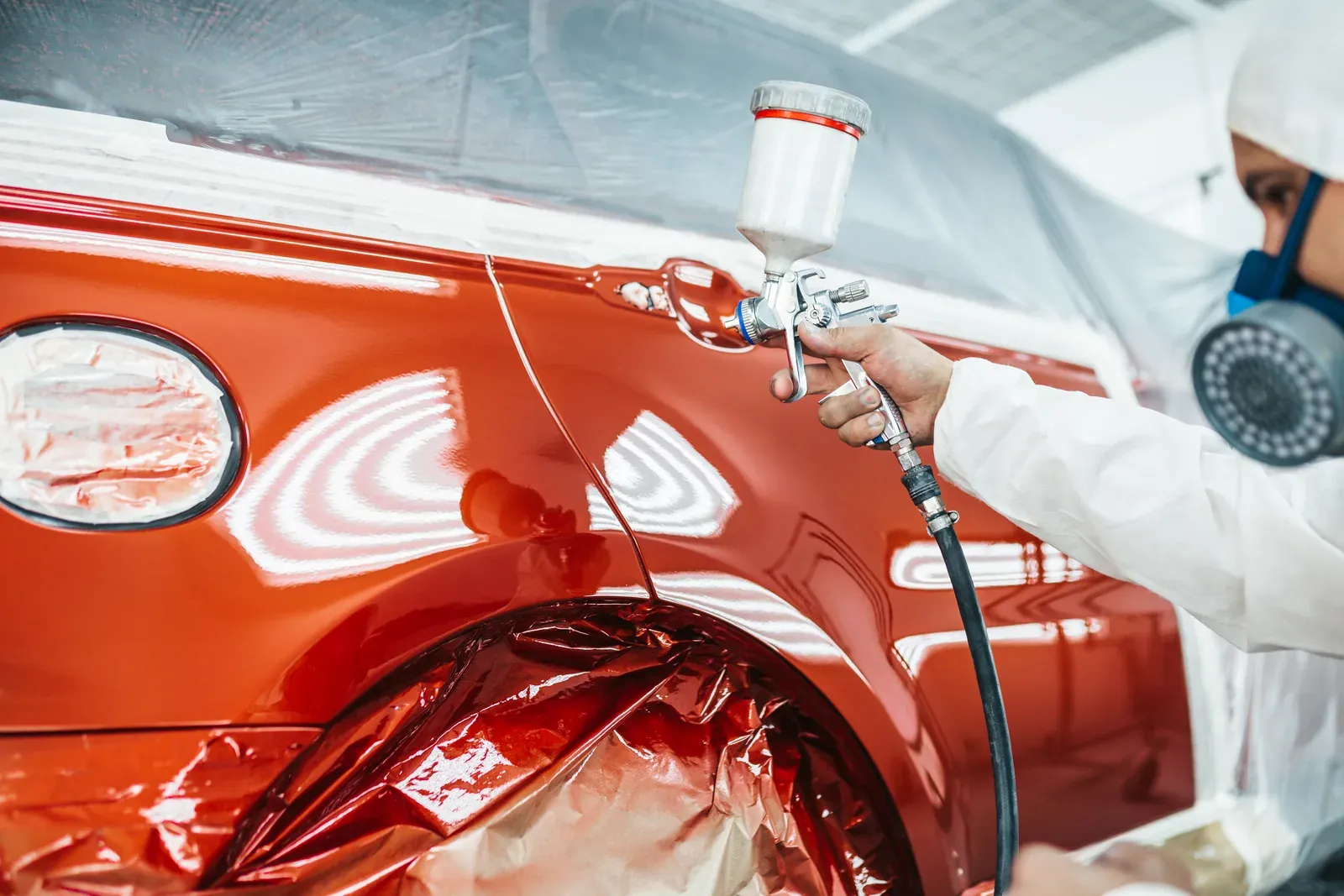
The decision is straightforward once the cover is off. A scuff or a short crack in a repairable spot is plastic-welded, refinished to your colour and blended, with the finish warranted for life. A cover with snapped tabs, a torn corner or a crack through a sensor housing is replaced. Either way the absorber, brackets and clips behind it are inspected, sensors are transferred or replaced as the parts require, and on equipped vehicles a recalibration may be required before the car goes back up the 404. Our estimator writes the photo estimate as the starting number and firms it up after teardown.
- Weld and refinish a cover that will still hold its shape
- New cover when tabs, corners or a sensor housing have gone
- Everything behind the plastic checked before the estimate is final
- Driver-aid recalibration arranged where the vehicle calls for it
Claim, pay, or tie it up for the drive
A corner scuff refinished is often a sensible out-of-pocket job, and at 30 kilometres we will say honestly if a shop nearer Wellington Street would serve you as well. A cover, absorber, brackets and a recalibration is a claim; if another driver caused it, Ontario’s DCPD rules mean your own insurance company pays and it does not cost you the repair. We open the claim, send the teardown photos and deal with the adjuster from our desk, in Mandarin if that is easier for the household.
If the cover is hanging after the hit, do not run it down the 404 at speed. Strap it up for the drive if it is secure enough, or leave the car in Aurora and let us coordinate the tow to Sheppard and Don Mills. Either way the rental through your coverage is booked to be at the shop when the car is.
Questions people ask
I clipped a curb stop at SmartCentres and the front lip is scraped. Is that a claim?
Usually not worth one. A scraped lower lip with no cracked tabs is a refinish job that often prices near a typical deductible, and a single-vehicle claim goes on your record. Send a photo of the lip and one from underneath; if the splitter or the lower grille has broken, the number changes and we will tell you.
The bumper sprang back into shape after a tap at Bloomington. Why does it still need looking at?
Because the cover is designed to spring back and hides what it lands on. Tabs, the foam absorber and any sensor in that corner take the load, and on a newer SUV a sensor a few millimetres off aim can trigger false warnings or, worse, none. A photo tells our estimator whether the cover needs to come off before the job can be priced properly.
Can I drive the car to you with the cover loose?
Only if it is properly secured. A cover that lets go at highway speed on the 404 is a hazard for everyone behind you. If a strap will hold it firmly, stay in the right lane and take it slowly; if there is any doubt, leave it in Aurora and we arrange the tow to Sheppard and Don Mills while the claim is opened.